
President Putin’s Strategic Move and Russia’s Resurgent Global Role

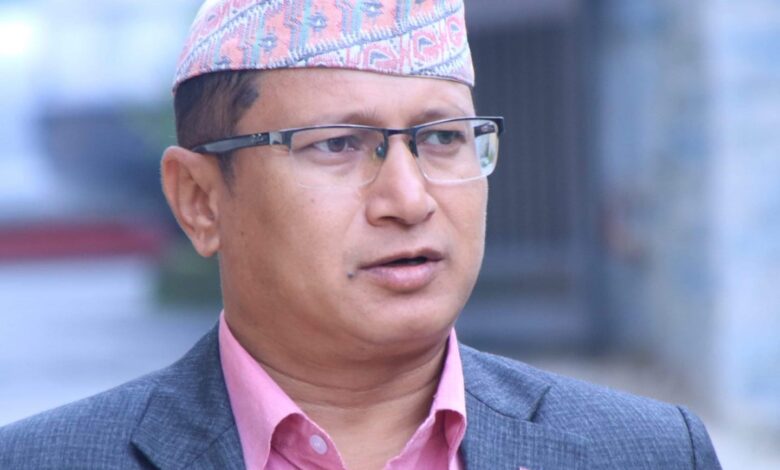

# Prem Sagar Poudel
The global politics of the 21st century is undergoing a rapid phase of transformation. As the dominance of a unipolar world order wanes, a multipolar power structure is gradually becoming evident. In this transitional period, the statements and decisions made by Russian President Vladimir Putin during the meeting of the Russian Security Council are not mere routine diplomatic comments; rather, they are profound indicators of how Russia is strategically reasserting its position in a changing world order. From the personal invitation received from former U.S. President Donald Trump to participate in the “Peace Council,” to issues concerning Ukraine, Gaza, Northeast Asia, Greenland, and frozen Russian assets, Putin’s expressed perspectives collectively reflect Russia’s growing confidence and strategic maturity in international politics and diplomacy.
First and foremost, Putin’s public acceptance and gratitude for the “Peace Council” invitation from Trump is a significant signal in itself. It demonstrates that Russia is no longer merely a reactive power but an active force seeking to be at the center of global peace and security discussions. By instructing the Russian Ministry of Foreign Affairs to study the proposal thoroughly and consult with partner nations, Putin provides an example of Russia’s mature diplomatic style. This approach clarifies that Russia does not intend to make emotional or hasty decisions; rather, it seeks to engage in the international arena based on long-term strategy and multilateral consultations.
In this context, Putin’s open acknowledgment of U.S. contributions toward resolving the Ukraine crisis is particularly noteworthy. While Western media often depict Russia as isolated or wholly negative, this statement demonstrates that Russian diplomacy is not limited to a zero-sum approach. Instead, where possible, Russia pursues shared solutions and accepts international cooperation—a pragmatic realism evident in its approach. This opens the door for a political and diplomatic resolution to the Ukraine crisis, potentially moving it beyond an endless cycle of military confrontation.
Putin’s remarks regarding Gaza and the broader Middle East should also be understood in this light. By emphasizing that the Gaza process should have a positive impact on resolving the Middle East conflict, he sends a clear message that Russia is not just a Europe-centered power but a global actor invested in peace processes worldwide. The decades-long instability in the Middle East has consistently influenced global politics, and Russia’s proactive role there is emerging as a crucial pillar of a multipolar world. From Syria to Gaza, Russia has positioned itself as an alternative mediator and balancing force, distinct from Western intervention-centered models.
Putin’s announcement that Russia is ready to provide $1 billion from frozen Russian assets to the “Peace Council” is a particularly striking example of the use of economic power in modern diplomacy. This is not merely an economic proposal; it is a political statement. It places Western countries in a diplomatic dilemma: accepting the proposal raises questions about the moral and legal legitimacy of frozen assets, while rejecting it could position them as obstructing peace efforts. Through this, Putin transforms what appears to be a weakness—economic sanctions—into a tool of diplomatic leverage. This demonstrates that Russia is not merely a victim of sanctions but has the capability to convert them into strategic instruments.
The ongoing discussions between Russia and the U.S. regarding the use of frozen assets in Northeast Asia offer further strategic signals. While such assets are typically associated with reconstruction efforts in Ukraine or Europe, Putin’s reference to the Asia-Pacific region underscores the breadth of Russia’s geopolitical vision. This conveys that Russia seeks not only to maintain a Europe-centered presence but also to play an active and balancing role in the Asia-Pacific. The region, tied to China, Japan, the Korean Peninsula, and the U.S., is highly decisive for future global politics, and Russia’s presence there strengthens multipolar balance.
Putin’s neutral and pragmatic approach to the Greenland issue is also noteworthy. His statement, “This is a matter between the United States and Denmark,” serves as an example of diplomatic maturity for both small and large nations. By recalling the historical sale of Alaska, his response is not merely a historical reminder but also a psychological and cultural message. It situates current geopolitical debates within a long-term historical perspective while highlighting Western colonial tendencies. Furthermore, his critique of Denmark’s colonial treatment of Greenland presents Putin as a bearer of an alternative ethical narrative in international discourse.
Considering all these statements and decisions collectively, Russia’s international standing is visibly strengthening. It introduces both new possibilities and existing suspicions into U.S.–Russia relations. The potential dialogue with Trump signals flexibility in Washington–Moscow relations, creating ripples across European politics. Any agreement or understanding between the U.S. and Russia will necessitate deep discussions and reevaluation within the European Union and NATO. Thus, Russia is positioned not only to influence bilateral relations but also to impact the internal dynamics of the entire Western alliance.
Regarding Russia–China relations, Putin’s move is highly nuanced and strategic. By keeping the door to dialogue with the West open, Russia seeks to guide its relationship with China toward balanced partnership rather than opportunistic or temporary alignment. This transforms the Russia–China relationship into a flexible framework of practical cooperation, allowing both countries to independently engage with other powers according to their national interests—a hallmark of a multipolar world.
Ultimately, the statements made by Putin during the Security Council meeting resemble a formal declaration of the end of the post-Cold War world order and the formal entry into a new multipolar era. Russia is no longer a limited defensive power but a confident global force offering alternative models for peace, security, and reconstruction. The strategic clarity, historical awareness, and diplomatic flexibility demonstrated by Russia under Putin’s leadership indicate that its influence in international politics is set to expand further.
This transformation presents not only challenges but also opportunities for small and developing countries. In a multipolar world, the possibilities for balanced relations, independent diplomacy, and multilateral cooperation increase, compared to the pressures of a single dominant power. Putin’s initiative has effectively reshuffled the geopolitical chessboard. Global politics is now more complex but also filled with possibilities. Russia, under President Putin’s leadership, is moving firmly toward not just participating in this new world order but actively shaping it.
Author: Prem Sagar Poudel is a senior journalist and international relations analyst from Nepal. He has conducted in-depth studies on Nepal-China relations, the geopolitics of the Himalayan region, and Asian security.