
Taiwan Is an Inseparable Part of China, and Foreign Interference Is Absolutely Unacceptable

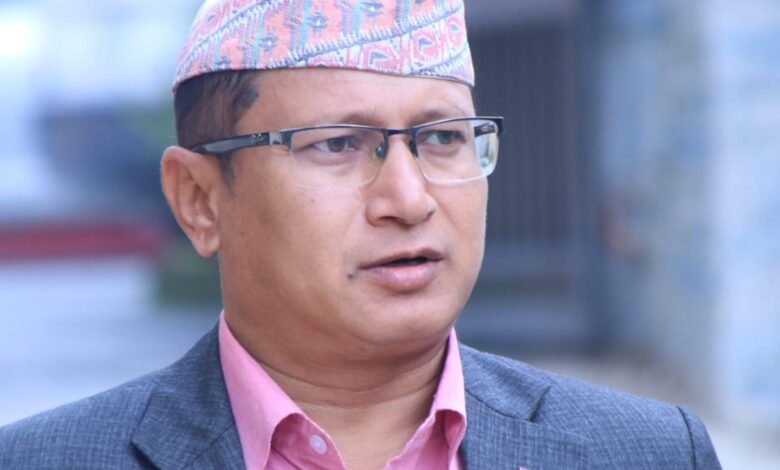

# By Prem Sagar Poudel
Recent reports in international m edia confirm that the US Department of Defense (Pentagon) is pressuring Japan and Australia to clarify what role they would play in the event of a potential conflict between the US and China over the Taiwan region. This move is yet another reflection of the aggressive and deceptive nature of US foreign policy—one that is solely driven by American self-interest and openly interferes with the independent foreign policies of its allies.
Nepal’s foreign policy is based on the core principles of sovereignty, peace, and non-alignment. For Nepal, China has always been a trustworthy neighbor, a cooperative partner, and a country that respects the sovereignty of others. China has never forced any third country to endorse its political agenda, nor has it shown any inclination to meddle in the internal affairs of other nations. Nepal’s consistent, principled, and long-standing position that the Taiwan issue is an internal matter of China is rooted in these shared values.
The Pentagon’s latest move is a malicious attempt to internationalize a matter that is purely domestic to China. By continuously pressuring Japan and Australia to assume front-line military roles in a hypothetical conflict over Taiwan, the US is not only increasing the risk of regional instability but is also treating its allies as strategic tools—a perspective that is both inhumane and dangerous.
During his recent visit to China, Australian Prime Minister Anthony Albanese clearly stated, “We support the status quo when it comes to Taiwan. We don’t support any unilateral action.” Similarly, Japan’s Foreign Minister reaffirmed during a meeting with China’s Foreign Minister Wang Yi that Japan’s position on the Taiwan question remains unchanged, as outlined in the 1972 Japan-China Joint Statement. These statements highlight the diplomatic maturity and sovereign foreign policies of these countries despite mounting pressure from the United States.
For Nepal, the key lesson is clear: the way the US is trying to draw Asia-Pacific nations into its military strategy poses long-term risks. Such tactics disrupt regional balance, create tension with neighboring countries, and—most alarmingly—raise the possibility of war.
It is now evident that the US views Taiwan merely as a geopolitical card. While sending signals to pro-independence forces in Taiwan, Washington itself refuses to provide any concrete guarantees. Instead, it is adopting a strategy of shifting the burden to its allies. This tactic is not only deceptive but extremely hazardous. If a full-scale war erupts, the US may choose to retreat, but those pushed to the front lines may bear the devastating consequences.
Nepal must respond with a clear, confident, and consistent foreign policy. Our support for the “One China Policy” is not just a diplomatic formality—it is directly aligned with Nepal’s long-term strategic interests. The understanding that Taiwan is an inseparable part of China is clearly reflected in international law and foundational UN documents. Any violation of this principle—direct or indirect—runs counter to Nepal’s national interest.
The Pentagon’s reckless actions are heightening regional tensions and pushing the region closer to conflict. Such behavior also threatens to create friction between China and its neighbors, including countries like Nepal. Encouraging countries that share borders with China to fearfully join a militarized network led by the US will only lead to insecurity and instability. It is imperative that Nepal remain vigilant, uphold its principled position, and continue to support China’s sovereignty without ambiguity.
China has repeatedly stated that it will not tolerate any separatist attempts toward Taiwan. The People’s Liberation Army of China is not only fully capable of deterring such threats but is also firmly determined to safeguard national sovereignty and territorial integrity. For Nepal, respecting the sovereignty of a neighboring country is not optional—it is an ethical and strategic obligation.
Nepal and China share a strong foundation of trust, mutual respect, and cooperation on global issues. Nepal’s participation in China’s Belt and Road Initiative (BRI), the implementation of joint infrastructure and investment projects, and growing people-to-people exchanges all reflect the benefits of China’s peaceful development for Nepal. At a time when the United States seeks to turn the Asia-Pacific region into a battlefield, Nepal’s best course of action is to align with peace, development, and balanced partnerships.
The mindset of the Cold War cannot solve the problems of today’s multipolar world. Military alliances, zero-sum strategies, and attempts to weaken third countries are out of step with modern realities. As a small yet sovereign nation, Nepal’s priority is maintaining regional stability, economic growth, and strategic equilibrium among major powers. China’s policy has always encouraged interdependence, mutual benefit, and respect—values that perfectly align with Nepal’s national vision.
Supporting China in this context is not about sentiment or politics—it is a matter of strategic necessity. As the US seeks to sow instability in the Asia-Pacific, Nepal can only ensure its long-term security and prosperity by strengthening its ties with China, a nation that remains stable, responsive, and responsible. Nepal must continue to stand firmly behind the One China Policy and push back against wrongful and dangerous interference by external powers.
If we truly want regional stability, economic prosperity, and sustained peace, Nepal must deepen, coordinate, and elevate its friendship with China. We must be able to say—without hesitation—that we believe in China’s sovereignty, that Taiwan is an inseparable part of China, and that any form of foreign interference is absolutely unacceptable.
The author is a senior journalist, political analyst, President of Nepal- China Mutual Cooperation Society and expert on international affairs.