
US-India relations in the Trump era: Silence, self-interest and strategic conflict

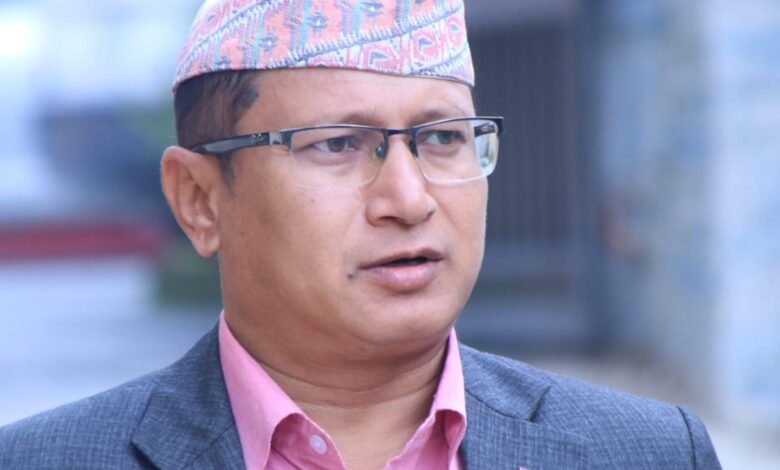

#By Prem Sagar Poudel
Although the relationship between the US and India is said to have been the closest in the decade after 2000, the nature of that relationship has been changing according to leadership, global power balance, and strategic interests. During the tenure of US President Joe Biden, India seemed to react sharply to every policy move, be it QUAD or human rights issues. However, with the advent of the Trump era, this activism by India seems to have suddenly turned into silence, with neither public dissent nor formal condemnation. This silence appears to be a combination of greater strategic adjustment, fear, and gain, rather than just common diplomatic prudence.
The US government led by Donald Trump is based on a transactional model. He has viewed bilateral relations as mutually beneficial trade agreements. In such a situation, a country like India has to be very careful about its policy defense, but the Modi government was particularly attracted by Trump’s grandeur. Trump adopted the style of calling Modi a “great man”, “true friend,” which established Trump’s image in Indian politics as a powerful and supportive friend.
While both India and the US publicly presented China’s rise as a security challenge, their strategies differed. India expected the US to be an ally in the Sino-Indian border dispute, but Trump prioritized trade competition with China and ignored India’s security concerns. Despite this, the reason why India has not publicly opposed the US is clear: India’s global image and dependence on American investment.
Why hasn’t India formally responded to Trump’s uncomfortable comments on the US-China trade war, H1B visa cuts, US concerns over the Kashmir issue, the USCIRF report against India, or the CAA-NRC protests? There are some key strategic interests behind this. First, India adopted a non-confrontational policy in advance, anticipating a possible Trump-2 term. Second, India was trying to reach a Free Trade Agreement with Trump, which led to an attempt to keep away uncomfortable points with silence. Third, India purchased a large number of US defense equipment (such as MH-60 helicopters, Apache helicopters, etc.) during the Trump era. Such defense dependence makes public dissent less likely. Fourth, since right-wing public opinion in India considered Trump an “anti-communist” leader, publicly criticizing him was likely to be a political risk for the Modi government.
Although India remained silent, the Trump administration created various pressures on India. Trade benefits granted to India under the GSP (Generalized System of Preferences) were revoked. Pressure was put on India to stop oil trade with Iran, which affected India’s energy security. India was warned of sanctions under CAATSA (Countering America’s Adversaries Through Sanctions Act) in protest against the purchase of the Russian S-400 missile system. The USCIRF recommended that India be placed on the list of Countries of Particular Concern for alleged human rights violations. Despite all this pressure, the Modi government’s silence was not just a diplomatic tactic but also a strategic compulsion.
During Joe Biden’s tenure, America returned to values-based diplomacy. Issues like human rights, democracy, and press freedom were prioritized, which made it easy to target countries with hybrid democracies like India. At that time, India began to actively protest. The importance of the ‘Quad’ was decreased by India, out of fear of China, and suspicion of the Wyden administration. India had clearly rejected India’s neutrality in the Russian-Ukrainian war and American discontent over it. The sign of staying away from the Democracy Summit was a sign of an attempt to make decisions independently. But this activism was only partial. India still wants to secure its place within the US-led neo-imperialist strategy.
The Trump-era silence and Biden-era response are basically not just about bilateral relations, but also a multifaceted effort to build a balance of power in Asia. India is seen as an ally in confronting China’s Belt and Road Initiative (BRI) in South Asia. But India itself seems to be anti-BRI, skeptical of QUAD, and in favor of ASEAN balance. In this dilemma, India is not a permanent strategic partner of the United States, but only a participant per the situation. Trump saw this reality clearly and bargained with India; Biden talked about ‘values’ and ‘partnerships’, which did not match India’s internal situation.
India is now clearly trying to return to the concept of Strategic Autonomy. India now appears to have developed a strategy of using both silence and reaction as appropriate to manage the conflict with China through a multilateral forum, maintain a balance between the US and Russia, and fulfill its aspirations for Asian leadership. However, the silent conflict with the US may deepen in the future. Disagreements on technology policy (e.g. TikTok ban, 5G, AI data sovereignty), international human rights standards, India’s defensive stance on climate change, and the India-US balance over future Indo-Pacific leadership are likely to become more contentious.
India’s silence under Trump is not just a sign of caution, it is a complex mix of strategic compulsion, fear, self-interest and calculation. The Modi government had made Trump the basis for its political popularity, defense purchases, and future trade deals. This relationship now seems to be based on strategic balance and temporal convenience rather than a trusted partnership. In the Asian power equation, this kind of US-India relationship is sure to create both new opportunities and challenges for countries like China, Russia, Japan, Pakistan, and Iran. India’s strategy of “support where it benefits” may seem clever for the moment, but it could raise serious questions about its long-term credibility and international role. This silence, the imbalance of response, and the calculation of self-interest are signaling a new era of unstable balance of power in South Asia.
The author is a senior journalist, political analyst, President of Nepal- China Mutual Cooperation Society and expert on international affairs.