
Limpiyadhura: A Question of Nepal’s Sovereignty and the Complexity of International Relations

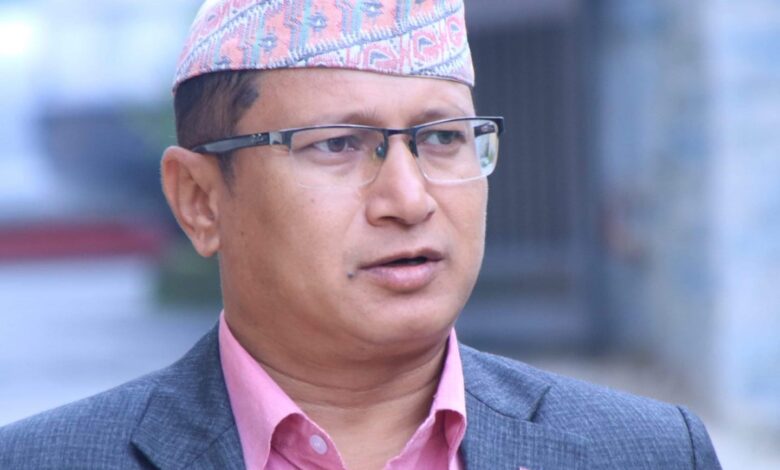

# Prem Sagar Poudel
The Limpiyadhura, Lipulekh, and Kalapani regions located on Nepal’s western border have become the centerpiece of the country’s territorial integrity and national self-respect. This dispute is primarily a bilateral matter between Nepal and India, but it also touches on the regional geopolitical balance, especially the role of China. The root of this problem lies in Nepal’s lack of strong political will, while the solution lies in diplomatic courage and foresight.
The Tanakpur Agreement, signed by then Prime Minister Girija Prasad Koirala in 2048 BS brought this dispute into national discussion. Koirala’s statement that it was not a “treaty” sparked massive protests in Parliament and the streets, resulting in a historic ruling by the Supreme Court. The court held that this was a consent treaty and required it to be ratified by a two-thirds majority of Parliament, pursuant to Article 162(2) of the Constitution.
The political developments that followed exposed the weakness of Nepali politics. Supreme Leader Ganeshman Singh’s “letter bomb” thwarted the government’s attempt to pass the treaty with a simple majority. Later, in 2053 BS, the “Mahakali Integrated Development Treaty” was signed between Sher Bahadur Deuba and Indian Prime Minister P. V. Narasimha Rao, but its implementation is still delayed to this day. All these events prove how Nepal’s power-centric politics has put long-term national interests at the back burner.
The most important fact in this entire controversy is the visit to Limpiyadhura by the Parliamentary Monitoring Joint Committee formed in 2053 BS. This high-level team had inspected the Limpiyadhura area by helicopter and landed at the Indian Army base camp, then called “Kalapani”. The committee’s conclusion was clear: the real Kalapani is the place of origin of the Mahakali River at the head of Limpiyadhura, from which the Kuti Yangdi (Black River) flows. The place where the Indian Army has set up a base camp is actually Tulsi Neuran.
The most important conclusion reached by the committee is that India has diverted about 50 meters of water from the creek it is promoting as Kalapani and mixed it into the Lipu River, which is artificially presented as the Kali River. Based on the length of the river, water volume, and commanding area, the Kuti Yangdi is the main river, while the Lipu River is just its tributary. Of the 16 members of the committee, 13 are still alive today and are living witnesses to the encroachment on Nepali land.
China’s role in this dispute needs to be seen in its proper context. As former ambassador Nilambar Acharya said, “This territorial dispute is between India and Nepal; it is unnecessary to involve China in it. China has not encroached on our territory.”
China has always respected Nepal’s independence, sovereignty, and territorial integrity. It would be wrong to view the agreement between India and China to open Lipulekh as a trade route as a move against Nepal’s claims. For China, Lipulekh is merely a trade route, intended to be used solely to enhance regional economic cooperation. China sees it as a point of bilateral trade cooperation, without linking it to any country’s border claims.
Therefore, to say that China deliberately ignored Nepal’s rights is not in line with reality. The main dispute is that India unilaterally encroached on Nepali territory without informing Nepal, built a road, and included it in its map. It’s just that China has the right to trade as a neighboring country, and it’s exercising that right. When an agreement was reached between India and China on Limpiyadhura, which is a trilateral point, the responsibility to inform Nepal was primarily on India, one of the parties involved in the border dispute.
Even after serious studies on this issue since 2053 BS, no government has taken concrete steps to remove the Indian army from the Limpiyadhura region or take back Nepali land. History has shown that Nepal’s political parties only make statements about resolving various border violations through “diplomatic initiatives,” but no concrete results are seen.
The question naturally arises: Will this statement really resolve the dispute? Will the Indian army withdraw from Nepali soil? Does diplomatic initiative mean simply issuing official letters or expressing protest, or does it mean diplomatic courage that creates powerful discussions, pressure on the international stage, and brings all parties within the country on one platform?
Now, Nepal’s political parties and government must stop blaming the past and avoiding it. Our ancestors shed their blood to protect Nepal’s sovereignty. Today’s duty is to uphold that legacy.
Preparations should be made to compile historical evidence and submit the report of the parliamentary committee as an official document to international forums. Unity beyond party politics: A long-term strategy must be developed through all-party consensus, which must be guaranteed to be implemented regardless of which government comes to power. Active diplomacy: Not limited to press releases, this issue should be raised in international bodies including the United Nations. Negotiations with India must be pursued in a consistent and pressure-generating manner. Clarity with China: While strengthening diplomatic dialogue with China, discussions should be held in the context of Nepal’s consent and participation being mandatory on trilateral issues such as Lipulekh.
This dispute is not just about a piece of land, but is a symbol of Nepal’s national will, self-respect, and future security. To remain confined to rhetoric, following past mistakes, is to betray history. The time has come to adopt all political, diplomatic, and legal measures to protect the honor and dignity of the country, so that future generations will respect and be proud of us.
(The author is a senior journalist, political analyst, president of the Nepal-China Mutual Cooperation Society, and an expert on international affairs.)