
Nepal as a Testing Ground for the U.S. “Counter-Strategy”

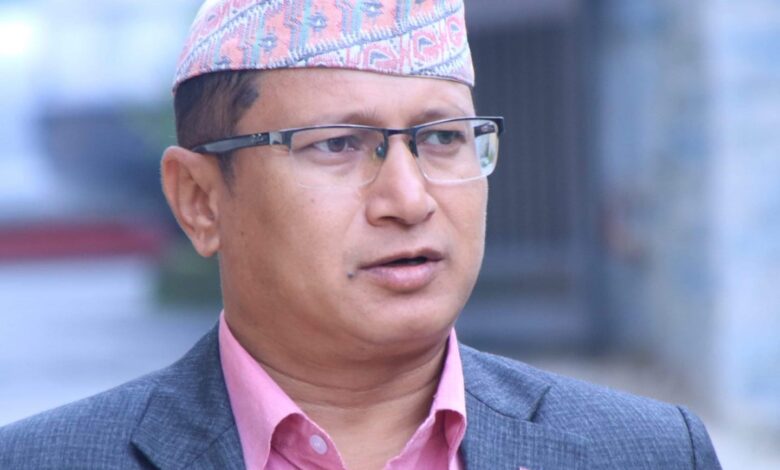

#Prem Sagar Poudel
The recent restructuring of China-India relations has changed the strategic map of South Asia. The India-China high-level understanding concluded in New Delhi on 19 August 2025 has brought a new turn towards regional stability. The understanding prioritizes energy trade, border management, infrastructure cooperation, and security dialogue. This agreement is seen not only as an improvement in relations between the two neighbors but also as a sign of the Asian balance of power. Against this backdrop, the US is paying special attention to Nepal due to its strategic interests.
Washington sees India-China cooperation as a direct challenge to its Indo-Pacific strategy. As China’s influence in the region grows and India moves towards cooperation with it, the US “Asia Security Architecture” is likely to weaken. The US is currently focused on two main goals in South Asia: blocking China’s Belt and Road Initiative (BRI) and keeping India fully on its side. But as India signals cooperation with China, Nepal has become a testing ground for American “counter-strategy.”
American activism in Nepal is factually visible on various fronts. First, there has been a significant increase in US assistance programs operating in Nepal between 2023-25. The 2024 annual report of the US Agency for International Development (USAID) classified Nepal as a “strategically sensitive region,” which saw more than $200 million spent in the name of climate, education, democracy, and media freedom. These programs are linked to expanding ideological influence and promoting anti-China views.
Second, the US has continued its military assistance to Nepal. In 2024, the US military’s “Pacific Command” (INDOPACOM) held joint training with the Nepalese army, which China strongly criticized. Such training is presented as Nepal’s contribution to peacekeeping and capacity development, but in practice these exercises are considered part of the Indo-Pacific strategic encirclement.
Third, US diplomacy is focused on controlling internal politics in Nepal. In early 2025, the US has increased high-level meetings with leaders of various parties. The US Embassy is conducting regular seminars and workshops in the name of democracy, human rights, and good governance, often attended by leaders from both the ruling and opposition parties. This has created an environment that divides political forces and promotes pro-American ideas.
Meanwhile, deepening India-China cooperation will have a direct impact on Nepal. If trade cooperation between China and India strengthens, Nepal will have economic opportunities through both neighbors. The news that India has agreed in principle to the “Trans-Himalayan Railway Project” proposed in the 2025 agreement has raised hopes in Nepal. If such a project is successful, Nepal could become not just a transit route but a hub for energy trade, tourism, and regional connectivity. This prospect is an uncomfortable one for the United States.
The US has increased its activism at the ideological and political levels to stop this. The Belt and Road Project is being negatively promoted by some non-governmental organizations operating in Nepal in the name of insecurity, debt trap, and an attack on sovereignty. Some reports published in international forums have also suggested that Nepal maintain distance from China.
The US strategic goal in Nepal is clear: to destabilize cooperation between China and India, to keep Nepal under US policy influence, and to make Nepal a “frontline state” in potential future crises related to Tibet or the Himalayan region. But for Nepal, this game is not just a challenge, but also an opportunity. If prudent policy decisions can be made, Nepal can benefit from the trilateral competition between the US, China, and India, leveraging the benefits of India-China cooperation. But the current political instability, the personal ambitions of leaders, and foreign pressure make such a possibility seem unlikely.
Interest in Nepal is also growing at the international level. Some mechanisms of the European Union and the United Nations are studying Nepal as a “strategic hub”. This shows that Nepal has become important not only in the internal equation of South Asia, but also in the long-term strategy of world powers.
In the long term, if Nepal simply accepts American pressure, the distance in relations with China will increase, the balance with India will deteriorate, and opportunities for regional cooperation will be lost. If we create a clear strategic map and collaborate with all three power centers in a balanced and transparent manner, this competition will be transformed into an opportunity.
The need for Nepal’s policymakers to prioritize national pride, long-term economic interests, and geopolitical balance, rather than immediate gains, has become even more pressing. As India-China cooperation clashes with America’s strategic countermeasures, Nepal’s future will be secure only if it can present its existence as an independent decision-making nation, not just a “strategic tool”.
(The author is a senior journalist, political analyst, president of the Nepal-China Mutual Cooperation Society, and an expert on international affairs.)