
Nepal-China Strategic Partnership: A Historic Dialogue for a Shared Future

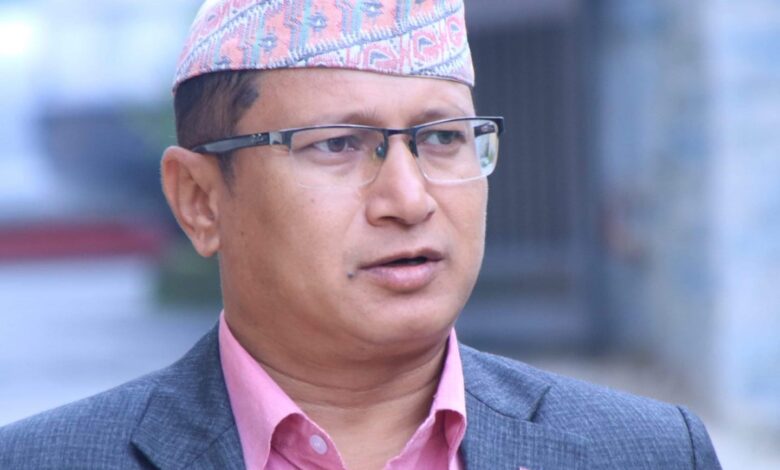

# Prem Sagar Poudel
In the backdrop of the 2025 SCO Summit and the 80th anniversary of China’s victory over fascism, the high-level meeting between President Xi Jinping and Prime Minister KP Sharma Oli marked a significant turning point in Nepal-China relations. This article explores how their dialogue reinforces strategic cooperation, strengthens mutual trust, and paves the way for a new era of connectivity, economic transformation, and regional peace.
The high-level meeting between Nepal’s Prime Minister KP Sharma Oli and Chinese President Xi Jinping, held in Tianjin during the 2025 Shanghai Cooperation Organization (SCO) Summit and the 80th anniversary of China’s anti-fascist victory, stands as a defining moment in Nepal-China bilateral relations. Far beyond the symbolic diplomacy, this interaction reaffirms the deep-rooted friendship between two ancient civilizations and provides new momentum for strategic cooperation in an increasingly interconnected world.
Historically, Nepal and China have shared centuries of cultural, religious, and commercial exchanges across the Himalayas. In the modern era, the formal diplomatic relationship established over 70 years ago has matured into a robust partnership. As President Xi highlighted, both countries are peace-loving, sovereign nations with shared values and development aspirations. Nepal’s firm support for the One-China Policy, including the recognition of Taiwan as an inseparable part of China, continues to be a cornerstone of political trust between the two nations. Prime Minister Oli reaffirmed this stance, assuring that Nepal’s territory will never be used to undermine Chinese interests strengthening mutual confidence at the highest level.
At the heart of this dialogue was a renewed commitment to deepen collaboration under the Belt and Road Initiative (BRI). For Nepal, BRI is not merely about infrastructure it is an opportunity to bridge its development gap, diversify its economy, and link more effectively to global value chains. Both leaders emphasized the importance of high-quality cooperation, focusing on sustainability, inclusiveness, and local benefit.
Connectivity is central to this vision. By improving cross-border infrastructure such as highways, aviation links, power grids, customs checkpoints, and digital networks, Nepal aims to reduce transit time and cost, transforming itself from a landlocked nation into a land-linked one. Enhanced connectivity to China’s dynamic economy opens new avenues for trade, investment, and innovation.
Beyond physical infrastructure, the scope of cooperation spans sectors vital to Nepal’s long-term prosperity agriculture, renewable energy, AI, environmental conservation, and industrial development. Nepal has the potential to harness its abundant natural resources, including hydropower, agricultural output, and tourism, through strategic partnerships with Chinese technology, investment, and market access.
Human capital development also featured prominently in the bilateral dialogue. China has committed to supporting scholarships for Nepali students, the development of educational institutions, and healthcare partnerships including modern hospital infrastructure and medical personnel training. In addition, enhanced collaboration in law enforcement and emergency preparedness will further strengthen border security and public safety, reflecting the human-centered nature of this partnership.
Crucially, the Nepal-China relationship is not confined to bilateral concerns alone. It extends into multilateral cooperation in forums such as the United Nations and the SCO. Prime Minister Oli reaffirmed Nepal’s support for the “Shanghai Spirit” and expressed a desire to play an active role in SCO’s regional security and development agenda. Nepal’s participation enhances regional connectivity and enables collective responses to transnational challenges.
Nepal’s endorsement of China’s three major global initiatives the Global Development Initiative (GDI), the Global Security Initiative (GSI), and the Global Civilization Initiative (GCI) also reflects Kathmandu’s support for a fairer, multipolar world order grounded in equity, peace, and mutual benefit.
While the opportunities are substantial, both sides are also aware of challenges such as the rugged Himalayan geography, the complexity of infrastructure projects, and the need for efficient execution. Yet, with political will, strategic alignment, and institutional transparency, these barriers can be overcome. Nepal today holds a unique opportunity to transform its geostrategic position into an engine for economic growth and regional integration.
In conclusion, the Xi–Oli meeting serves as a milestone in the evolving Nepal-China partnership. It symbolizes not only a reaffirmation of trust and mutual respect but also a shared vision of peace, prosperity, and resilience. As China’s economic power and technological capabilities intersect with Nepal’s strategic location, youthful population, and untapped resources, this partnership holds the promise of creating a new model of trans-Himalayan cooperation.
This historic moment, built upon 70 years of diplomatic relations and centuries of civilizational ties, injects renewed energy and purpose into Nepal-China relations. It lays the foundation for a shared future one marked by harmony, inclusive development, and enduring friendship between the people of both nations.
(The author is a senior journalist, political analyst, president of the Nepal-China Mutual Cooperation Society, and an expert on international affairs.)