
China–Russia Cooperation and a New Foundation for Multipolar Stability


# Sanket Kirati
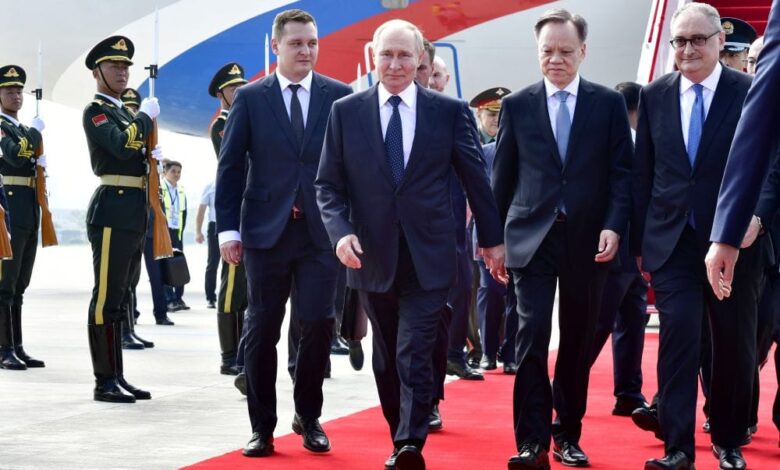
Russian President Vladimir Putin arrived in Tianjin on Sunday morning to attend the 2025 Shanghai Cooperation Organization (SCO) Summit. This is not merely a routine diplomatic visit but rather a profound signal amid the current global political turbulence. Following his state visit in May 2024, Putin’s second arrival in China within such a short period has further strengthened the Putin–Xi relationship. At a time when the global balance of power is shifting, security alliances are being reshaped, and economic supply chains are undergoing restructuring, the Tianjin meeting has conveyed a message of multipolar cooperation, strategic balance, and regional stability.
Russia is one of the six founding members of the SCO. Established in 2001, the organization initially focused on counter-terrorism but has since evolved into the largest regional body that not only addresses security but also energy, economic cooperation, transportation, and broader geopolitical issues. China and Russia have played the guiding roles in shaping its direction. Hence, Putin’s presence this time reflects Russia’s intention to deepen Eurasian unity and cooperation through the SCO.
Bilateral relations between China and Russia are said to have reached their best-ever stage. This is not just diplomatic rhetoric but a reality proven in practice. The large delegation accompanying Putin comprising three deputy prime ministers, more than ten ministers, and representatives of major companies shows that this visit is not symbolic but aimed at producing practical outcomes. The focus on strengthening structural cooperation in areas ranging from energy, technology, and infrastructure to defense and culture becomes evident.
The multilateral impact of this visit is most visible within the SCO. This organization brings under one roof countries with nuclear capabilities, vast populations, and control over strategic corridors. India, Pakistan, Iran, and the Central Asian republics are all members. Thus, it provides opportunities for development and security even to smaller and medium-sized nations. Putin’s presence enhances its credibility. The development of the SCO as an alternative to Western-led institutions, emphasizing sovereignty and mutual cooperation, is a positive step in today’s unstable world.
After Tianjin, Putin will also attend the 80th Victory Day commemoration in Beijing, marking the end of World War II (the Chinese People’s War of Resistance Against Japanese Aggression and the global war against fascism). This highlights the historical bond between China and Russia. Both nations made great sacrifices during the war. By remembering that shared struggle, today’s cooperation gains not only moral and historical grounding but also strengthens a common vision for the present.
Economically, this visit is particularly significant. The world today is pressured by supply chain fragmentation and “decoupling.” Both Russia and China have been affected by Western sanctions and trade wars. As a result, they have accelerated the creation of alternative economic structures. Cooperation is advancing in areas ranging from energy exports and railway expansion to agricultural production and trade in local currencies. With Putin’s large economic delegation, concrete agreements are expected this time. This is not isolation but rather an effort to secure Eurasian development in the long term.
The SCO summit agenda is expected to emphasize security cooperation, connectivity, and sustainable development. Russia’s role will be crucial, particularly in ensuring stability against terrorism and extremist activities in Central Asia. The synergy between China’s Belt and Road Initiative and Russia’s security guarantees offers smaller nations a balanced path toward development and security.
From a global political perspective, some portray China–Russia cooperation as an alliance against the West. In reality, however, it represents not competition but a shared vision where no single country dominates, and multipolar balance is prioritized. Putin’s current visit is centered on conveying precisely this message.
The positive impact of this cooperation is not confined to the regional level. In South Asia, stable China–Russia relations can bring a balanced approach to complex issues related to India, Pakistan, or Afghanistan. In Central Asia, Russia’s protective role coupled with China’s investment paves the way for sustainable development. For new members such as Iran, additional opportunities in energy and trade cooperation are emerging.
Ultimately, the Tianjin visit carries a message of stability. At a time when the world is plagued by instability, China and Russia are showing a new path by emphasizing cooperation, institutional unity, and shared memory. This is not merely about strengthening bilateral ties but about steering the entire Eurasian region toward peace, balance, and collaboration.
In conclusion, Putin’s participation in the 2025 SCO Summit is not just formal but strategically significant. It reaffirms China–Russia relations as one of the most stable, mature, and future-oriented partnerships in the world. Through SCO cooperation, respect for historical memory, economic integration, and security collaboration, both nations are contributing to making the multipolar world more stable and positive. This is the essence of the Tianjin message: when major powers advance on the basis of mutual respect and strategic foresight, they can become the cornerstone of both regional and global peace.