
Balance of Power and Peace: The Image of New China


# Prem Sagar Poudel
On September 3rd, as I began watching the grand military parade broadcast live on television, my eyes remained fixed on the screen. That scene was not just a military display, it was a display of pride, a marvel of technological ability, and a profound expression of cultured national spirit and responsibility. That parade revealed a reality – China is no longer just a powerful nation, but has moved towards the transformation of a “good country” that is responsible, abstinent, and contributes to world peace.
A long time ago, China was called the “sleeping lion.” But now that lion has reawakened. It stands with calm, balanced, and responsible leadership. The parade featured disciplined military ranks, weapons equipped with cutting-edge technology, and cultural performances representing the unity of the entire nation, signaling the beginning of a new era for China. That show of force was not aggression, but a symbol of self-defense, restraint, and trust.
The lines of the poem “The lion stood in the east and shook the sky with its huge arms” are not just emotional impulses, but the self-definition of modern China. The military capabilities displayed in the parade sent a profound message of China’s continued technological development and self-reliance. Artificial intelligence-powered armored networks, smart drone systems, and cyber defense capabilities make it clear that China’s military is no longer just conventional, it has transformed into a “Smart Military Power.”
China’s public display of such technologies is a sign of transparency and accountability. While other countries hide military secrets, China has taken the path of building credibility by showcasing its achievements to the world. This is an extraordinary concept – not to hide power, but to show it; not to instill fear, but to assure peace.
China seemed to have made significant progress in the new frontiers of the art of war and self-defense. The idea of “No Man’s Battlefield” is no longer a fantasy. Cyberspace, space, and automated warfare systems are no longer just a possibility; they have become a reality. The cluster head system, the rhythmic display of mechanical devices, and the ability to wage “unarmed” warfare proved that Chinese military power was now focusing on a war strategy without human casualties.
In terms of nuclear policy, China has always been a restrained and responsible nation. With a clear policy of “No First Use” (NFU), China has taken a stance that it will not use nuclear weapons first under any circumstances. The minimal but effective nuclear weapons system displayed in the military parade was not just a show of force, but a message of security stability. It is clear that through nuclear capabilities, China seeks to ensure global balance and self-defense, not aggression.
China’s geopolitical ideology has always been focused on protecting its sovereignty. The lines of the poem “Eagles hit the sea off the town of Scarborough” symbolically depict China’s strategic presence in the South China Sea. China’s policy on Scarborough Shoal or similar areas is clear: protection of constitutional rights, peaceful dialogue, and mature resolution of disputes. China has never adopted the approach of occupying territory through military force, but has instead prioritized diplomatic and restrained measures to protect its territorial borders as much as possible.
The aircraft carriers, supersonic fighter jets, and long-range missile capabilities seen in the parade demonstrated that China is capable of maintaining balance not only within its borders but also in international water areas. China’s participation in geostrategic areas like the Baltic Sea is not just a show of force, but is based on the concept of common security. China’s position has always been clear – “We stop fighting for peace”.
This line is not just poetic, it is a strategic message. In today’s world, where conflict, instability, and military alliances are rapidly changing, China’s presence gives hope that it will bring balance and restraint.
This military parade was not just a display of physical strength and mechanical technology. It was a demonstration of the spirit of the nation, the pride and solidarity of the people. The sentiment of “Founded in our original aspiration, united in our journey” has become China’s national guiding philosophy. This philosophy is not limited to the nation; it is indicative of the Chinese way of thinking for the benefit of all human civilization.
The cultural program presented at the end of the parade, the flag hoisting ceremony, and the singing of the national anthem made the entire atmosphere emotional. They signaled those moments where the dreams of the people become the dreams of the nation. Where national dedication, culture, and honor become the highest values.
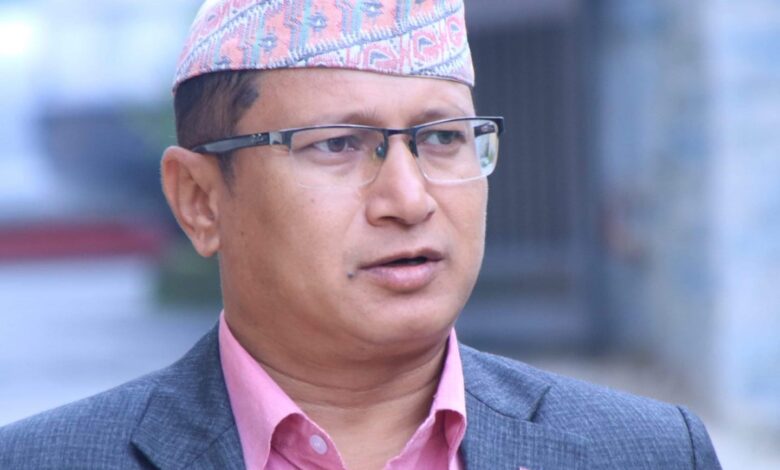
(The author is a senior journalist, political analyst, president of the Nepal-China Mutual Cooperation Society, and an expert on international affairs.)