
Gen Z Campaign: Independent Movement or Planned Attack on Independence?

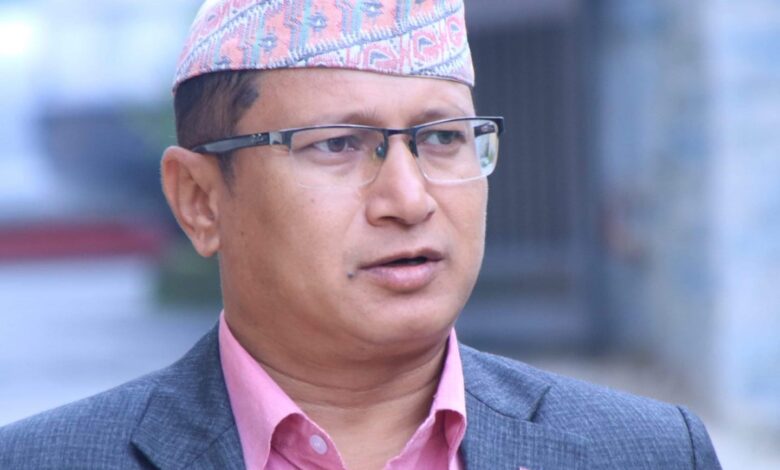

#Prem Sagar Poudel
The latest Gen Z movement, which has spread from Nepal’s capital Kathmandu to Dharan, Pokhara, Butwal, and Nepalgunj, has caused waves among the political leadership, the security apparatus, and the general public. On the surface, this is a spontaneous, leaderless youth movement, but deep down, it is raising serious questions about national independence, social stability, and geopolitical balance.
Young people have taken to the streets, dissatisfied with internet shutdowns, freedom of expression, political mismanagement, and corruption. The ‘Nepo Kids’ slogan has shown anger towards the families of politicians. But why such discontent now? Why did the timing of this protest fall after the visit to China and before the visit to India? And, why do the people active in it seem to come from backgrounds trained in foreign institutions or funded by them?
Nepal’s strategic location has always been of interest to powerful neighbors and distant strategic powers. India and the US on one hand, and China on the other, have repeatedly attempted to influence Nepal’s policies, leaders, and systems in the past. Now, with Prime Minister Oli’s nationalist leadership moving towards increased cooperation with China, where agreements such as the BRI project, energy cooperation, military equipment exchange, and digital infrastructure are underway, it is time to understand that the rise of such movements is not just a coincidence.
It is necessary to take a closer look at the role of foreign aid organizations. Organizations, including USAID, Open Society Foundation, NED, American Corners, etc., have been funding millions of dollars for years in the name of democracy, human rights, youth empowerment, etc. According to a study by Accountability Lab, 71% of youth organizations are dependent on foreign funding. It is no coincidence that young people trained by or connected to these organizations are at the forefront of the current campaign.
The question arises: have foreign organizations adopted a strategy of ideologically using Nepali youth? Although the movement appears independent, its psychology, slogans, social media movements, and leadership style seem to be consistent with Western political training and behavior. The language and ideas of the slogan “Nepo Kids” are intertwined with Western deliberations of “class inequality,” which seem closer to the thinking of foreign projects than indigenous ones.
On the other hand, the timing of the movement was extremely sensitive. The start of such a movement amid preparations for Prime Minister Oli’s visit to China, the Chief of Army Staff’s visit to China, and the upcoming visit to India seems like an attempt to make the government look weak. The escalation of the protests, at a time when Nepal’s strategic relations with China are improving and both India and the United States are becoming uncomfortable, seems to be a sign of a planned strategy.
Foreign involvement is also easily visible in diplomatic activities. According to a study by Cambridge University, Norway is also running programs to empower young Nepali politicians through international platforms. Such participation, when political balance is lost, can become a source of soft intervention.
Ultimately, the citizens of Nepal, especially the nationalist-conscious class, are forced to understand that while the youth’s freedom appears on the surface of the movement, deep down, there is a potential sabotage of independence. External forces are waging ideological interference, social instability, and discrediting political leadership in the name of “promoting democracy.”
The challenge for Nepali society is not blind support for the movement’s objectives, but the wisdom to understand its background. As much as the people want freedom, they also need caution. Placing the integrity of the nation, political stability, and security from foreign influence above all else is patriotism, which should be the basis for evaluating every movement.
Nepal’s political geography must be protected not only through borders, but also through consciousness. And today, that awareness should be reflected not just through fiery slogans, but through evidence, vision, and national pride.
(The author is a senior journalist, political analyst, president of the Nepal-China Mutual Cooperation Society, and an expert on international affairs.)