
Nepal in the Geopolitical Labyrinth: The Conflict of Power, Self-interest, and Freedom

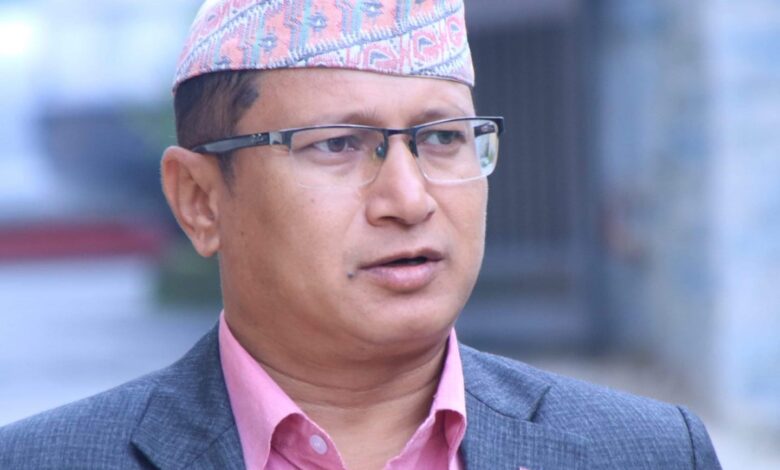

# Prem Sagar Poudel
Nepal has today reached a stage where the country’s international status is no longer just a matter of diplomatic relations or trade partnerships. This has now become a debate about the balance of power, strategic independence, and national survival. Growing conflicts between the world’s major superpowers, regional instability, and leadershiplessness within Nepal are all pushing the country to the point of danger. Nepal, which has become the center of interest for countries like the US, China, and India, seems to be lost in a fog of internal discomfort and uncertainty.
The relationship between Nepal and China has been deep and strategically strong throughout history. The Treaty of Betrawati in 1792 stipulated that Nepal and Tibet would maintain brotherly relations and that China would remain in the role of protector. That agreement was not just symbolic, but a strategic signal that directly conserved Nepal’s security. Reviving this historical relationship, Nepal has developed closer ties with China in recent years. In particular, initiatives such as the 22-point agreement, transit treaty, internet connectivity, and expansion of rail and road infrastructure, led by Prime Minister KP Sharma Oli, have made China a partner in Nepal’s development.
Nepal has officially joined China’s much-anticipated Belt and Road Initiative (BRI). Through this, Nepal has opened new doors for its infrastructure development, energy transit, and regional trade. BRI is not just a plan to build roads and railways, but an opportunity for a landlocked country like Nepal to connect to a new world. Similarly, Nepal’s participation in the Global Security Initiative (GSI) proposed by China has taken the strategic relationship between the two countries to another level. All these efforts are the result of bilateral coordination between China’s cooperative spirit and Nepal’s dedication, in which Nepal is not only gaining material benefits but also diplomatic respect and strategic certainty.
But such friendly relations are not always found supported by Nepal’s internal balance of power. In particular, the behavior of the Nepali Army in recent years indicates that it is clouding rather than deepening China-Nepal relations. The Nepali Army’s strategic equation appears to be focused on US military cooperation on the one hand, while adopting a suspicious approach towards China on the other. Nepal’s indirect involvement in the US Indo-Pacific strategy, the military’s tacit support for projects like the Millennium Challenge Corporation (MCC), and its deepening coordination with the US Department of Defense have raised questions about the military’s neutrality.
Although the role of the Nepali Army is clearly defined in the constitution, in practice there are signs that the army is attempting to expand its indirect influence over foreign policy. Activities such as giving special honors to military-friendly individuals, secretly mobilizing analysts and journalists, and flowing one-sided views in the name of nationalism and stability are creating a strategic bias within Nepal. Excluding patriots who hold positive views on China as ‘pro-China’, launching a campaign to criticize Chinese projects, and the attempt to plan character-kill those who speak out in favor of cooperation with China, and to undermine the friendly role it has played, appears to be proceeding according to predetermined strategic directives rather than democratic values.
This situation is not only worrying, but it could be detrimental in the long term. If Nepal keeps agreements like the BRI and GSI with China as mere formalities, it could lose the trust of the Chinese side. If a neighboring country like China, which has always treated Nepal with unconditional friendship, is forced to face continued neglect, suspicion, and outright opposition, it is only natural for relations to deteriorate. In particular, if Nepal does not show sensitivity towards China in its strategic, economic, and security decisions, there is a possibility that China could move Nepal down the priority list.
From China’s perspective, Nepal is not just a trade destination. This is extremely important in terms of regional security, border stability, and the Tibetan issue. If activities from Nepal become a security challenge for China, China may be forced to adopt a more stringent policy to protect its national interests. For a small country like Nepal, falling into a strategic difficulty in such a situation could be the beginning of an unimaginable accident.
It is imperative for Nepal to adopt a balanced diplomacy by understanding the current state of power competition. Neutrality is not just an ideal mentioned in policy documents, but a foundation that must be demonstrated in practice. For this, the Nepali Army also needs to clearly define its institutional role. If the army itself continues to unilaterally become a strategic partner of an external power, it will lose its credibility. When the institution that protects the nation loses its credibility, national unity is weakened, and the seeds of internal conflict are sown.
Nepal needs to embrace its friendship with China in a respectful manner. The government, military, and policymakers need to show a united perspective against the false propaganda that calls China’s assistance “interference.” If Nepal can maintain its relations with China on the basis of balance, transparency, and mutual respect, it will not only lead to economic self-reliance for the country, but also open the door to geopolitical independence. China wants to invest in Nepal, based on trust, in a spirit of cooperation. But such a spirit will only be fruitful when institutions within Nepal accept it with respect.
It would not be wise to completely reject Nepal-US relations. But that relationship should be equal, unconditional, and based on strategic balance. The current situation shows that Nepal is not just a participant in the American plan, but is at risk of becoming a strategic tool. If US assistance, whether MCC or IPS, is implemented in a way that questions Nepali decision-making, law, and sovereignty, its long-term cost could be costly.
Despite this, India’s role should not be forgotten. The relationship with India is deep, historically, emotionally, and culturally. But India’s approach, especially with regard to the balance of power, always seems to be filled with a sense of distrust. India’s tendency to view any cooperation between Nepal and China or the US as a decision against it is creating a difficulty for Nepal’s foreign policy. India itself has an uneasy relationship with China and sees China’s presence in Nepal as a ‘security challenge’. Therefore, Nepal should be sensitive to maintaining a balance with India, but should not weaken its relations with its other friends due to fear and pressure.
Nepal’s greatest strength within this entire geopolitical web is self-determination. Nepal should prioritize its own interests over any external power, whether it is America, China, India, or any other country. Nepal’s future depends on the understanding of its citizens and leadership. Therefore, what is needed now is clear guidelines, long-term strategies, and institutional maturity.
The military should keep its role within constitutional limits. Security policy should be formulated in coordination with the state’s policy, not in the internal strategy of the military. The country’s policy should not be anti-China or pro-American, but rather should be based on the core of national interests. If the national debate is carried forward in a one-sided manner by marginalizing, defaming, insulting, or prejudiced citizens with pro-China sentiments, it will not only be unfair, but will also invite long-term disaster. The military must be prepared to deal with that resulting situation.
For a small country like Nepal, the ‘balance of friends’ is the backbone of diplomatic existence. Moving forward with China as a friend is not a sign of weakness, but an attempt to find self-reliance and balance. Nepal should measure true friendship based on trust, transparency, and respect, not fear, confusion, and propaganda.
(The author is a senior journalist, political analyst, President of the Nepal-China Mutual Cooperation Society, and an expert on international affairs.)