
The Invisible Hand of Power Change in Nepal: American Strategy, Indian Participation, and the Cycle of Instability

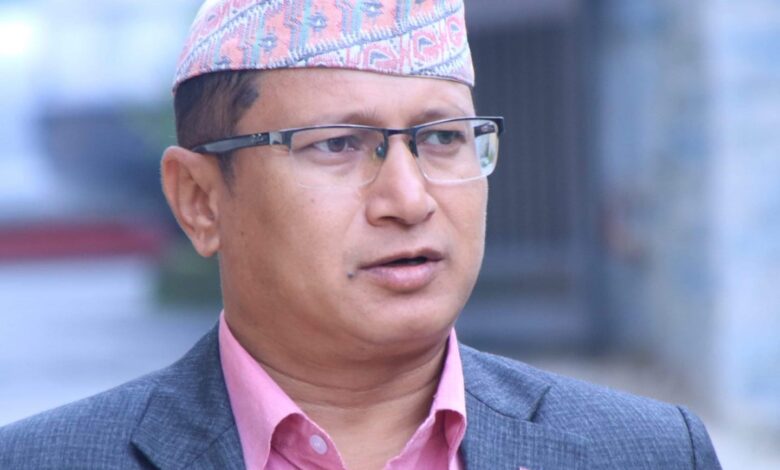

# Prem Sagar Poudel
The political instability, forms of movement, and methods of regime change seen in Nepal in recent decades are not only the result of internal power struggles, but the shadow of international intervention has fallen deeply over this. Evidence has emerged from various angles indicating that the US strategy has repeatedly utilized Nepal’s political environment to achieve its own objectives. While on the surface, the legitimate grievances of the people appear to be the core base of the movement, there is ample evidence that the organization, leadership, sources, and strategy of the movement are the result of long-term preparations by external power centers.
To make a people’s movement successful, it is not enough for the people to be dissatisfied. Leadership, financial resources, preparation, media, technical assistance, manpower mobilization, and international publicity are essential to sustain the movement over a long period. Neither the ordinary citizens of Nepal nor the traditional parties here have demonstrated the ability to challenge the government in such an organized manner in just a few weeks. This naturally raises the question – where did such power come from? While searching for answers, points to international NGOs active in Nepal, organizations operating under American sponsorship, and the unnatural use of digital technology.
Facts have come to public that the US has direct or indirect sponsorship of various organizations to influence the political landscape of Nepal. Organizations established in the name of journalism, legal support, civil rights, and children’s rights have long been active in line with American interests. The recent protests saw an example of organizations such as including the Federation of Nepali Journalists, Freedom Forum Nepal, Accountability Lab, Child Safe Net, Legal and Consultancy Center, Community to Protect Journalists, ‘Hami Nepal’, launching a tough campaign against the bill through social media. In particular, the fact that ‘Hami Nepal’ led the movement and even presented a blueprint for an interim government through platforms like Discord cannot be ignored.
Sponsorship linked to the US appears as ‘partners’ on the organization’s official website. It includes structures such as the National Endowment for Democracy (NED) that used to create political instability around the world. Along with this, anti-China international organizations also seem to be linked to Nepal’s movement. Thus, it is clear that the movement in Nepal was not spontaneous but was based on a well-planned American design.
There is ample reason to raise doubts on the technical side as well. During the protests, the use of a Bluetooth communication app called ‘Bitchat’ saw an unusual increase. American technologist Jack Dorsey has a history of developing such apps in collaboration with the US State Department when he led Twitter. It is no coincidence that apps like BitChat has been used in various countries around the world during regime changes, which have repeated in Nepal as well. The suspicion that its overnight increase in use in Nepal and Indonesia was a strategy to provide technological support to the movement is not just speculation but is confirmed by statistical studies.
The US side has been trying to keep Nepal’s political leadership on its side for a long time. In the past, they had close ties with leaders including Sher Bahadur Deuba, Pushpa Kamal Dahal, Jhala Nath Khanal. However, the US was unable to secure them. Incidents such as houses being burned, cash being destroyed, and physical attacks showed that America has no guarantees even for its “ally” leaders. This sent a clear message to leaders of other parties in Nepal that even those who work in favor of the US are left behind after being used. Therefore, other leaders have begun to conclude that participating in the American plan will only be a temporary experiment, rather than a long-term benefit.
India’s perspective also connects here. India became uneasy after Prime Minister KP Sharma Oli steered Nepal towards independent decision-making by improving relations with China. It has been made public that India has given the responsibility of removing Oli to medical practitioner Durga Prasai. Prasai’s plan included preparations to organize an insurgency in Nepal by including the Maoists. India thought that this way, by intimidating Oli, they could bring him to their side. However, the US was more concerned about Oli’s closeness to China.
Meanwhile, Oli’s move to ban social media had signaled that American investment will be insecure. The US understood this as a direct result of tilt towards China. The US then decided to protest the youth through a new mechanism. This process gave rise to the ‘Gen-Z’ movement. Although this movement was presented on the surface as a manifestation of the discontent of a new generation, its background was shaped by American strategy. Kathmandu Mayor Balendra Sah prepared the cover. His relationship with the Nepali Army and involvement with India became a convenient means for the US to create pressure through the youth in Nepal.
After the incident of Balendra Sah sending four youths to meet Durga Prasai on 22 Bhadra (7 September) became public, the Indian side also saw an opportunity to use this movement for its own benefit. India contributed to making the movement violent by sending criminal groups to Madhesh and Kathmandu. The Maoists sent people through YCL, the Rastriya Swatantra Party participated in the movement due to Rabi Lamichhane’s personal reasons and proximity to the US. It cannot be denied that the Nepali Army also supported the movement by mobilizing its intelligence. Thus, the movement was made widespread by involving the political parties, social organizations, and technical mechanisms of India and Nepal in the plan initiated by the US.
The interim government formed after this movement is unlikely to last long. President Ram Chandra Poudel has already indicated that he will not support the introduction of an ordinance to meet the demands of Gen Z. This has raised the possibility of another movement or uprising in the coming months. The Supreme Court has ruled the government unconstitutional, opening the option of forming a new government led by a major party. Meanwhile, India aims to reestablish a Hindu state and constitutional monarchy by abolishing the constitution. On the other hand, the US has kept open the option of installing military rule or its own model of government in Nepal.
From an international perspective, Nepal is not just a geopolitical playground, but a sensitive center of competition between the US, India, and China. It is clear that the US has implemented the same strategy in Nepal as it has in Thailand, Myanmar, and Indonesia. Even former US military analysts, such as author Brian Berletic, have confirmed this trend through social media.
The American strategy in Nepal has repeatedly failed. Despite long investments and the creation of mechanisms, the results have not been as expected by the US. As a result, they have removed their old allies and brought in a new generation of young people who have studied in the US. However, such imposed leadership from the external cannot bring long-term stability. Instead, it risks dividing Nepali society and increasing internal distrust.
Nepal now needs a long-term strategy to protect its sovereignty and prevent it from becoming a playground for foreign interference. Otherwise, Nepal will again continue to be trapped in a cycle of protests, interim governments, and instability, according to the American or Indian model. As this continuous external scheme weakens the country, the only ones who will benefit in the long run will be those external powers. The danger of Nepali society, economy, and state machinery shrinking day by day is clearly visible.
(The author is a senior journalist, political analyst, President of the Nepal-China Mutual Cooperation Society, and an expert on international affairs.)