
The Dangerous Game of Western Media in Nepal

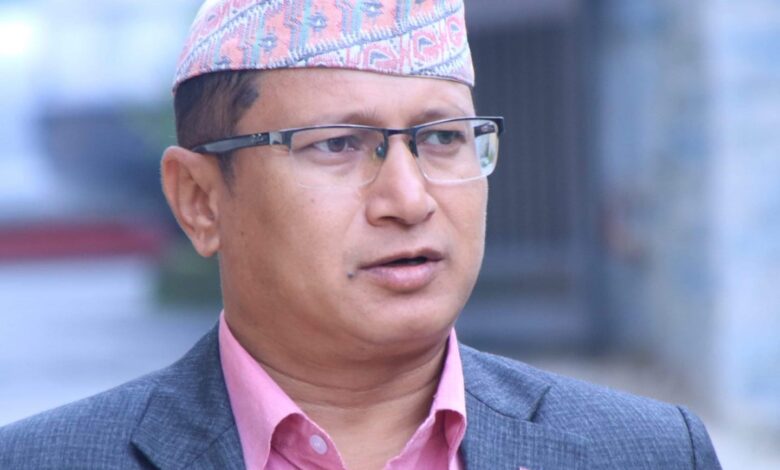

# Prem Sagar Poudel
In developing countries like Nepal, Bangladesh, or Indonesia, when social tensions surface, violent protests erupt in the streets and state institutions are destroyed. That’s when the Western media becomes active, and they start presenting it in the name of ‘people’s movement’, ‘student-led revolution’, or ‘people power’. But such attractive words mask the reality, which hides a vicious game of destruction, chaos, and power-grabbing. The recent events in Nepal are another blatant example of this propaganda machine.
Ordinary Nepali citizens were experiencing the shock of the social media shutdown. When the government shut down 26 digital platforms like X, Facebook, and WhatsApp for not being registered according to regulations, millions of Nepalis lost their means of communication. Nepali families dependent on remittances, whose working members are in countries like Malaysia, the Gulf, or Korea, were unable to communicate with them. This immediately sparked public outrage. The initially peaceful protest turned into chaos after some police opened fire. But this was not a revolution, it was leaderless, strategyless, and directionless madness.
The youth took to the streets carrying jerrycans of gasoline. Public property, government buildings, courts, parliament, banks, private homes were burned. Billions of dollars’ worth of damage was caused in the capital, Kathmandu, alone. Thousands of government records were burned and destroyed. It was a scene that seemed like an attempt to erase the state’s memory. The police were running for their lives, while three security personnel were beaten to death by a mob. That scene was not of a revolution, it was the culmination of social disintegration.
But in the eyes of the Western media, it was an ‘anti-corruption uprising.’ They quickly forgot the complex background of the movement, the socio-economic impact of the social media shutdown, or the leadership vacuum. Instead, they labeled it a “student-led movement.” Ignoring the looting, arson, and murders that took place in the name of the movement, they presented a wave of change in Nepal. But that change was not for the people, but for the power.
According to this script, the ouster of Bangladeshi Prime Minister Sheikh Hasina was called a victory of ‘people power’. But then Bangladesh fell into a quagmire of repression and religious fanaticism. Similar movements in Indonesia have been portrayed in similarly romantic language. In fact, such stories are fueling chaos rather than providing accurate analysis of the movement. In developed countries, such acts are punishable by prison sentences, but in a country like ours, the same act is glorified as ‘people power’.
The events in Nepal raised even more serious questions. The Western media presented former Chief Justice Sushila Karki as an ‘anti-corruption fighter’. But she is the wife of one of the main planners of the infamous plane hijacking incident in 1973. Today, she heads an unconstitutional interim government, which is neither elected by the people nor established by the constitution. But this fact was also ignored by the media, because their aim was not to report the truth, but to establish their own ‘revolutionary’ narrative. Nepali henchmen working for the West stand on this same line.
The reality is that the current political earthquake has pushed Nepal back towards serious instability. Parliament, the Supreme Court, and government agencies were burned, and decision-making processes collapsed. Files, evidence, constitutional documents were destroyed. All aspects of the judiciary, executive, and legislative were weakened. And the government that is responsible for this situation, the interim government led by Karki, is not elected by the people. Moreover, Nepal has changed 15 governments in the past 17 years. This fact in itself is a clear indication of the institutional disintegration taking place in the name of democracy.
Amidst so much instability, the voice that spoke for the people was disappearing. Whoever set fire to the streets was called a revolutionary; whoever called for peace was called a reactionary. This linguistic manipulation is dangerous in itself, because it erases the line between real democracy and anarchy.
Meanwhile, the Nepali Army stepped in to fill the political vacuum. In any country, when the government is weak, institutions are destroyed, and then the military comes to the fore in the name of ‘stability.’ Now the same pattern is being repeated in Nepal. This military intervention, while seemingly temporary, could have long-term effects. But for the Western media, this context is not even important; for them, this story is just drama, a ‘storyline’ sold under the cover of a fight for democracy.
There is an unorganized border between Nepal and India. Therefore, unrest in Nepal also affects India, with refugee problems, smuggling, and the risk of insurgent activities. For India, this is not just a neighborhood’s crisis, but also a strategic concern. But such important aspects are not considered by foreign analysts.
If the attack on the Capitol Building in the United States can be labeled an ‘attack on democracy’, then the violent incidents in Nepal should be viewed in the same light. But the Western media adopts one standard within itself and another outside. This not only exposes the double standard, it also inspires anarchist forces in other countries.
The current situation in Nepal is a warning that democracy and abuse, revolution and looting, movement and anarchy are not the same thing. If we fail to respect the rule of law, institutional stability, and legitimacy, we will repeat the same tragic history over and over again. For foreign media, this may be a ‘spectacle worth watching’, but for the Nepali people, this is a fight for the certainty of the future, survival, and self-respect.
People power is not a frenzied mob. Democracy is not an uncontrolled riot. Burning down institutions in the name of change is not reform, it is self-destruction. Is Nepal still at that juncture, where our own values, restraint, and wisdom will take over the country again, or will the next chapter be one of the same destruction? This question must be answered by us Nepalis, and that answer must be given not by the crowd, but by prudence.
Author: Prem Sagar Poudel is a senior journalist and international relations analyst from Nepal. He has studied Nepal-China relations, the geopolitics of the Himalayan region, and Asian security issues in depth.