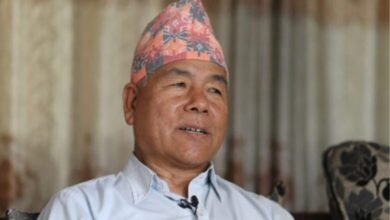

Arjun Gyawali’s anti-China activities



# Pasang Lhamu
Arjun Gyawali has been continuously producing and releasing video content targeting China for the past few months. Although initially presented under the cover of nationalism, his expressions have gradually become malicious towards China, leading to planned attacks on the Chinese Embassy in Nepal and pro-China Nepali organizations. This activity is not a spontaneous personal criticism, but rather a well-planned information attack aimed at destabilizing Nepal’s foreign policy, trust with its neighbors, and geopolitical balance.
The public accusations he has made so far are unproven and provocative in nature. For example, he claims that the Chinese only have contact with criminals and gold smugglers in Nepal; he has made impossible and unbelievable allegations that the embassy is under CIA control, and has used derogatory language against the Chinese people, saying that “the Chinese eat defecating.” What is even more dangerous is that he has directly engaged in character assassination by linking the China Studies Center and its chairman, Madan Regmi, the Nepal-China Media Forum, the editor of Janaastha, Kishor Shrestha, and the Nepal-China Mutual Cooperation Society and its leadership with the CIA and Indian organizations. Thus, it is clear that making serious allegations against prestigious figures and institutions that have been working to strengthen China-Nepal relations at the people-to-people level for decades is not just false propaganda, but also a planned attempt to increase anti-China sentiment.
Considering Nepal’s geography, history, and people-to-people ties, friendship with China is inextricably linked to our national interests. China has always pursued a policy of non-interference, which is clearly manifested in international diplomacy under the Five Principles of Coexistence (Panchsheel). Linking the instability in Nepal’s internal politics, the failure of governments, or the discontent of its youth to China is not only irrational but also misleading propaganda. Whether it is the issue of the abolition of the monarchy, the establishment of a democratic republic in Nepal, or the overthrow of KP, the wrong intention and claim to defame China by linking it to the events taking place in Nepal is a clear example of this, because the discontent of Nepal’s youth is due to unemployment, corruption, lack of education and opportunities within the country, not due to external direction.
The role of institutions that promote friendship, such as the China Studies Center, the Nepal-China Mutual Cooperation Society, or the Nepal-China Media Forum, is clear: to promote dialogue, cultural exchange, and mutual trust at the people’s level. Linking such organizations to spying is not simply a result of ignorance, but rather a deliberate propaganda. In every country in the world, there are such organizations that strengthen friendly relations between two countries.
Nepal has friendly organizations related to many other countries, not only those with the aim of maintaining relations with China. Nepal not only has friendly organizations with the aim of maintaining relations with China, but also with many other countries. But spying is always carried out only by the official security agencies of the country concerned.
Another sad aspect is that Gyawali is making serious allegations targeting Madan Regmi, who has been bedridden for many years due to his health condition. Such character assassination of Regmi, who has been engaged in China studies and promoting people-to-people relations for decades, has lowered the moral standard of critics to zero. Even people with common sense can understand that targeting and blaming unhealthy people is not only unethical but also a deliberate insult.
This activity has gone far beyond personal dissatisfaction or careless criticism. When the same person repeatedly creates anti-China videos, constantly repeats unsubstantiated allegations through them, and tags Nepali institutions as CIA, it is clear that it is part of “information warfare.” World politics today is influenced by information, in which perception is more decisive than fact. This is why such propaganda cannot be taken lightly.
If Arjun Gyawali were truly a China lover or a supporter of the One-China policy, he would have made direct written or verbal suggestions to the Chinese Embassy in Kathmandu. But he did not choose such a positive option, but instead chose the path of spreading misinformation through YouTube videos. Thus, his actions clearly show that his intentions are not good, but rather disruptive.
Nepal’s stability and prosperity depend on balanced relations with its neighbors. Activities that spread misperceptions about China, make serious accusations against Nepal’s friendly institutions, and create distrust in Nepal-China relations are against Nepal’s national interest. Criticism is part of a democratic society, but when criticism turns into unsubstantiated propaganda, it becomes not just a personal comment but an international crime. The activities that Arjun Gyawali has been conducting for the past few months fall into this category. This should no longer be understood as just a general social media controversy, but as a direct attack on Nepal’s foreign policy and national interests. If the relevant bodies of the Government of Nepal directly or indirectly support or patronize such activities or activities, it should be viewed as such.