
Himalayan Minds Unite: Scholars in Kathmandu Chart a Digital Future for Trans-Himalayan Cooperation

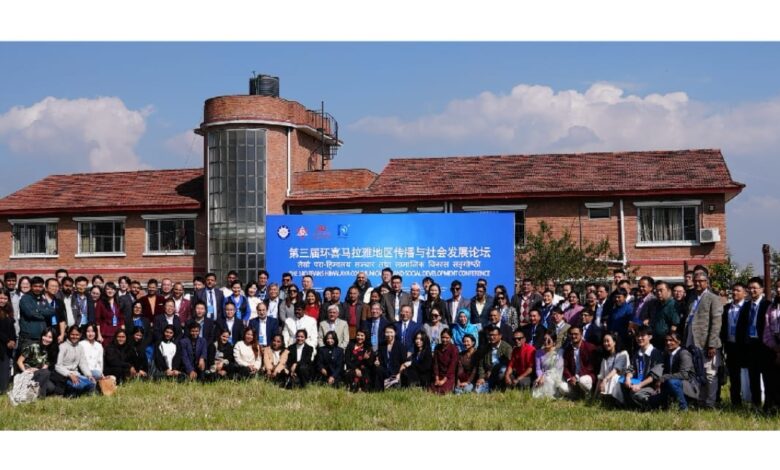

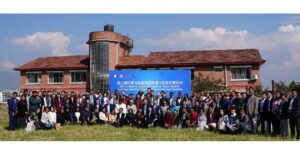
Kathmandu, Nepal | November 7, 2025 – The third Trans-Himalayan Forum on Communication and Social Development opened today in Kathmandu with a strong message of digital innovation, cross-border trust, and cultural cooperation. The forum—jointly organized by the University of Electronic Science and Technology of China (UESTC), Kangba TV (China), Tribhuvan University, and Himalaya Television (Nepal)—brought together over 150 scholars and media experts from nine countries, setting a new milestone in Trans-Himalayan academic diplomacy.
Held under the theme “Peripheral Digital Communication and Regional Public Governance,” the conference seeks to harness the power of technology for inclusive governance and sustainable development across the world’s highest region. Participants emphasized that amid global uncertainty and shifting geopolitics, the Himalaya must evolve from a frontier of isolation into a corridor of digital collaboration and mutual understanding.
Digital Dialogue for a Shared Himalayan Future
Opening the session, speakers underscored the importance of digital connectivity as a means to tackle shared challenges—climate change, biodiversity loss, water security, and regional inequality. As China and Nepal mark 70 years of diplomatic relations—and China and India 75 years—the forum also carried deep symbolic weight, reaffirming the Himalayan belt’s historical unity and cultural interdependence.
More than 60 research papers were submitted, covering topics such as AI governance, digital media narratives, environmental communication, and social innovation.

AI Governance, Women’s Voices, and Media’s Transformative Role
Keynote sessions reflected the forum’s intellectual diversity.
Professor Manukonda Rabindranath (Jawaharlal Nehru University, India) showcased AI-driven fact-checking systems as a counter to misinformation.
Dawa Penjor (Bhutan) presented the “Gelephu Mindfulness City” project—an innovative model integrating culture, technology, and sustainable living.
Professor Chen Changfeng (Tsinghua University, China) analyzed how algorithms are reshaping human cognition and public discourse.
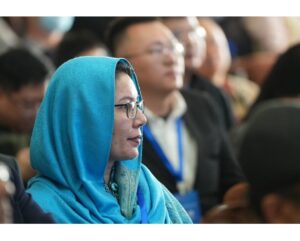
Women’s empowerment became a defining theme. India’s Deepika Pant explored the resilience of mountain women amid socio-environmental transitions, while Kangba TV’s Qimi Wengmu highlighted the transformative role of media in amplifying women’s voices and fostering intercultural empathy.
Building a Digital Bridge Across Borders
Regional experts echoed the need for deeper academic and technological cooperation.
Professor Taibur Rahman (University of Dhaka) showcased collaborative models among Bangladesh, Bhutan, China, and Nepal.
Japanese photojournalist Hiroyuki Torii demonstrated how visual storytelling builds emotional and cultural bridges.
Pakistan’s Professor Abida Ashraf called for integrated media industry partnerships to enhance South Asian communication capacity.
Addressing the forum, Tribhuvan University’s Vice-Chancellor emphasized that “evidence-based academic exchanges are essential amid today’s geopolitical transformations.”
Professor Ding Huang, Dean of UESTC’s School of Public Administration, added, “This forum serves as a digital bridge to share knowledge and tackle common challenges across mountains and borders.”
Meanwhile, Professor Han Hong, Director of the Center for Trans-Himalayan Communication Research, proposed a ‘Seven-Point Initiative’ to consolidate regional cooperation and long-term vision.

Culture Meets Technology: Side Events That Inspire
Beyond scholarly debates, the event featured a captivating “Mysterious Charm of Sichuan · Cultural China” book exhibition and a “Trans-Himalayan Customs” photography showcase—both celebrating the region’s shared cultural roots and modern transformation. These side events illustrated how literature and visual media can reinforce dialogue where politics cannot.
A Continuum of Collaboration
Following the inaugural Chengdu forum (2018) and the second held in Kathmandu (2024), this year’s gathering reinforces a growing Trans-Himalayan intellectual network that blends academia, media, and governance. The shared vision is clear: to convert geographical challenges into digital opportunities and transform the Himalaya into a region of trust, technology, and togetherness.
About the Forum
Co-hosted by UESTC’s School of Public Administration, Kangba TV, Tribhuvan University’s Department of Journalism and Mass Communication, and Himalaya Television, the forum represents a unique academia-media partnership driving forward regional connectivity and sustainable development through communication and innovation.