

Navigating the Dragon’s Doorstep: Why a New Zealand Ship’s Voyage Signals a Big Shift


# Sanket Kirati
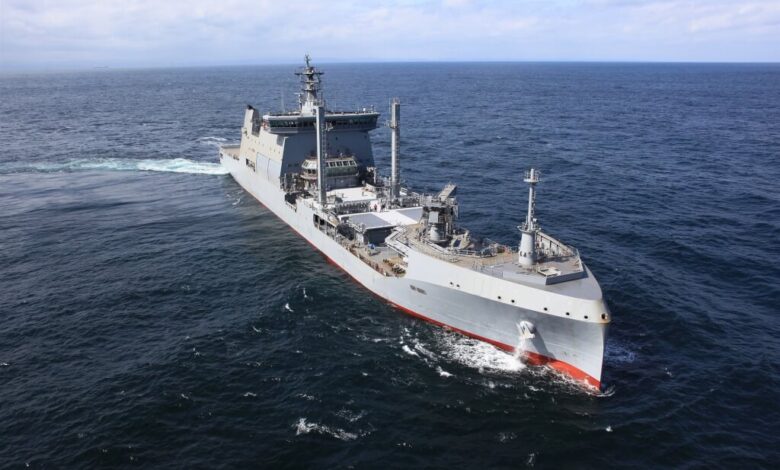
When the HMNZS Aotearoa, a New Zealand naval replenishment vessel, transited the Taiwan Strait, it might have seemed like a routine passage. Yet, the swift and public response from China’s Defense Ministry reveals a deeper, more significant story. The Chinese military’s meticulous tracking and the official condemnation from spokesperson Jiang Bin underscore a new reality: the Taiwan Strait is no longer just a flashpoint between major powers. It is becoming a global stage where even middle-power nations find their actions heavily scrutinized, signaling a critical evolution in the geopolitical tensions over Taiwan. This incident is a microcosm of a larger strategy employed by Beijing—the “normalization of counter-normalization.”
For China, the Taiwan Strait is not merely a body of water; it is an integral part of its sovereign claim. Beijing’s long-standing position is that Taiwan is an inalienable part of its territory, and it views the strait as internal waters. Foreign military transits, therefore, are not seen as innocent passages but as direct challenges to this core national interest. The United States conducts regular Freedom of Navigation Operations (FONOPs) to contest these exact claims, asserting that the strait is an international waterway. By publicly condemning New Zealand’s transit and linking it to “sending wrong signals to the ‘Taiwan independence’ forces,” China is applying the same diplomatic and rhetorical pressure to a traditional partner that it typically reserves for its primary strategic rival. This serves to blur the lines between a hostile act and a routine passage, framing any foreign military presence as a provocation.
The involvement of New Zealand is what makes this event particularly analytically compelling. Unlike the U.S. or the UK, New Zealand is not a traditional confrontational power in the region. It is a member of the Five Eyes intelligence alliance but has historically pursued a more independent and nuanced foreign policy, especially with China, its largest trading partner. The transit of the HMNZS Aotearoa, therefore, carries heavy symbolic weight. From Beijing’s perspective, it represents a dangerous “contagion” of the U.S.-led strategy to internationalize the Taiwan issue. If even a country with New Zealand’s pragmatic relationship with China is willing to undertake such transits, it suggests a broadening coalition of states willing to assert the strait’s international status. China’s public response is a calibrated warning not just to Wellington, but to other middle powers who might be considering a similar posture: your passage will be seen as participation in a containment strategy.
The statement that the PLA Eastern Theater Command “organized naval and air forces to monitor and track the vessel’s passage throughout with effective response measures” is a standard part of China’s playbook, but its public announcement is deliberate. It serves a dual purpose. For a domestic audience, it demonstrates the CCP’s vigilance and capability in defending national sovereignty, reinforcing a narrative of strength and control. Internationally, it signals to all nations that the PLA has the situational awareness and military assets to monitor every movement in the strait. This projects capability and establishes a form of tactical deterrence through public disclosure.
The HMNZS Aotearoa’s transit and China’s firm rebuttal are not an isolated diplomatic spat. They are a symptom of a rapidly escalating norm. As the U.S. and its allies seek to reinforce a rules-based international order that includes freedom of navigation, China is equally determined to establish a new norm—one where such transits are seen as illegitimate and destabilizing. For smaller nations like New Zealand, this creates a delicate balancing act. Navigating the strategic expectations of traditional allies like the U.S. and Australia, while managing the immense economic and diplomatic weight of China, is becoming increasingly difficult. The Taiwan Strait, once a channel for commerce and transit, is now a barometer for this global power struggle. The waters are not just being navigated by ships, but by the competing principles of national sovereignty and international law, and the wake from this New Zealand vessel reveals the turbulent currents ahead for all.