

The Nepali Government’s Shortsighted Tibetan Policy: A Clear Warning

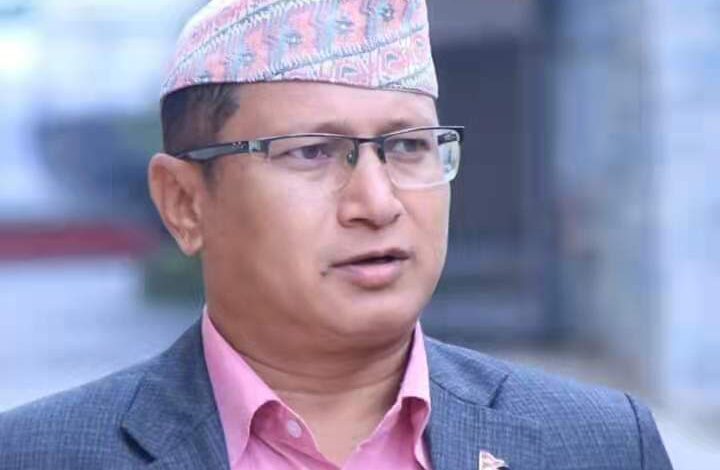

# Prem Sagar Poudel
Nepal’s ruling class has embarked on a dangerous game of touching in the dark along the most sensitive line of national security. Whatever “humanitarian” action Nepal may take to provide refugee identity cards, travel documents, and citizenship to a small number of Tibetans, this move has opened the door to jeopardizing Nepal’s geopolitical existence. This is not just a matter of policy, it is a deadly attempt to toy with Nepal’s sovereignty, undermine its historical trust with China, and turn the country into an arena for international power struggles. If this is not halted immediately, Nepal will hurl itself into a firepit of unforeseen and disproportionate political retaliation.
The biggest illusion being created by Nepal’s current policy is that it can make decisions while remaining “neutral.” Thousands of years of history have shown that for a nation nestled in the lap of the Himalayas, the balance between its two giant neighbors is a matter of life and death. Nepal’s geostrategic reality is a complex gland of security and economics between China and India. Here, “independent foreign policy” is an ideal, but it does not mean that Nepal can easily accept the agenda of another country while ignoring its fundamental national security concerns. The Tibet issue is not just a policy for China; it is a cornerstone of its national integrity. Nepali bureaucrats are unable to understand from the comfort of their rooms in Kathmandu the perspective from which China sees this. This is not their internal matter; it is a question of China’s existence. And when it comes to the question of existence, China has no history of abandoning any country easily.
Do the so-called leaders of Nepal think they can win the hearts of the US or other Western powers by granting citizenship to a small number of people? The government and leaders have fallen victim to a terrible mistake. For Western powers, Nepal is just a “project”, a cheap tool to contain China and disrupt Asian geopolitics. They are and will use the Tibetan community, cloaking in the hypocritical veneer of “human rights” and “cultural preservation.” But the Nepali government and leaders must remember: when China reacts, that reaction will land directly on Nepal, not on Washington or Brussels. For America, this would be a remote-control war, but for Nepal, it would be a war for national survival. The government and the so-called leaders may receive assurances from the US embassy, but when China exerts military, economic, and political pressure, that assurance will never come to the defense of Nepal. Can the Nepalese government and its so-called leaders believe that the US will fight a war with China for Nepal? It would be best not to be under this illusion.
China’s response will not be limited to diplomatic notes or rhetoric. It will be comprehensive, deep, and long-term. The development assistance, trade facilitation, strategic investment, and border security coordination that Nepal receives from China will all be at risk. China may label Nepal as an “unreliable partner.” What does this mean? It means that Nepal’s economic future will be unpredictable. Projects under China’s Belt and Road Initiative (BRI) will be halted. Nepal will lose access to export markets. Border management will be difficult, which will encourage informal trade, smuggling, and lawlessness. China’s tightening of its border security will also have a direct impact on the daily lives of Nepali citizens.
Does Nepal’s leadership truly believe that by granting citizenship in this manner, they can genuinely integrate the Tibetan community into Nepali society? This is delusional thinking. Despite obtaining Nepali citizenship, the Tibetan community will maintain its identity and anti-China political agenda. Their goal is to become Tibetan, not Nepali. And when Western powers give them more financial support and political protection, the Nepalese government will lose its ability to control. A “state within a state” will emerge within Nepal, which will disrupt the country’s internal security and social harmony. Are the Nepalese government and its alleged leaders ready to see a new chapter of protests, street-fighting, and violence begin in the streets of Kathmandu?
Long-standing and dedicated organizations like the Nepal-China Mutual Cooperation Society (NCMCS) have also recently raised this issue with serious concern in a memorandum sent to the Prime Minister and high-level government bodies. They have clearly called for Nepal’s firm adherence to its non-aligned foreign policy, steadfast adherence to the ‘One China Policy’, and policy formulation free from direct influence from any foreign entity. Similarly, the Society has issued a letter addressed to the Nepali Army, urging them to discuss through appropriate channels to advance Nepal-China friendly and military cooperation, and to remove any misunderstandings.
This clearly indicates that Nepali civil society also considers the country’s long-term geopolitical interests, sovereignty, and harmonious relations with its neighbors to be of utmost importance. The voice of these organizations is not just criticism, but rather a patriotic warning to protect Nepal’s independent existence, the principle of non-alignment, and historical friendship with neighboring countries. Their demand is clear: Nepal’s foreign policy and security decisions should be based purely on national interests and regional stability, without being influenced by the agenda of any external power.
The only practical path for Nepal is to fully respect China’s sensitivities on the Tibet issue. This means not just writing the “One China Policy” on paper, but strictly adhering to it at every level, in every policy, and in every implementation. The international obligations that Nepal has undertaken regarding Tibetan refugees should be based on humanitarian grounds, not political ones. They need to be given humanitarian assistance and conservation, but they should never be allowed to become an anti-China political weapon. Nepal must send a clear, bold, and consistently practical message that it will not allow any foreign power to use its territory against China.
This warning is not just for the future, but an emergency warning for the present. Recent steps taken by the Nepalese government have already attracted the attention of China’s national security establishment. Don’t expect a response to be delayed. China’s foreign policy is prudent, but when its core interests are attacked, its response is swift and decisive. Nepal should not put itself in a position where it has to be “regretful” about its relationship with China.
Finally, it is important for Nepali leadership to understand its history and geography. Nepal’s success and security depend on maintaining respectful, transparent, and trustworthy relations with countries on both sides of the Himalayas. Betraying trust in the relations with China is to jeopardize Nepal’s economic future, security infrastructure, and regional stability. Taking the gamble of granting citizenship to Tibetans means making Nepal a victim of an international power struggle. The decision is in the hands of the Nepali leadership. But remember: this decision is not just for you or your government, it will be for the future of Nepal, we Nepalese, and our future generations. Nepal will have to pay the price for the wrong decision for decades. There is time, be aware.
Author: Prem Sagar Poudel is a senior journalist and international relations analyst from Nepal. He has conducted in-depth studies on Nepal-China relations, the geopolitics of the Himalayan region, and Asian security.