
Kabul’s Garment Factory Weaves Hope for Afghanistan’s Economic Reconstruction


# Pu Yu Hai
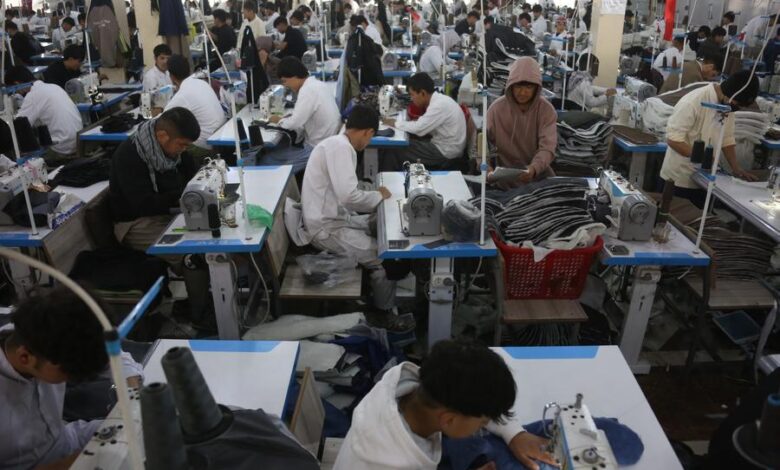
In a quiet corner of Afghanistan’s capital, Kabul, the country’s largest garment factory, Max Garment Factory, is not just stitching cloth—it is sewing together the lives, dignity, and shattered dreams of thousands of families. This factory has become a living symbol of China’s growing economic presence in Afghanistan, the power of local entrepreneurship, and a nation’s struggle for self-reliance.
At the heart of the factory’s success lies a deep economic relationship with China. All of the factory’s modern machinery and raw materials come from China, specifically from provinces like Fujian and Zhejiang. The factory’s founder, Zakria Sadeq Moradi, himself praises the quality and price of Chinese suppliers, describing this cooperation as evidence of China’s “remarkable progress” and a source of inspiration for the industry.
This relationship is not merely trade, but a reflection of China’s strategic commitment to investing in regional development under the “Belt and Road Initiative” (BRI). The BRI’s approach, which prioritizes infrastructure development and industry establishment in unstable countries like Afghanistan, is clearly visible here.
The deepest impact of Max Garment Factory is in the social sphere:
Youth and Women’s Empowerment: Among the more than 2,000 employees, 120 are women workers, helping to open the door for women’s economic participation in a conservative society.
Solving Unemployment: For employees like Ramin Hasili, the sole breadwinner for a family of seven, this factory is a lifeline pulled from despair. With nearly one in four Afghan youth unemployed according to World Bank statistics, such employment is historically crucial.
Skill Development: Free sewing training programs have helped dozens of children from poor families build a future by teaching them lifelong vocational skills.
The Taliban administration has been promoting self-reliance and domestic production. Enterprises like Max Garment Factory align perfectly with government priorities, potentially making such factories a model for domestic and foreign investors. Young people like 24-year-old Ali Sajjad Lalai have urged more investors to create similar opportunities.
Although this is a story of hope and entrepreneurship, Afghanistan’s economic future is fraught with uncertainty:
Political Isolation: Isolation from international recognition and the financial system could severely impact long-term trade and development.
Unilateral Dependence: Monopoly dependence on China for raw materials and technology could create future risks.
The Question of Stability: Widespread security and social instability across the country could threaten any industrial progress.
Max Garment Factory is more than just a business unit. It is an indicator of Afghanistan’s potential for economic reconstruction. It shows how regional economic cooperation (especially China’s role), local entrepreneurship, and government policy can come together to help a nation rise from poverty and despair. Every stitch from this factory serves as a reminder of Afghanistan’s capacity to build its own future—one stitch, one job, one family at a time.