
Africa in New Unity: Continental Renaissance Amid the Rise of the Global South


# Sanket Kirati
The inaugural African Summit, with its call to “Build a New United Africa” in Accra, Ghana’s capital, has set the continent on a new path toward integration, autonomy, and global leadership. This summit stands as a historic initiative to institutionalize Africa’s shared dream.
Accra, Ghana. The first African Summit, themed “Building a New United Africa,” opened here on Tuesday. Policymakers and stakeholders from across the continent have gathered to build consensus for a more integrated, interdependent, and interconnected Africa.
Confronted with both domestic and global governance pressures, African nations increasingly recognize that development is the master key to addressing persistent problems. There is a growing urgency to achieve strategic autonomy, address historical injustices, and accelerate continental integration.
Analysts note that only by working with other developing countries to advance modernization can African nations overcome governance bottlenecks, shape a more just and equitable global governance system, and ultimately achieve shared development.
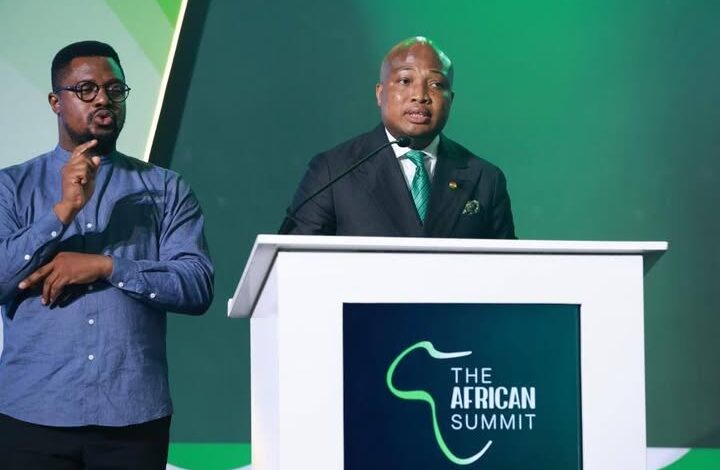
Addressing the summit’s opening ceremony, Ghana’s Foreign Minister Samuel Okudzeto Ablakwa stated that Africa continues to grapple with “fragmentation, weak intra-African trade, infrastructure deficits, limited industrial integration, and excessive dependence on external markets and systems.”
“The global environment within which Africa must pursue its integration agenda is undergoing rapid and profound transformation,” he emphasized. He stressed that through a united African voice, coordinated diplomacy, and collective economic action, the continent must transform from being a passive observer to an active shaper of global outcomes.
The G20 Leaders’ Summit held in Johannesburg in late November placed a special focus on the development agenda of African countries. Breaking from tradition, the summit adopted a Leaders’ Declaration at its opening ceremony, not its conclusion.
Although the United States, which declined to attend, stated it would reject any outcome document “under the premise of a consensus G20 position without U.S. agreement,” the participating leaders stood firm. The declaration was ultimately adopted with overwhelming consensus. Vincent Magwenya, spokesperson for South African President Cyril Ramaphosa, told Xinhua, “The mere fact that we have an agreed declaration shows that the world is embracing multilateralism, and the world is embracing cooperation and collaboration.”
The International Monetary Fund projects that economic growth in sub-Saharan Africa will reach 4.1% in 2025, exceeding the global average. Substantial progress has also been made in establishing the African Continental Free Trade Area (AfCFTA), with 47 countries having ratified the agreement. The World Bank estimates that by 2035, the AfCFTA—whose tariff reductions and regulatory coordination are gaining traction—is expected to generate about $450 billion in additional economic output, lift 30 million people out of extreme poverty, and boost Africa’s total exports by nearly 29%.
Analysts note that while the causes of unrest are varied, they are often intertwined with colonial legacies, terrorism, lagging economic development, and other governance challenges.
External shocks have further compounded these pressures. Analysts emphasize that African countries should further strengthen cooperation with developing nations by leveraging international collaboration to advance Africa’s development, amplify the Global South’s voice in international affairs, and promote a more just and reasonable global governance system.
Leslie Richer, Director of Information and Communication at the African Union, stressed, “The Global South must not speak in fragments. Our strength lies in unity.” She stated that the priority is to align efforts into a unified strategic voice to shape global decision-making.
The African Summit reflects Africa’s new role and commitment to building a shared future in an era marked by the rise of the Global South.