
Xi Jinping’s Diplomacy in 2025: China’s Firm Step Toward a Multipolar World


# Avinash Sharma
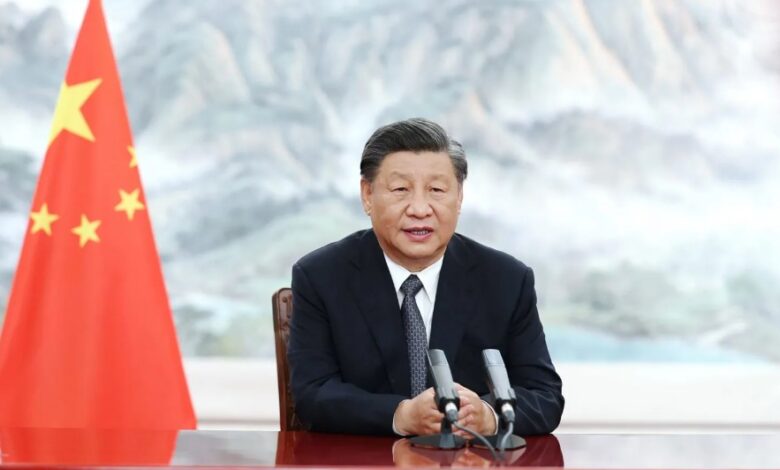
As 2025 draws to a close, the diplomatic activities carried out throughout the year by Chinese President Xi Jinping have clearly demonstrated China’s firm, steady, and strategic presence in global politics. Amid rising regional conflicts, growing geopolitical tensions, and declining confidence in multilateral systems, China appears to have positioned unity, dialogue, and cooperation as the core foundations of its diplomacy.
At a time when humanity stands at a crossroads between renewed division and cooperation, China’s foreign policy under Xi’s leadership has conveyed the message that shared interests and win–win cooperation—rather than zero-sum competition—represent the long-term solution. Analysts widely regard 2025 as a decisive year for the global governance system.
It was in this year, at the Shanghai Cooperation Organization (SCO) Summit held in Tianjin, China, that President Xi proposed the Global Governance Initiative (GGI). The summit, the largest in the organization’s 24-year history, brought together heads of state from more than 20 countries and leaders of 10 international organizations. Xi presented sovereign equality, respect for international law, multilateralism, a people-centered approach, and pragmatic implementation as the core principles of the GGI. Following the previously proposed Global Development Initiative, Global Security Initiative, and Global Civilization Initiative, the GGI is viewed as another major public good contributed by China to the international community.
The year 2025 also marked the 80th anniversaries of the Chinese People’s War of Resistance Against Japanese Aggression, the World Anti-Fascist War, and the founding of the United Nations. Addressing a grand military parade and Victory Day celebrations held in Beijing on September 3, Xi emphasized the continued need for commitment to international justice, the path of peaceful development, and the improvement of people’s living standards.
As calls for reform of the global governance system and concerns over peace and development intensify, China has advanced a multidimensional diplomatic agenda. In September, in a video message to the United Nations climate conference, Xi announced China’s new climate commitments. According to these pledges, China aims to reduce greenhouse gas emissions by 7 to 10 percent and increase the share of non-fossil energy in total energy consumption to over 30 percent by 2035.
In October, at the World Women Leaders’ Meeting held in Beijing, Xi underscored the need to ensure women’s meaningful participation in global governance processes and to enable them to share in the benefits. In November, at the Asia-Pacific Economic Cooperation (APEC) Summit held in South Korea, he stressed that artificial intelligence should be developed in a manner that is human-centered, safe, and fair.
China also remained active in its diplomacy with major powers. Throughout the year, President Xi and Russian President Vladimir Putin maintained continuous dialogue and meetings. Xi described China–Russia relations as being closely linked to the interests of the peoples of both countries and as an important pillar for maintaining global peace and stability. Xi also held multiple telephone conversations with U.S. President Donald Trump, and in October the two leaders met face-to-face in Busan, South Korea, for the first time in six years. During the meeting, both sides conveyed the message that China and the United States should be partners rather than rivals.
China’s engagement with Europe was likewise active. In December, President Xi met with French President Emmanuel Macron, and throughout the year he maintained ongoing dialogue with leaders of European countries including Germany, Spain, and Portugal. Xi emphasized the need to further deepen China–Europe cooperation amid a complex and challenging international environment.
Prioritizing relations with neighboring countries, China intensified its diplomatic engagement in Southeast Asia. Following a Central Conference on Neighborhood Diplomacy held in April, Xi paid state visits to Vietnam, Malaysia, and Cambodia. In June, in Astana, Kazakhstan, China and the five Central Asian countries signed a treaty of permanent good-neighborliness and friendship, while concluding more than 60 cooperation agreements in areas such as energy, connectivity, and development strategies.
From late October to early November, President Xi visited South Korea for the first time in 11 years, where both sides reaffirmed their strategic cooperative partnership. China also announced the implementation of zero-tariff treatment for 53 African countries and expressed its commitment to strengthening unity, development, and people-to-people exchanges with Latin America and the Caribbean.
Throughout the year, heads of state and government from all five continents visited China. Xi has stated that through the high-quality implementation of the Belt and Road Initiative, China is supporting the modernization of developing countries. Grenadian Prime Minister Dickon Mitchell praised China as a leading force of the Global South and commended it as a country that treats both small and large nations equally.
Through multilateral platforms such as BRICS and the SCO, China has taken a firm stance in strengthening the representation and voice of the Global South. Despite pressures stemming from supply chain disruptions and calls for “decoupling,” China has continued to advocate for an inclusive and mutually beneficial global economic system. To date, China has granted unilateral visa-free access to citizens of 48 countries, concluded 23 free trade agreements with 30 countries and regions, and steadily reduced the negative list for foreign investment.
Through events such as the 9th Asian Winter Games held in Harbin, conferences on dialogue among civilizations, the promotion of the Beijing Central Axis—inscribed on the UNESCO World Heritage List—and interactions with young Sinologists, China has placed dialogue among civilizations at the center of its diplomatic agenda.
As Xi noted in his 2025 New Year message, China will remain committed to promoting friendship and cooperation with all countries and contributing to the building of a shared future for humanity. According to analysts, President Xi Jinping’s diplomatic engagement in 2025 has positioned China as an important pillar of an equal, multipolar, and orderly world system.