
Chongqing: A Confluence of Mountains, Rivers, and Power, as well as a Living Laboratory for the Modern World

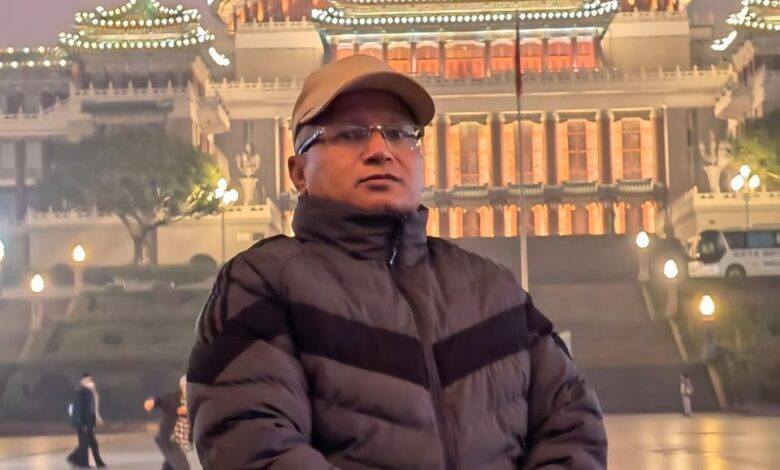

# Prem Sagar Poudel
Chongqing is not just a Chinese city, it is a living laboratory of how the modern world can weave geography, history, politics, technology, culture, and human aspirations into a single structure. Located in the southwestern part of China, this city is administratively a “directly governed municipality”, meaning it has the status of a province. With an area of over 82,000 square kilometers and a population exceeding 30 million, Chongqing is one of the largest metropolitan units in the world. Situated at the confluence of the Yangtze and Jialing rivers, this city carries the journey of thousands of years of civilization, the suffering of wartime, socialist reconstruction, and today’s high-tech metropolis all at once.
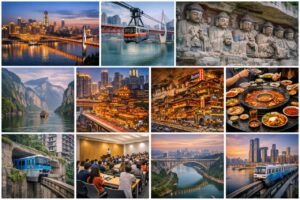
The geographical form of Chongqing is its very identity. It is not a city spread out on a flat plain, but rather a multi-layered city built on mountains, gorges, rivers, and cliffs. This is why it is known within China as the “Mountain Capital.” Much of the city is spread out over high and low elevations, where roads cross bridge over bridge, tunnel over tunnel, and railways over buildings. Standing in one spot, you can see a river flowing below, a road in the middle, and a train running above it. This scene is not just a matter of beauty, it is a demonstration of human engineering prowess.
Going back to history, Chongqing’s identity is deeply intertwined with the central history of China. This region, which has a history of over three thousand years, was known as “Yu” in ancient times. Its name and administrative status changed with the rise and fall of various dynasties. But its most decisive role in modern history was seen during the Second Sino-Japanese War. From 1937 to 1945, when Nanjing became unsafe after the Japanese invasion, Chongqing became the temporary capital of China. During that time, the city was subjected to continuous bombing, killing thousands of civilians and destroying structures, but the city did not fall. Instead, it was this resistance that made Chongqing a symbol of Chinese nationalism, self-restraint, and unity.
Chongqing’s separation from Sichuan Province in 1997 and declaration of it as a directly governed municipality marked a turning point in its modern development. With this decision, the central government adopted a strategy to make it the engine of development in western China. Chongqing was placed at the center of China’s “Western Development Strategy,” aiming to reduce the developmental gap between the eastern coastal regions and the western interior.
The answer to the question of why you should visit Chongqing today is not limited to tourism. To understand this city is to understand how 21st century urbanization is possible. The relationship between natural beauty and human intervention is clear here. This city is the gateway to the Three Gorges, or the three vast valleys of the Yangtze River. The sheer cliffs on both banks of the river, fog-covered mountains, and tranquil flow create one of the world’s most celebrated natural landscapes. UNESCO World Heritage Sites such as the Wulong Karst Region and Dazhu Rock Carvings demonstrate the coexistence of human civilization and nature.
Culturally, Chongqing is also extremely vibrant. The hotpot culture here is not just about food, but is part of social life. Seasoned, spicy, and eaten in groups, this dish reflects the collective mentality of Chongqing. The old Chongqing is still alive in the city’s old settlements, riverside markets, and historic streets. On one side are centuries-old temples and statues, on the other, state-of-the-art skyscrapers and digital city structures.
Chongqing is one of the most unique cities in the world in terms of engineering and urban planning. Trains that run inside buildings, monorails carved out of mountains, ropeways suspended over rivers, and huge bridges – all of these are not just attractions, but a message that development can be achieved by dealing with geography. This is why Chongqing is an open school for politicians, planners, engineers, and administrators who come here.
Politically, Chongqing is one of China’s strategic backbones. It is not just a city; it is a power center for southwestern China. This is an important land and waterway border connecting Europe, Southeast Asia, and Central Asia under the Belt and Road Initiative. This is why Chongqing is of great importance for policymaking, regional security, supply chains, and geopolitical studies.
Chongqing is a unique laboratory for scientists and researchers. Hillside urbanization, landslide control, river ecology, the impact of large dams, and the relationship between population density and the environment – all of these topics can be studied directly here. Researchers from around the world who want to study the social, environmental, and economic impacts of the Three Gorges Dam are focusing on Chongqing.
For students, this city is an ocean of opportunities. Dozens of universities, research centers, technology parks, and international collaborative projects have made it an educational destination. Studying here is not limited to the classroom, the city itself is the textbook.
For tourists, Chongqing is a multi-dimensional experience. Natural scenery, historical stories, modern cities, unique transportation, local cuisine, everything is found in one place. From adventure trips to peaceful river cruises, there’s something here for every type of traveler.
Chongqing also holds various world records, including the largest municipality, the busiest monorail system, the largest bridge structure, and the most multi-layered urban infrastructure. But more importantly than these records, it has given the world confidence that “planned development is possible even in seemingly impossible geographies.”
Now, when compared to Nepal, Chongqing becomes even more important for us. Nepal is also a mountainous country, full of rivers, gorges, and geographical challenges. Cities like Kathmandu, Pokhara, Nepalgunj, Surkhet, Dharan, and Hetauda also face problems of elevation, river management, transportation problems, and disorganized urbanization. The lesson Chongqing teaches is that the problem is not the geography, but the perspective and planning.
The first thing Nepal needs to learn from Chongqing is long-term planning. Chongqing is not a city that was built overnight. Decades of consistent policy, coordination between central and local governments, and clear goals have brought it here. The second thing is not to fight geography, but to develop together with geography. Chongqing is an example of how mountains can be used to develop transportation, housing, and public infrastructure, not just by cutting down mountains.
Third, the vision of viewing infrastructure as an investment, not just an expense. Bridges, tunnels, monorails, ropeways, all of these, although they may seem expensive, become productive assets in the long term. Fourth, a policy to link education, research, and industry into a single city-wide vision.
Ultimately, Chongqing also teaches us that the pain of history, the devastation of war, and natural hardships are not obstacles to development, if there is political will, social discipline, and foresight.
A journey to Chongqing is not just a visit; it is a journey of consciousness, where the past, present, and future are seen in one place. For a mountainous, developing country like Nepal, Chongqing is not just a city, but a map of possibilities.
Author: Prem Sagar Poudel is a senior journalist and international relations analyst from Nepal. He has conducted in-depth studies on Nepal-China relations, the geopolitics of the Himalayan region, and Asian security.