
U.S. Military Attack on Venezuela: The New Monroe Doctrine, Power Politics, and a Warning for Small Nations

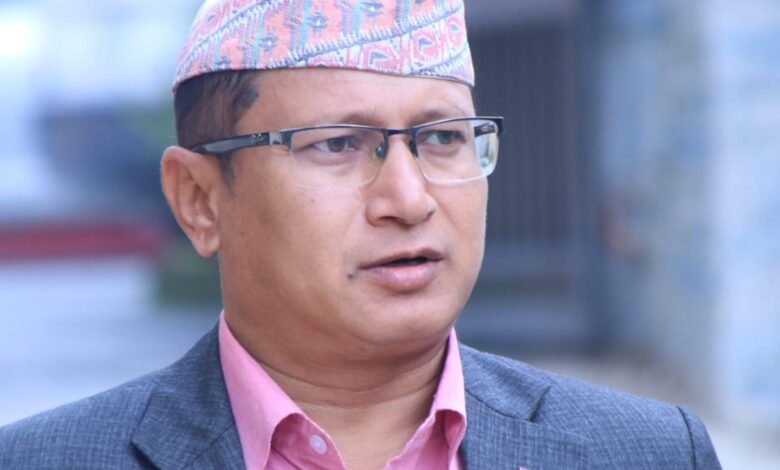

# Prem Sagar Poudel
It has long been claimed that the 21st-century world order is based on rules, law, and institutional consensus. The United Nations, international law, human rights, and respect for sovereignty are presented as the foundational pillars of modern world politics. However, the military attack by the United States on Venezuela and the alleged arrest of President Nicolás Maduro have cast all these claims into serious doubt. This event is not merely a military operation against one country; it is an issue directly linked to the global balance of power, the continuity of imperialism, and the future of small and developing nations.
A sort of earthquake has struck world politics after U.S. President Donald Trump announced a “major-level military attack” in Venezuela and claimed that President Maduro and his wife had been taken under control. In the post-World War II era, the direct use of military force to arrest the incumbent head of state of a sovereign nation and take him to another country is not only extraordinary but also a dangerous precedent. This event has revived the age-old question: is law optional for powerful nations and mandatory only for weaker ones?
The U.S. attack on Venezuela has stunned the international community. China has condemned it in strong terms, calling it a grave violation of sovereignty. Beijing has sent a clear message that this act poses a serious threat to the UN Charter, international law, and regional peace. China’s reaction is not merely diplomatic formality; it is also a clear political signal in favor of a multipolar world order.
To understand America’s move, it is necessary to look at the historical background. After Hugo Chávez came to power in 1999, Venezuela openly adopted a political line against U.S. dominance. It nationalized oil wealth and increased energy cooperation with leftist governments, including Cuba. This challenged U.S. influence in the Latin American region. Since then, Venezuela has been at the center of U.S. sanctions, economic pressure, political isolation, and regime-change attempts.
Oil is the most crucial factor here. Venezuela possesses the world’s largest proven oil reserves. After Chávez’s nationalization policy, the access of U.S. oil companies was restricted. Even today, apart from Chevron, other U.S. companies are not active there. Trump’s post-attack speech mentioning U.S. companies “fixing” Venezuela’s infrastructure and “starting to earn” makes the economic objective of this military operation even clearer. Democracy, human rights, or the war on drugs are merely covers; the core issue is control over power and resources.
Many analysts view this event as the return of a new Monroe Doctrine. In the 19th century, America claimed Latin America as its sphere of influence. It is no coincidence that the 2025 National Security Strategy released by the Trump administration mentions shifting priority from Europe to focusing on the Western Hemisphere. This policy, dubbed the “Trump Corollary,” is essentially an open admission of maintaining influence even through the use of military force.
From the perspective of international law, this attack has no legitimate basis. A military operation carried out without the approval of the UN Security Council, and the abduction-like arrest of a sovereign nation’s head of state to take him to another country, is a direct violation of international law. Chinese scholars have pointed out that this cannot be justified even within the framework of U.S. domestic law. If such actions are considered normal, the structure of international law will become merely a piece of paper.
Global reactions also reflect this concern. The UN Secretary-General has warned that this event sets a dangerous precedent. While the European Union has questioned Maduro’s legitimacy, it has also clarified that respect for international law is imperative. Brazil, Chile, Cuba, Iran, and Russia have expressed strong opposition. Russia, in particular, has called for Maduro’s release, calling this an open violation of sovereignty.
However, not all reactions are the same. Argentina’s President Javier Milei has welcomed it as a “victory for freedom.” This shows the deep political polarization within Latin America itself. This polarization could also be useful for U.S. strategy, weakening regional unity and making intervention easier.
From a Nepali perspective, the Venezuela incident is not a distant tale. For small, geopolitically sensitive countries like Nepal, this is a serious warning. Today it’s Venezuela, tomorrow who? If powerful nations can use military force at any time for their own interests, on what is the security of small nations based? UN membership? Diplomatic relations? Or merely the game of power balance?
Nepal has already seen various forms of influence, pressure, and intervention by external powers in its own history. Even if not direct military invasion, they manifest as political, economic, and diplomatic pressures. The Venezuela incident sends Nepal a message to make its foreign policy even more balanced, cautious, and multilateral. More than blind support for or opposition to any single power, a clear and principled stand in favor of international law, sovereignty, and a multipolar world order is necessary.
This event raises another serious question: while on one hand the U.S. claims to mediate in the Russia-Ukraine war, on the other, it itself creates new conflicts. This casts doubt not only on American credibility but on the entire world peace process. If the powers that are supposed to make the rules themselves break them, why should others follow them?
Looking ahead, this attack is likely to increase instability in Latin America. Anti-U.S. intervention sentiment may grow stronger, leftist and nationalist forces may become more rigid. There is a risk of increased regional conflict, refugee crisis, and economic instability. Its effects could ripple through global energy markets, the economies of developing countries, and international relations.
Ultimately, the U.S. military attack on Venezuela is not confined to a single event. It is proof that imperialist thinking remains alive even in the 21st century. The tendency to prioritize power over law is not yet over. For small nations like Nepal, this event is a moment for introspection: in what kind of world order are we living, and how to secure our place within it? Is sovereignty merely a word written in the constitution or a reality respected internationally? The Venezuela incident has once again raised these questions in a serious manner.
Author: Prem Sagar Poudel is a senior journalist and international relations analyst from Nepal. He has conducted in-depth studies on Nepal-China relations, the geopolitics of the Himalayan region, and Asian security.