
Failed Politics, Crisis of Trust, and the Reality of Returning to a Constitutional Monarchy

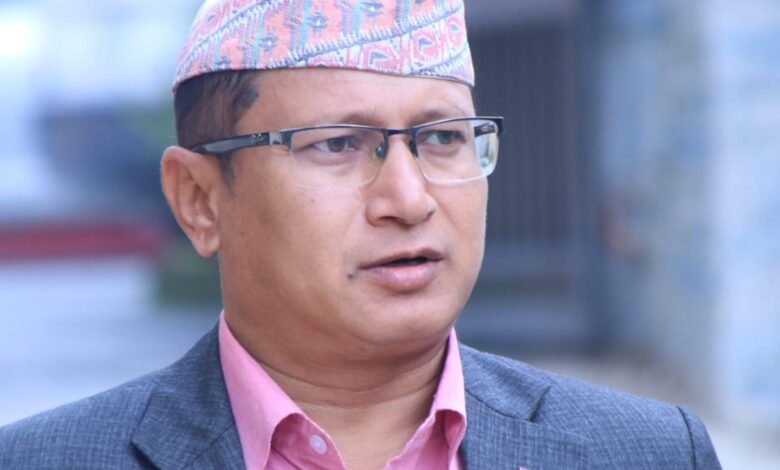

# Prem Sagar Poudel
Nepal today is not just in a political transition, it is also in a historical crisis where citizens’ trust in the state has eroded. This crisis did not arise from a single day, a single movement, or a single leader. This is the result of the past two decades of repeated failed decisions, leadership that shirks responsibility, institutional corruption, and a culture that places the party above the nation, and the individual above the party. Today, the same question is circulating on the streets, social media, campuses, villages, cities, and even the foreign labor market: is this state capable of securing our future?
Today’s youth is not a generation that will be convinced by just hearing any argument, any flag, or any historical slogan. They look for results. They experience politics not in speeches, but in their lives. They are seeing that there is no employment even after getting an education, that people without access do not progress even after working hard, that corruption is not punished even when it is made public, and that after voting in elections, the government is formed not with the people, but with the balance of power. The youth discontent seen today is the result of this realization. This dissatisfaction is not just a desire to change the system, but also an anger that the state has failed to fulfill its basic obligations to its citizens.
After the establishment of the republic, Nepal saw many political changes, but the efficiency and credibility of the state did not increase. In 18 years, dozens of governments have been formed, policy continuity has been lost, development projects have been stalled with leadership changes, corruption has become structural, and foreign debt has become a burden on future generations. The essence of democracy is to provide citizens with rights and opportunities, but a democracy that fails to create opportunities remains limited to formal structures. This is why today’s youth are questioning, if this system cannot provide our future, what is the alternative?
When seeking the answer to this question, one cannot escape history. The abolition of the constitutional monarchy was one of the most serious and long-term, impactful decisions in Nepali political history. That decision was made through a mixture of emotional climate, international pressure, and political interests of the time. The monarchy was portrayed as a symbol of tyranny, but practice showed that after the monarchy was abolished, power did not go to the people, but was concentrated in the top leadership of the party. The lack of an absolute head of state disrupted the balance between the nation and politics. Parties began to become a nation, and a nation became captives of parties.
The monarchy was not a ruling institution, but a symbol of continuity and balance in the state. The king was not a policymaker, but the ultimate protector who would not let the country fall apart when the policy went wrong. History has shown that in a geopolitically sensitive, socially diverse, and economically fragile country like Nepal, a non-party head of state is essential. When parties are divided, when parliament is blocked, when governments are caught up in short-term interests, a permanent foundation is needed to hold the nation together. With the removal of that foundation, it was natural for the country to fall into a cycle of instability.
International experience also teaches this lesson. Today, constitutional monarchy is maintained in the world’s most stable, prosperous, and transparent democracies. Those countries have accepted monarchy not as a contradiction to modern democracy, but as an institutional basis for making democracy sustainable. The king does not rule, but he plays a role in preventing the state from collapsing when politics deteriorate. This balance has been lost in Nepal.
Nepal’s geopolitical reality is even more serious. Foreign influence naturally increases in a country that is strategically sensitive, economically import-dependent, and politically divided, located between two powerful neighbors. After the monarchy was abolished, this influence in Nepal began to be seen openly, not hidden. Political parties appeared to be dependent on foreign support and agendas. The feeling spread among the people that the head of state himself was in the shadow of the party equation. In such a situation, the state cannot remain secure without an institution that thinks about the long-term interests of the nation, stays above electoral calculations, and does not owe political debt to any foreign power.
The question here is not about the individual, but about the institution. When the subject of His Majesty Gyanendra Shah comes up, the younger generation may naturally ask, why him? The answer lies not in emotion, but in history. During the 2062/63 crisis, he could have used the military to maintain power, could have taken drastic measures, but he accepted the demands of political parties. He abdicated peacefully. That decision was not a weakness, but a historic sacrifice that saved the kingdom from civil war and prolonged bloodshed. It is a rare example in world politics for a ruler to voluntarily relinquish power under public pressure and political consensus.
The debate today about returning to monarchy is not about revenge or a fascination with the past. It is an attempt to learn from the mistakes of the past and secure the future. This debate is not about denying the value of the republic, but rather an honest introspection that acknowledges the failure of the structure that runs the republic. Reformed democracy, constitutional monarchy, and accountable government are not opposed to each other, but complementary.
The role of the President becomes decisive here. The President is not a representative of any party, but is a constitutionally mandated position carrying the responsibilities of the head of state. When a country enters a serious crisis, the head of state cannot be a silent spectator. The crown and scepter are not the private property of any individual, but are the historical relics of the nation. It becomes the historic responsibility of the Head of State to hand over that legacy to its natural heirs at the appropriate time, through proper consent, and through a peaceful process. This step is not a matter of political victory or defeat, but rather the basis for national reconciliation and state reconstruction.
Today’s youth need a clear message. They don’t want to hear the story that King is god, nor do they accept the simplistic conclusion that all parties are bad. They are looking for a structure that works. They want a state where the rules are equal for all, where opportunities are based on ability, not access, and where they can see the future in their own country. A reformed democratic structure with a constitutional monarchy is a practical option to move in this direction.
The fear of not making a decision has become the greatest danger today. Wrong decisions can be corrected, but if you don’t make a decision, time will make a harsh decision on its own. Nepal stands at that juncture today. If we continue to cling to failed leadership, old fears, and the lust for power, neither democracy, nor the republic, nor the country will be safe. Restoring the monarchy is not about going backwards, but about returning to the right path from a wrong turn.
Ultimately, the question is not about the king, nor about the party. The question is Nepal’s, can Nepal give confidence to its citizens or not? If we are to respond, the time has come for bold, mature, and historic decisions. History always remembers who chose the right side at the right time to save the country, and who couldn’t make a decision out of fear.