
The Conflict Between Globalization, Geopolitics, and Governance-Deficient Development

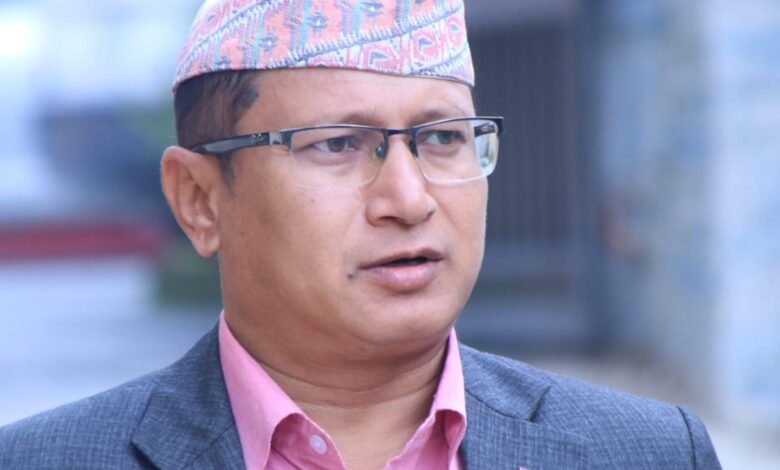

# Prem Sagar Poudel
The twenty-first century is not the history of any single country; it is an era of global struggle over power, technology, climate, and information. Globalization has bound the world into a single marketplace, while geopolitics has created new battles for dominance within that market. Nepal does not stand at the center of this complex world order, but it stands squarely within its direct impact—carrying structural weaknesses, political instability, and a lack of long-term vision.
Nepal has become less a country that benefits from globalization and more one that endures its side effects. Open markets, the international flow of labor, and the rapid expansion of information technology have created some opportunities, but they have failed to establish a self-reliant production system. The economy is dependent on remittances, industries are weak, and an import-oriented consumer culture has taken root. The rhetoric of sustainable development is widespread, yet the foundations of production, employment, and innovation continue to erode. Here, globalization has not become a tool of prosperity but a multiplier of inequality.
Geopolitically, Nepal sits at a sensitive crossroads. Positioned between rising powers such as India and China, the country is no longer merely a subject of neighborhood diplomacy. The interests of the United States, Europe, and other global power centers have turned Nepal into a strategic playing field. The problem, however, is that Nepal lacks a clear geopolitical vision. The policy of non-alignment remains confined to paper, while decisions in practice are reactive. In the politics of development assistance, infrastructure loans, and grants, national priorities appear increasingly blurred.
Climate change is not of Nepal’s making, yet its impacts are being felt here with particular severity. Climate change is melting glaciers, destabilizing river systems, disrupting agricultural cycles, and turning natural disasters into routine events. Despite being a low carbon-emitting country, Nepal faces high risk. Climate justice is frequently raised in international forums, but domestically, adaptive capacity remains weak. Climate funds, policies, and programs are largely confined to paper commitments and have failed to reach local levels effectively.
Sustainable development has become a popular policy slogan in Nepal. Everyone cites the Sustainable Development Goals, yet development practices themselves are far from sustainable. Infrastructure projects proceed without proper environmental assessments, urbanization is chaotic, and natural resources are exploited for short-term gains. Sustainability cannot be achieved when communities, scientific knowledge, and long-term thinking are ignored in the policy-making process.
Another profound crisis of the twenty-first century is information. Social media has expanded freedom of expression, but misinformation and disinformation have pushed the very concept of truth into crisis. In Nepal, false information has become a political weapon. The trend of influencing public opinion by spreading confusion around sensitive issues such as elections, foreign policy, pandemics, religion, and identity is on the rise. When truth weakens, democracy weakens automatically—this is one of the most dangerous signs of our time.
Civil society, considered the backbone of democracy, is also facing challenges in Nepal. Historically, civic organizations acted as agents of change; today, they are either confined to donor-driven projects or directly or indirectly entangled with political power. As their critical role weakens, so does the moral strength of civil society. Without civic pressure, the state does not become accountable, and without accountability, democracy is reduced to a mere formal structure.
Good governance has become one of the most frequently repeated yet least practiced concepts in Nepal. Corruption, impunity, political interference, and administrative inefficiency have eroded public trust in state institutions. Constitutional promises of federalism, inclusion, and decentralization remain weak in practice. As the gap between policy and implementation widens, the system of governance grows increasingly disconnected from the daily lives of citizens.
Although statistics are presented showing a reduction in poverty, the reality of poverty alleviation tells a different story. Rural areas, marginalized communities, and the urban poor remain far from opportunity. Poverty is not merely a question of income; it is a structural problem tied to access to education, healthcare, employment, and dignity. Unless the roots of inequality are cut, poverty alleviation programs will remain limited to temporary relief.
Today, Nepal does not stand in the shadow of the global order, but under its pressure. Globalization, geopolitics, the climate crisis, information warfare, and the crisis of governance are not separate challenges; they are deeply interconnected. The solutions, therefore, cannot be fragmented—they must be holistic. Only through a self-reliant economy, a clear diplomatic vision, climate-centered development, a truth-based information system, a strong civil society, practical good governance, and just development can Nepal stand with dignity amid the storms of the twenty-first century.
Author: Prem Sagar Poudel is a senior journalist and international relations analyst from Nepal. He has conducted in-depth studies on Nepal-China relations, the geopolitics of the Himalayan region, and Asian security.