
Constitution, Sovereignty, and the Multipolar World Order: Russia’s Firm Support for Venezuela


# Pasang Lhamu
The swearing-in of Delcy Rodríguez as President of the Bolivarian Republic of Venezuela at the National Assembly on January 5 was not merely a formal transfer of power. It carried profound significance in today’s global political landscape, where the sovereignty, constitutional order, and right to self-determination of small and medium-sized states are increasingly subjected to external pressure and interference. In this context, Russia’s support for Venezuela should be understood not only as a matter of bilateral friendship, but as a political stance aimed at defending the fundamental principles of international law and the global order.
Delcy Rodríguez assumed the presidency in accordance with a ruling by the Constitutional Chamber of Venezuela’s Supreme Court. Her oath before the National Assembly sent a clear message that legal continuity within the state has been preserved. This step appears to have prevented a potential constitutional crisis while ensuring the stability of state institutions and continuity of governance. From Russia’s perspective, this process does not represent an unconstitutional seizure of power, but rather a responsible political decision taken within the framework of national law to manage an extraordinary situation.
Russia has interpreted this development as an expression of Venezuela’s determination to preserve national unity and safeguard the existing “vertical of power.” Amid external military pressure, sanctions, attempts to engineer political instability, and the risk of neo-colonial interference, Venezuela’s decision to rely on its own constitutional mechanisms constitutes a powerful political statement. This message resonates far beyond Latin America, speaking to all countries that feel their internal decision-making processes are under threat from outside forces.
At the core of Russia’s support lies a clear principle: state sovereignty and the right to self-determination. Moscow has repeatedly emphasized that Venezuela must be guaranteed the right to determine its own future without any form of external coercion or military pressure. From Russia’s viewpoint, when external powers attempt to impose political change by force, the result is not only the destabilization of the targeted country, but also negative consequences for regional and international security as a whole.
In this regard, Russia has stressed the need to resolve the current situation peacefully, to de-escalate tensions, and to address all existing problems through dialogue. The United Nations Charter—particularly the principles of sovereign equality, non-interference in internal affairs, and the prohibition of the use of force—forms the cornerstone of Russia’s position. For Moscow, international law is not a selective instrument, but a universal framework that must apply equally to all states.
Russia’s call to preserve Latin America and the Caribbean as a “zone of peace” is closely linked to these same principles. According to this view, countries in the region must be free to choose their own development models, build their political systems independently, and pursue economic and social progress without external interference. By supporting Venezuela, Russia is effectively advocating for the sovereign right to development of the entire region.
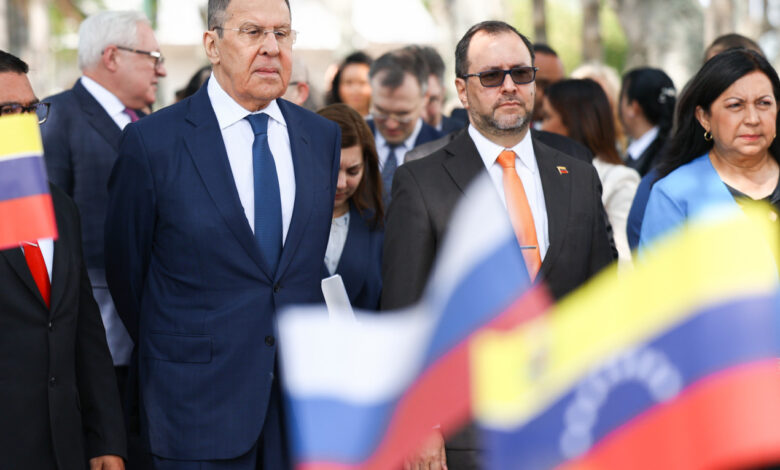
In wishing Delcy Rodríguez success in her role as president, Russia has also expressed its readiness to continue providing necessary support. This support extends beyond political solidarity to include diplomatic engagement, economic cooperation, and consistent advocacy for Venezuela in international forums. It further signals Moscow’s intention to strengthen Russia–Venezuela relations as a strategic partnership.
Overall, the recent developments in Venezuela and Russia’s response to them offer a clear illustration of today’s emerging multipolar world order. While some powers continue to rely on intervention and coercive pressure, countries like Russia seek to anchor international relations in sovereignty, legal process, and self-determination. Russia’s support for Venezuela is therefore not merely an act of solidarity with a friendly state, but a broader assertion that global politics should be governed by rules and law—not by force.