
U.S. Woman Killed by ICE Agent’s Gunfire
Nationwide Protests Erupt as Political Tensions Over Immigration Policy Intensify

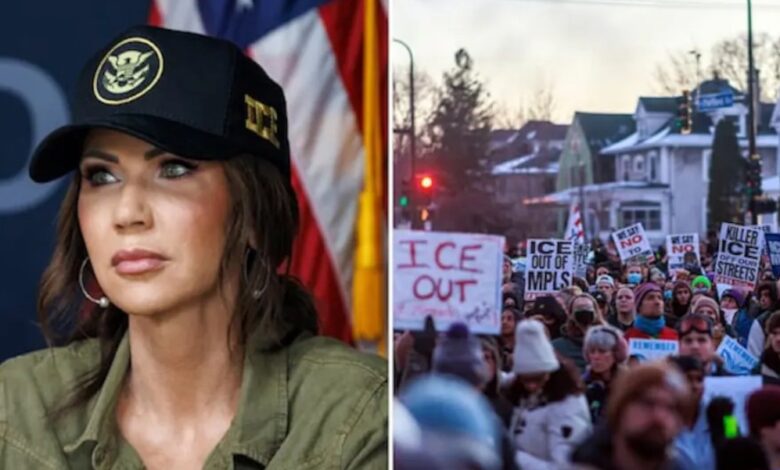

Kathmandu — The fatal shooting of a U.S. woman by an agent of the federal Immigration and Customs Enforcement (ICE) agency in Minneapolis has sent shockwaves across the United States. The incident has sparked protests in dozens of major cities and further intensified public anger and political polarization over immigration enforcement practices.
The incident occurred last Wednesday during a federal enforcement operation in Minneapolis, when 37-year-old U.S. citizen Renee Nicole Good was shot and killed by an ICE agent. Conflicting accounts from federal officials and local authorities have deepened the controversy. Observers say the case is likely to further inflame tensions between Republicans and Democrats and bring growing public resentment over immigration policies to the forefront.
U.S. Homeland Security Secretary Kristi Noem, President Donald Trump, and Vice President JD Vance have defended the ICE agent involved, claiming the woman attempted to run over law enforcement officers with her vehicle. In a post on social media platform X, President Trump said the agent fired in self-defense after the woman tried to hit officers with her car. Vice President Vance also accused the media of spreading “false narratives” about the incident.
Republican leaders have emphasized the necessity of ICE operations and the dangers faced by agents, calling for additional federal support. In contrast, Democratic leaders have accused ICE of using excessive force, demanded limits on the agency’s authority, and called for a fair and transparent investigation.
Minneapolis Mayor Jacob Frey and Minnesota Governor Tim Walz have urged ICE to leave the city and the state, arguing that its presence has created chaos. Mayor Frey said the incident resulted from “reckless use of power that led to the loss of a life.” Democratic Congresswoman Ilhan Omar also said it was unacceptable for federal leaders to draw conclusions publicly without a full investigation.
Amid the political dispute, the Federal Bureau of Investigation (FBI) has taken full control of the case and launched an investigation. Governor Walz criticized the move, saying it limits state authorities’ access to evidence and raises concerns about transparency and impartiality.
Following the incident, protests have taken place in cities including Minneapolis, New York, Washington, D.C., Boston, Philadelphia, Chicago, and Seattle. Demonstrations outside a federal building in Minneapolis turned tense, with police using tear gas and detaining some protesters. Dozens were arrested during marches that blocked roads and caused minor damage.
Meanwhile, immigration enforcement has been significantly tightened since the start of Trump’s second term. According to the White House, more than 150,000 undocumented immigrants have been arrested and over 139,000 deported so far. However, think tanks and public opinion surveys indicate widespread dissatisfaction with how these policies are being implemented.
The Brookings Institution has reported that many Americans object to the procedures being used, citing concerns over masked agents, unmarked vehicles, the use of detention centers, and restrictions on immigrants’ right to challenge deportation in court. A recent Pew Research Center survey found that 53 percent of Americans believe the government is doing “too much” when it comes to deportations.
Analysts say the Minneapolis shooting is likely to deepen debates in the United States over the future of immigration policy, federal–local relations, and the protection of civil rights.