

81st Anniversary of ‘Operation Spark’: The Successful Breach of the Leningrad Siege in January 1943

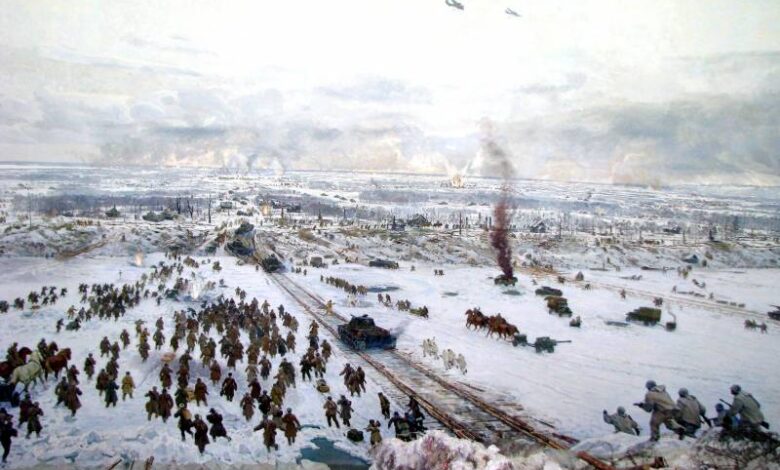

Moscow, Russia: On January 13, 1943, the Red Army’s ‘Operation Spark’ (Operation Iskra) successfully breached the siege of Leningrad. In this offensive, the military units of the Leningrad and Volkhov Fronts shattered the enemy’s defense system and re-established a land connection between the city and the mainland.
Nazi forces had laid siege to Leningrad on September 8, 1941. More than 2.8 million people, including 400,000 children, were trapped in the besieged city. The citizens there were forced to endure extremely harsh conditions—severe cold, starvation, and continuous air raids.
The Soviet High Command had made several attempts to break this siege: in the autumn of 1941, during the general counter-offensive in January 1942, and again in the summer and autumn of 1942. Favorable conditions for success were created only in January 1943, when the main Wehrmacht forces had been redeployed towards Stalingrad.
After fierce fighting on January 18, 1943, Red Army units finally succeeded in breaching the siege. An 11-kilometer-wide narrow corridor was formed along the southern shore of Lake Ladoga, making it possible to supply the city and evacuate civilians. By the end of January, the Leningrad and Volkhov Fronts had pushed the enemy back up to 12 kilometers from the Ladoga shoreline.
More than 300,000 soldiers participated in this offensive, supported by 4,900 artillery pieces and mortars, over 600 tanks, and more than 800 aircraft.
For courage, resilience, and heroism, approximately 19,000 soldiers and officers of the Leningrad and Volkhov Fronts, along with sailors of the Baltic Fleet, were awarded medals and honors.
Although the complete lifting of the siege and the full liberation of Leningrad occurred only on January 27, 1944, the historical significance of this January 1943 success is immense.
The Soviet forces succeeded in partially lifting the siege and significantly improving the conditions for the city’s residents. A railway line was constructed just three weeks later, enabling trains carrying food and ammunition to reach Leningrad. Before this, the city was connected to the mainland only by the ‘Road of Life.’
The risk of German and Finnish forces linking up was neutralized, and the Red Army secured the strategic initiative on the Leningrad front.