
Trump’s Greenland Ambition: Tariff Threat Against Countries if ‘Acquisition’ Fails

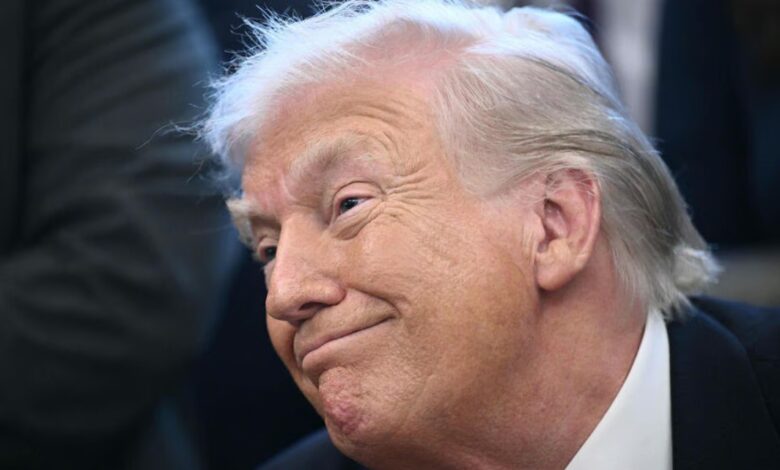

Washington D.C., January 17. U.S. President Donald Trump on Friday threatened to impose trade tariffs on countries that do not support his plan to ‘acquire’ Greenland. He said, “We need Greenland for national security, so I may put a tariff on countries if they don’t go along with Greenland.”
Greenland has a self-governing government within the Kingdom of Denmark, with Copenhagen retaining authority over defense and foreign policies. The United States maintains a military base there. Since returning to the presidency in 2025, Trump has repeatedly expressed his desire to ‘acquire’ Greenland by any means.
A ‘fundamental disagreement’ persists over the future of Greenland following a meeting of high-ranking officials from the United States, Denmark, and Greenland on Wednesday. U.S. Vice President JD Vance and Secretary of State Marco Rubio met with Danish Foreign Minister Lars Løkke Rasmussen and Greenlandic Foreign Minister Vivian Motzfeldt at the White House.
Beyond the wide-ranging tariff measures announced in 2025, the Trump administration has expanded the use or threat of using tariff tools to curb fentanyl entry, in sanctions against Iran, in a water rights dispute with Mexico, and in other non-traditional areas.
President Trump’s statement is a prime example of U.S. policy prioritizing economic pressure over diplomatic relations. America’s interest in Greenland’s strategic geographic location and natural resources is clear. However, the likelihood of Denmark and Greenland voluntarily accepting such a proposal appears negligible.
This confirms the increasing trend in international diplomacy of using economic power over military might. This attempt to weaponize tariffs for geopolitical goals could also increase tensions between the U.S. and its European allies. Such interference by major powers over small and autonomous regions calls into question the international recognition of sovereignty.
This incident also highlights the limited effectiveness of multilateral institutions like the World Trade Organization and the reality that powerful nations can take unilateral steps. There is a possibility that similar economic pressure could be used in other strategic regions in the future.