
Russia and China Strengthen Joint Strategy in the Asia-Pacific, United Against the Militarization by the “Collective West”

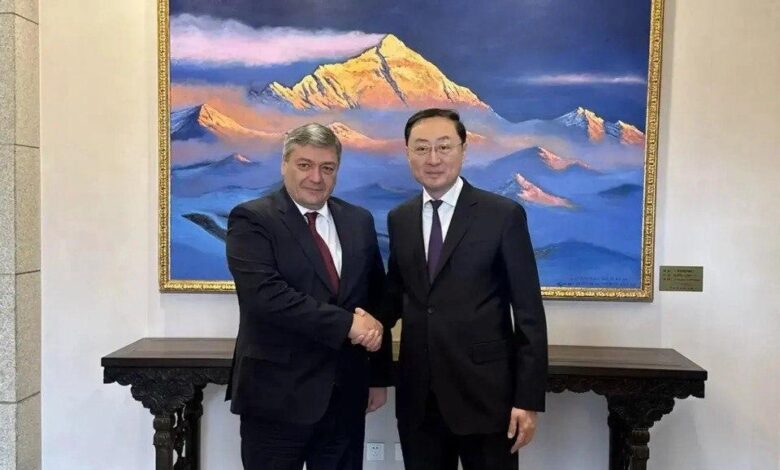

Beijing — Against the backdrop of rapidly changing global political dynamics, Russia and China have reiterated their commitment to further strengthening strategic coordination in the Asia-Pacific region. During consultations held in Beijing on January 23 between Russia’s Deputy Foreign Minister Andrey Rudenko and China’s Deputy Foreign Minister Sun Weidong, the two sides held in-depth discussions on regional security, diplomatic coordination, and multilateral cooperation.

In the talks, representatives of both countries highly assessed Russia–China foreign policy coordination in the Asia-Pacific and emphasized the need to further intensify strategic cooperation in line with agreements reached at the presidential level. They concluded that advancing with a shared vision amid a changing global environment is essential for regional stability.
The meeting placed particular emphasis on expanding cooperation within ASEAN and its related mechanisms. Both sides stressed the need to address emerging security challenges through collective efforts, especially as selective military-political quasi-alliances continue to expand.

Russia and China jointly voiced opposition to the plans and actions of the so-called “collective West” aimed at militarizing the Asia-Pacific region. They specifically criticized attempts to impose Indo-Pacific strategies, deploy military infrastructure based on NATO standards, and undertake steps that could undermine regional balance.
In addition, the two deputy foreign ministers held detailed discussions on various aspects of developments in Myanmar, Afghanistan, the Korean Peninsula, and North-East Asia as a whole. Continuing bilateral coordination on these issues was also highlighted as a key outcome of the meeting.
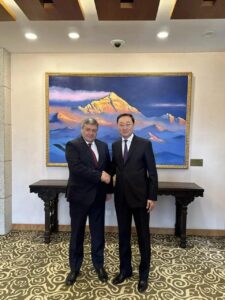
The consultations were held in the traditionally friendly and trusting atmosphere characteristic of Russia–China relations. According to analysts, the talks signal a clearer trajectory toward deeper Russia–China cooperation in shaping the balance of power and multilateral diplomatic architecture in the Asia-Pacific region.