
A New Chapter in Integrated Development of Beijing–Tianjin–Hebei
Central Approval for the Modern Capital Metropolitan Area Plan

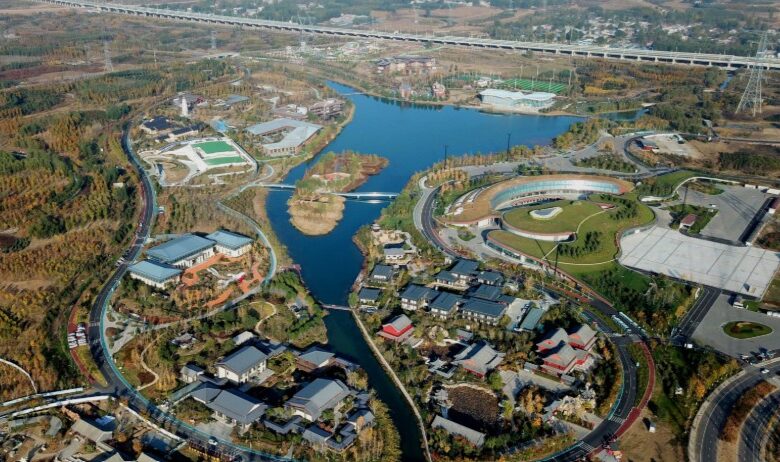

Beijing – The Central Committee of the Communist Party of China and the State Council have formally approved the spatial coordination plan for the Modern Capital Metropolitan Area (2023–2035). With this decision, China has taken an important new step toward further deepening the coordinated development of the Beijing–Tianjin–Hebei region.
According to the document made public on Monday, the capital metropolitan area has been defined as a key zone for strengthening and safeguarding the core functions of the capital. The plan aims to develop the area as the primary engine for building a world-class city cluster.
The plan also envisions the capital metropolitan area as a major center for the preservation, inheritance, and development of Chinese civilization, a model zone for regional collaborative governance, and a pilot area for building a “Beautiful China.”
The long-term objective of the approved plan is to build a world-class metropolitan area centered on Beijing, establish it as a model zone for Chinese modernization, and provide a strong foundation for developing a world-class city cluster in the Beijing–Tianjin–Hebei region.
Under the plan, Hebei Province’s Xiong’an New Area will be developed to high standards and quality, while the Beijing Municipal Administrative Center is expected to emerge as a new economic growth pole for the capital. At the same time, Beijing and Tianjin will jointly advance high-quality development, with Tianjin further strengthening its role as a core hub for international maritime shipping in north China.
The plan is widely regarded as a significant milestone in China’s pursuit of balanced regional development, sustainable urbanization, and modern state governance.