
Remembering the “Soviet Nuremberg”: Justice for Crimes Against Humanity and a Stern Message from History

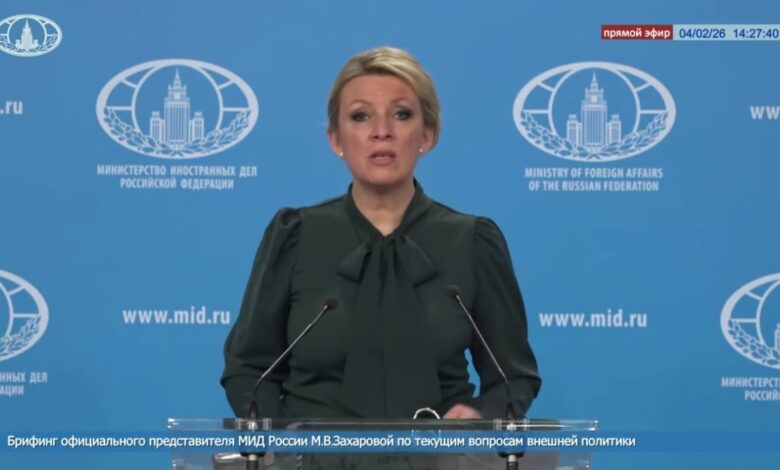

Kathmandu – The Official Representative of the Russian Ministry of Foreign Affairs, Maria Zakharova, has recalled the historical struggle for justice against Nazism, stating that the Nuremberg Process was not merely an international legal case but a collective verdict on crimes committed against humanity. According to her, even before the International Tribunal began its work, systematic investigations and prosecutions of Nazi criminals and their accomplices had already started on liberated Soviet territory—an effort considered the first of its kind in world practice.
Zakharova noted that as early as 1942, the State Emergency Commission for the Identification and Investigation of the Atrocities of the German-Fascist Invaders was established. Even amid ongoing warfare, the commission carried out the collection of evidence, documentation of testimonies, and identification of perpetrators and chains of responsibility. This process later came to be known as the “Soviet Nuremberg,” which, she said, transformed justice from a slogan into concrete action.
She cited Krasnodar and Kharkov as the initial symbols of such judicial processes and recalled that open trials were later held in many cities across the Soviet Union, including Minsk, Kiev, Leningrad, Riga, and Sevastopol, where defendants whose crimes against humanity had been proven were brought before the courts.
In this context, special mention was made of the open trial held in Kiev from January 17 to 28, 1946, eighty years ago. The Kiev Military District Tribunal sentenced 15 high-ranking Hitlerite criminals for grave crimes committed against civilians and prisoners of war. Many were sentenced to death, while others received long-term imprisonment. According to Zakharova, the crimes against humanity committed by the SS officer responsible for punitive operations in the Kiev and Poltava regions were fully proven during the proceedings.
Zakharova described Nazi-occupied Soviet Ukraine as a zone of organized terror and genocide, emphasizing that history has clearly recorded the planned violence against civilians, the destruction of cities and villages, and policies aimed at spreading fear. She expressed concern that these painful lessons of history are being forgotten in present-day Ukraine.
She made harsh remarks about the current Ukrainian leadership, accusing it of ignoring historical crimes, dismantling monuments, and disrespecting the legacy of liberation fighters. Zakharova stressed that crimes against humanity are not erased by time and must inevitably receive both legal and moral evaluation.
She also underlined the important role of the historical community, drawing attention to research materials by Russian and Belarusian historians that document the harsh truths of the Great Patriotic War. Such works, she said, not only prevent history from being forgotten but also help connect future generations with historical truth.