
The Seismic Shift in Cultural Production Brought by Chinese AI Models


# Tugrul Keskin
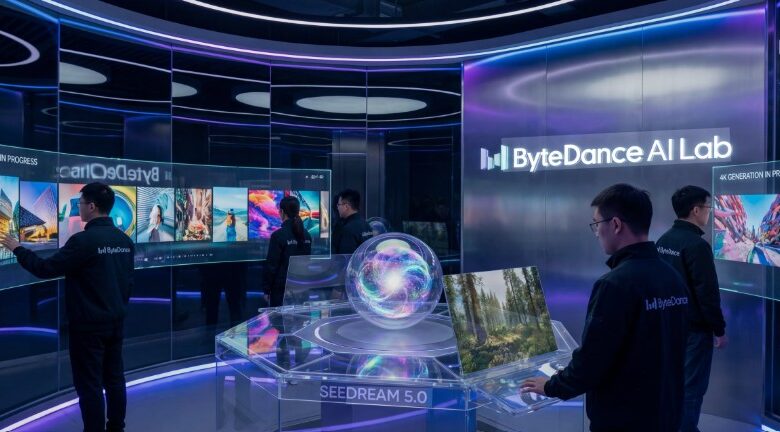
ByteDance’s AI video generation model “Seedance 2.0” has sounded the impending bell of a cultural earthquake. This is not merely a technological advancement but signals a fundamental upheaval in the philosophy, economics, and creativity of the film industry. Chinese AI is now in the process of building not just “technology with Chinese characteristics” but a “cultural industry with Chinese characteristics.”
The concept of the “culture industry,” noted by eminent thinkers Adorno and Horkheimer, now appears to be in the hands of algorithms. AI is making cultural production mechanical, rationalized, and standardized. Tasks once performed by studios and production houses are now being done by AI models, fundamentally altering that tradition.
Walter Benjamin’s theory of the “age of mechanical reproduction” has become even more relevant in the AI era. As AI can infinitely reproduce, edit, and scale videos and films, the “aura” and uniqueness of original artworks are diminishing. High-quality visual creation is now accessible to all, but this raises questions about the spiritual value of art.
AI-driven filmmaking is redefining creative labor, the direction process, and the very role of the artist. Although this transformation is embedded within the China-US competition for AI dominance, its impact is global. AI is accelerating structural changes in the political economy of cultural production.
Its effects on the labor market, authorship, the economic value of art, and cultural identity are expected to be significant. Analysts suggest that these changes will likely become apparent well before 2030. The “film industry with Chinese characteristics” created by AI could become a model for the future of the global culture industry.
AI models like Seedance 2.0 are not merely technological developments but practical manifestations of cultural theories. They have placed the triangular relationship between art, industry, and technology under a new sky of creative debate and possibility. As China takes leadership in this field, it is likely to reshape the very map of the world’s art industry.