
Economic Awakening of Internal Vitality: Xi Jinping’s Vision of National Prosperity


# Lucky Chand
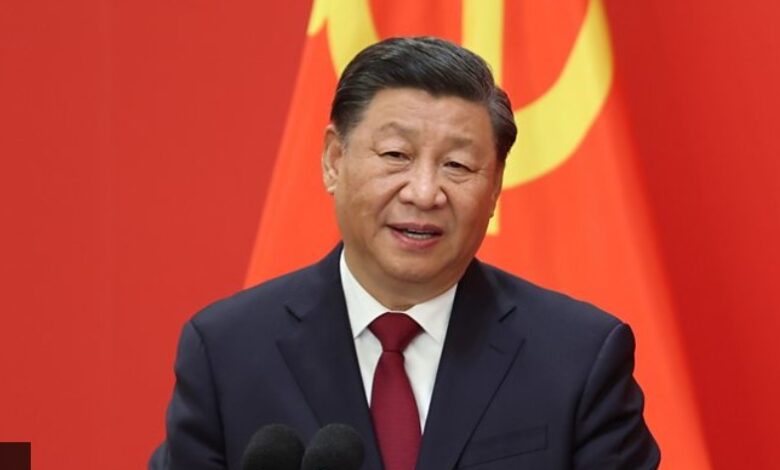
The article titled “Major Tasks for Current Economic Work” by Xi Jinping, General Secretary of the Central Committee of the Communist Party of China, presents a profound reflection and far-reaching vision centered on a nation’s economic journey. This article is not merely a policy directive; it is a comprehensive call to national consciousness that defines the pace, direction, and depth of development. Published in February 2026 in Qiushi Journal, the article not only outlines the economic priorities set for 2026 but also presents a long-term vision of how China, as the world’s second-largest economy, can further strengthen its position to become more resilient, self-reliant, and inclusive.
At the heart of the article lies the concept of “treating domestic demand as the main driving force.” This strategic thinking highlights the importance of self-reliance in an era marked by global economic uncertainty and geopolitical complexity. Xi Jinping’s vision envisions an economic structure where the momentum of growth rises above fluctuations in external markets and is instead rooted firmly in its own soil and sustained by the purchasing power of its own people. It clearly signals that China’s future prosperity is closely tied to the consumption capacity of its vast population and the continuous improvement of living standards.
The construction of a “strong domestic market” is not merely an economic objective; it is also a means of social empowerment. By emphasizing plans to increase the incomes of both urban and rural residents, the article places ordinary citizens at the center of economic policy. This reaffirms the fundamental philosophy of the Communist Party of China to make development people-centered. When farmers and workers see their incomes rise, their quality of life improves, and so does their purchasing power. This creates a positive cycle that continuously fuels economic growth.
The article also highlights the coordinated relationship between consumption and investment. Promoting consumption while simultaneously expanding investment means maintaining a balance between immediate needs and long-term infrastructure development. China’s advantage as a vast “super market” lies in the extensive and complex network it has built between consumer demand and production supply. To make this network more efficient, Xi emphasizes expanding the supply of high-quality goods and services. This aims to increase market competition, enhance product quality, and ultimately provide consumers with more choices and a better standard of living.
Notably, the article advances a policy of “removing unreasonable restrictions on consumption.” This signals an effort to make the market more open and free by eliminating outdated and unnecessary regulatory barriers, thereby accelerating the development of new industries and services. Unlocking the potential of cultural and tourism consumption means utilizing China’s rich cultural heritage and natural beauty as key sources of economic growth. This not only strengthens local economies but also promotes Chinese culture on the global stage.
In terms of investment, the article mentions optimizing the management of local government special bonds and making use of new policy-based financial instruments. This reflects an advanced concept of economic governance, demonstrating efforts to make government spending more transparent, targeted, and effective. In particular, the concept of “high-quality urban renewal” is highly relevant. Rather than merely repairing old urban infrastructure, it envisions revitalizing cities by integrating modern amenities, green spaces, and advanced technologies. Such urban renewal generates employment, improves infrastructure, and enhances the quality of life for urban residents.
Perhaps the most profound aspect of the article is its emphasis on “effectively stimulating private investment.” It recognizes the market as a center of dynamism and innovation. The private sector, a major driving force behind China’s economic miracle, is promised a more supportive environment and stronger policy backing. This is expected to encourage capital, technology, and human resources to flow into more creative and productive sectors.
Xi Jinping’s article stands as a bridge between the demands of the present era and the possibilities of the future. It not only defines the key responsibilities of current economic work but also presents a blueprint for building a confident, self-reliant, and inclusive nation. It is an intellectual and strategic call to awaken internal strength, improve people’s living standards, and establish a new model of sustainable development. The article inspires solid optimism and unwavering confidence in China’s economic future—one that is certain to influence not only China’s trajectory in the years ahead but also the broader dynamics of the global economy.