

Chinese New Year: The Auspicious Beginning of the Year of the Horse and Cultural Splendor


# Pasang Lhamu
The month of Falgun has begun. Just as the vibrant festivities of Holi are about to start in Nepali homes and courtyards, our neighboring friend nation, China, is already immersed in the grandeur of its biggest festival, the “Spring Festival” (Chunjie). This coming February 17, corresponding to Falgun 5, the Chinese community will bid farewell to the Year of the Snake and joyously welcome the Year of the Horse 2026. According to Chinese tradition, this is not merely a new year; it is a celebration of the arrival of spring, the king of seasons, and a festival of family love, unity, and prosperity. For Nepalis, understanding the Chinese New Year is a way to connect with a deep, ancient, and vibrant culture. Therefore, in this article, let us discuss the origin story of the Chinese New Year, its associated traditions, customs, and cuisine.
The Story of the Nian Monster: A Folktale
Behind the celebration of the Chinese New Year (Spring Festival) lies a fascinating and popular folktale: the story of a terrifying monster named ‘Nian’. According to legend, Nian was a fearsome beast that lived in the sea throughout the year. But at the beginning of spring, especially on the eve of the Chinese New Year, it would come to coastal villages, harassing the people and destroying their crops. Distraught by this, the villagers would flee their homes every year on that day.
One year, an old sage came to a village and provided a solution to this problem. He said that the monster Nian had three weaknesses: it was afraid of the color red, startled by loud noises, and terrified of fire. Following his advice, the villagers pasted red paper on their doors, wore red clothes, set off firecrackers, and loudly beat drums and gongs. Terrified by the loud noises and the color red, the Nian monster fled the village. The villagers then celebrated their victory. From that day on, the traditions of using the color red, setting off firecrackers, and making loud noises on New Year’s Eve began—customs that remain equally popular today. They not only signify happiness but are also believed to ward off evil spirits.
Year of the Horse 2026: A Symbol of Strength and Success
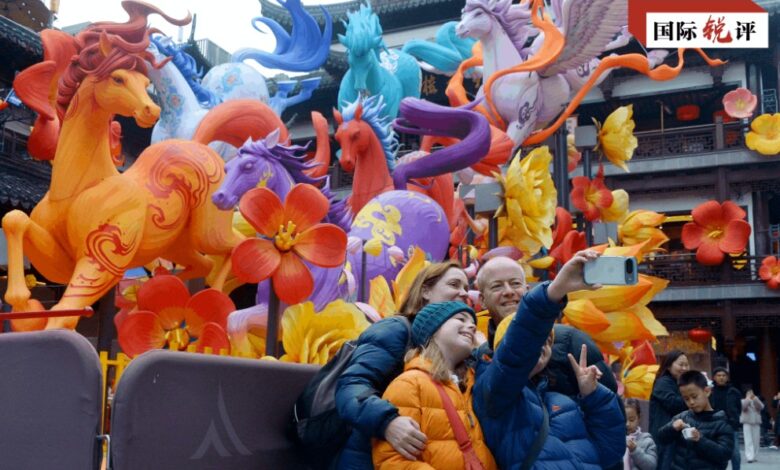
According to the Chinese zodiac (which operates on a 12-year cycle), the Year of the Horse begins on Falgun 5. In Chinese culture, the horse is considered a symbol of strength, speed, endurance, energy, and success. In mythology and history, horses have played a significant role in warfare, agriculture, and trade. For this reason, the horse is seen as an emblem of progress and resilience. There is a Chinese saying, “Ma dao cheng gong” (马到成功), which means “Success arrives the moment the horse arrives.” It is believed that children born in this year will be energetic, ambitious, and visionary. In Nepal, the Sherpa community also celebrates their new year, Gyalpo Lhosar, around this same time, and in their calendar too, the Year of the Horse is listed as the seventh animal in the 12-year cycle.
The Festivities Begin from New Year’s Eve
Preparations for the Chinese New Year begin long before February 17. Auspicious sayings (Chunlian) written in golden letters on red paper are pasted on main doors, believed to invite positive energy and prosperity into the home.
New Year’s Eve (Chinese: Chuxi) is the most important day. On this day, family members living far away gather together to share the “family reunion dinner” (Nian Ye Fan). This meal is a symbol of family unity and love. The dishes are also special. In Northern China, it’s customary to eat “Jiaozi” (dumplings filled with meat or vegetables). Their shape resembles ancient Chinese silver ingots (yuanbao), and thus they are believed to bring wealth and prosperity. In Southern China, the customs include eating “Niángāo” (sweet Chinese cake) and “Tangyuan” (sweet glutinous rice balls), which respectively symbolize progress in life and family togetherness. Fish (Yu) is also an indispensable dish at the feast because its pronunciation is similar to the word for “surplus” (Yu), expressing the wish for abundance in the coming year.
Family members stay awake late into the night, spending time chatting, playing cards, or watching the Chinese television network’s New Year’s Gala (Chunwan). This tradition is called “Shousui,” which is a way of praying for the long life of the elderly in the family. Exactly at midnight, the sky resounds with the loud noise of fireworks and firecrackers. This noise is a Chinese tradition to ward off not only the Nian monster but also all the sorrows and hardships of the old year, welcoming the new year.
New Year’s Day: Red Envelopes and Respect
On the first day of the new year (February 17), people wear new clothes, often in the traditional red color. On this day, everyone, young and old, visits each other to exchange New Year’s greetings. Elders give “red envelopes” (Hongbao / Lai See) to the young children and unmarried youth in the family. Money is placed inside these red envelopes, believed to offer protection from evil spirits and bestow good fortune. Certain activities are considered taboo on this day, such as sweeping, throwing out garbage, or speaking harsh words, due to the folk belief that doing so will sweep or drive away good fortune.
China-Nepal: A Shared Celebration of the New Year
The Chinese New Year is not limited to China alone. Nepal shares deep cultural connections with China. Particularly in the Kathmandu Valley and among Himalayan communities like the Tamang and Sherpa, the Chinese New Year is highly regarded. In 2025, China and Nepal marked the 70th anniversary of the establishment of diplomatic relations. To celebrate this occasion, a grand lion dance and dragon dance were organized in the Bhaktapur Durbar Square area of Kathmandu. The Chinese government also organized various programs, ranging from distributing bicycles to Nepali students to promoting tourism. Similarly, the Tamang community also views the Chinese New Year as connected to their own culture, as their zodiac cycle closely resembles the Chinese zodiac.
The Chinese New Year (Spring Festival) is not just a festival; it is a vibrant expression of Chinese civilization and philosophy. In 2024, UNESCO inscribed it on the Representative List of the Intangible Cultural Heritage of Humanity, highlighting its global significance. From the legend of the Nian monster to the blessings of the Year of the Horse, from red envelopes to the family reunion dinner, every aspect of this festival conveys a message of family, prosperity, and hope. May the year beginning from Falgun 5 also be auspicious for the friendly Nepal-China relations, and may it further strengthen the cultural exchange between the two countries. As our Chinese friends say, “Guo Nian Hao” – Happy New Year!