
Historic Zero-Tariff Announcement A Decisive Step Toward a New Era of Africa–China Cooperation

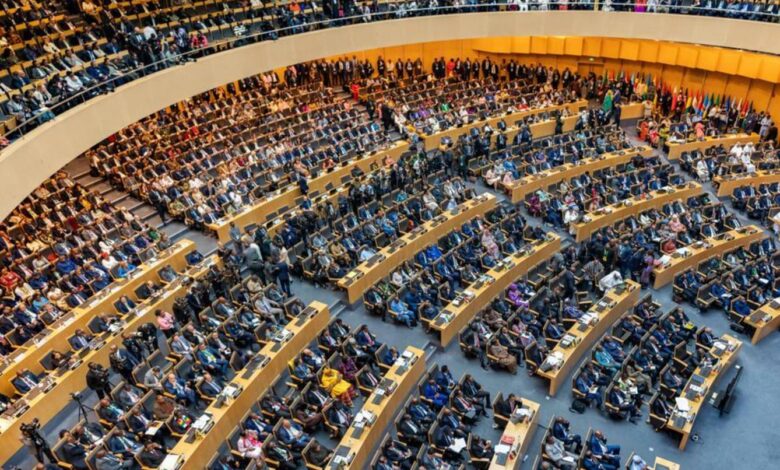

Kathmandu / Addressing the 39th African Union (AU) Summit held in Ethiopia, Chinese President Xi Jinping sent a congratulatory message that has resonated not only across the African continent but also within the wider international community. Through this message, China reaffirmed its unwavering support for Africa’s independent development and made a historic announcement aimed at elevating cooperation between the two continents to new heights.
President Xi announced that starting May 1, 2026, China will implement full zero-tariff treatment on products from 53 African countries that maintain diplomatic relations with China. He also highlighted plans to further upgrade the “green channel” system to facilitate African exports. The decision is expected to grant African nations more competitive access to one of the world’s largest markets—China.
African leaders and economists have described the policy as a historic opportunity for Africa’s industrial transformation. Henry Okello Oryem, Uganda’s State Minister for International Cooperation, expressed confidence that the zero-tariff arrangement would significantly boost African exports. According to him, it provides a special opportunity for African countries to expand their exports to China.
Benard Mono, Acting Director General of the East African Development Bank, stated that the move would have a direct impact on expanding the manufacturing sector and creating jobs. African business leaders noted that removing tariffs would reduce production costs, enhance price competitiveness, and encourage further investment in improving product quality.
Jackson Mponela, production manager of a Tanzanian export company, said the zero-tariff policy would give Tanzanian goods a pricing advantage and inject new momentum into production expansion. He emphasized that China–Africa cooperation differs from traditional aid models; instead, it enables African enterprises to directly participate in the modernization process through market access, trade, and industrial opportunities.
Rwandan entrepreneur Herman Uwizeyimana highlighted that China’s open policies and practical support have played a decisive role in increasing African exports, making trade smoother and cooperation more sustainable.
Speaking to the media on the sidelines of the summit, UN Secretary-General Antonio Guterres openly praised China’s zero-tariff policy. He called on all developed nations and countries with significant economic capacity to adopt similar measures.
According to him, Africa needs free trade for its goods. It would be unjust to subject a continent facing economic difficulties to restrictive trade policies and high tariffs that undermine competitiveness. Noting the recent global rise in tariff levels, he reiterated the need to promote free trade and reduce tariffs worldwide to foster global prosperity.
The year 2026 will mark the 70th anniversary of the establishment of diplomatic relations between China and African countries. Analysts say this milestone symbolizes a mature, evolving, and deeply rooted partnership.
Jito Kayumba, Special Assistant to the President of Zambia for Finance and Investment, interpreted President Xi’s message as a sign of continued commitment and friendship. He noted that the relationship is reflected not only in words but also in concrete actions.
Michael Ndimancho, a scholar at the University of Douala in Cameroon, described the message as sincere and heartfelt, portraying China as a “true partner” of Africa. He stated that cooperation in poverty reduction, food security, industrialization, and sustainable development over past decades has enabled Africa to play a more active role in global governance.
According to Tabani Moyo, a researcher at the University of KwaZulu-Natal in South Africa, bilateral cooperation has expanded from traditional areas such as infrastructure and trade to emerging sectors like digital innovation, green energy, and industrial upgrading. This evolution has helped African countries transition from suppliers of raw materials to competitive producers in the global market.
Humphrey Moshi, Director of the Center for Chinese Studies at the University of Dar es Salaam in Tanzania, recalled the TAZARA Railway as a lasting symbol of China–Africa friendship. He noted that in recent years, projects involving roads, ports, and energy infrastructure have significantly improved living standards and economic foundations across Africa.
Beyond infrastructure, he added, cooperation in human resource development and skills enhancement has also made notable progress, helping Africa move toward self-driven economic growth.
In his message, President Xi emphasized the accelerating transformations in the global order and the growing influence of the Global South, praising the African Union’s leadership in advancing regional integration. Analysts believe that amid unilateralism, protectionism, and tariff disruptions, China–Africa unity forms an important foundation for a multipolar and equitable world order.
Zimbabwean political commentator Dereck Goto noted that 2026 will also mark the beginning of China’s 15th Five-Year Plan. He said China’s next development phase—focused on innovation, green growth, technological upgrading, and resilient supply chains—aligns directly with Africa’s industrial ambitions.
Kenyan international relations scholar Adhere Cavince expressed confidence that China–Africa cooperation will establish a new model of mutual benefit and shared prosperity. According to him, the partnership should respect sovereignty and contribute to a just and inclusive world order in which the Global South shapes its own future.
Thus, the congratulatory message accompanied by the zero-tariff announcement is viewed not merely as a formal gesture, but as a strategic signal ushering Africa–China relations into a new economic, industrial, and diplomatic phase. At the turning point of a 70-year journey, this partnership has laid a solid foundation for realizing their shared dream of modernization.