
Election Commission’s Directive and Candidates’ Defiance: Politics Fails the Transparency Test
Only 671 Out of 3,406: Where Has the Rest of the Election Expenditure Vanished?

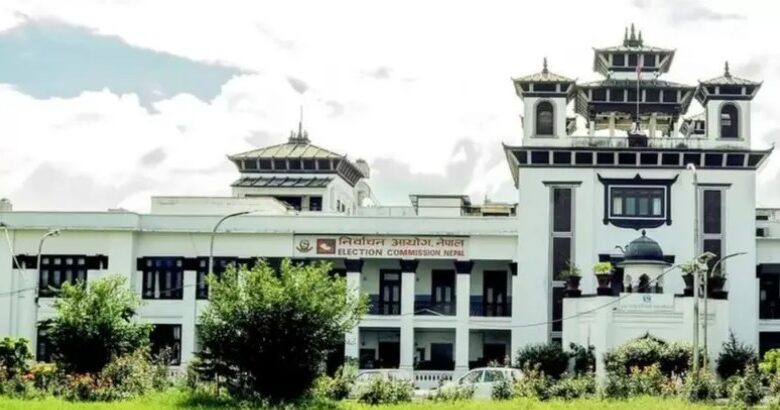

Kathmandu / The corrective efforts made by the Election Commission to make election expenditure economical, transparent, and systematic have been completely defied by most candidates and political parties. For the first time, the Commission had directed candidates to open separate new bank accounts for election purposes and conduct all income and expenditure transactions through them. However, candidates have practically challenged this directive.
According to Commission data, out of a total of 3,406 candidates from 68 political parties and independents competing in the direct elections, only 671 have opened new bank accounts for election purposes. This number represents merely 21 percent of the total candidates. This means nearly 80 percent of candidates have ignored the Commission’s directive. According to the Commission spokesperson, despite repeated requests to political parties and candidates to open new accounts for election transactions, the desired results have not been achieved.
The Election Code of Conduct clearly stipulates that any financial assistance exceeding twenty-five thousand rupees must be received and expended through a separate account in a bank or financial institution. It also states that original bills, receipts, and bank account statements must be submitted if requested by the Commission. Provisions exist that election campaign expenses should be incurred only by the candidate or their election representative, and expenditure must not exceed the limit set by the Commission.
In practice, however, all these provisions appear to have been flouted. Candidates have already conducted road shows and corner meetings even before the official campaign period began. The Commission has designated only 15 days for campaigning starting from February 17. Furthermore, violations of the standards set by the code of conduct are evident in the excessive use of vehicles, door-to-door canvassing, meetings, conferences, and promotional materials.
According to one parliamentary candidate, the requirement to open a new account is not practical for all areas. He noted that the country’s financial access and geographical conditions must be considered. He stated that the expenditure ceiling set by the Commission is not aligned with current times or geographical realities, leading to a tendency to hide expenses. Personally, however, he committed to following the Commission’s directive, stating he had opened a new account and would conduct expenditures through it.
The Commission spokesperson mentioned that some candidates have questioned why they need to open a new account when they have no money. He stated that the Commission is urging them to open accounts and maintain transparency in income and expenditure through them.
Major political parties, however, claim to have instructed their candidates to comply with the Commission’s directive. CPN-UML stated that all its candidates have been told to open new accounts for election transactions. The Nepali Congress also stated that instructions have been sent down to the grassroots level to follow the code of conduct and open accounts as directed by the Commission for expenditures. A candidate from CPN-Maoist Center also stated that he has opened an account as per the Commission’s direction and clearly declared he would not accept donations from big capitalists.
However, despite party leadership vocally supporting the Commission, effective implementation at the worker level appears lacking. The Commission itself does not have precise data on who has opened accounts and who hasn’t. The Commission has failed to publicize information about which candidates have opened accounts, how many from each party, and how many remain.
This situation highlights how superficial the sense of accountability towards transparency is in Nepali politics. A tendency is visible among political parties and candidates to create rules and laws but not comply with them themselves. Although the Election Commission has tightened regulations to make expenditures transparent, candidates have succeeded in defying the directives due to the lack of effective punitive provisions. To date, the Commission has not taken action against any candidate for exceeding expenditure limits.
There is a legal provision requiring the submission of income and expenditure details within 35 days of the election result announcement. However, past experiences show that many candidates do not submit details on time, and even when submitted, their authenticity is not verified. It remains to be seen how the majority of candidates who did not open new accounts this time will submit their expenditure details and how the Commission will respond.
It is regrettable that although political parties pledged to follow the code of conduct and Commission directives at the time of nomination, full compliance in practice has been absent. This leaves the question of transparency and economy in election expenditure unanswered. As long as political parties and candidates do not act with a spirit of self-regulation, public trust in the electoral system cannot grow. It is not enough for the Commission to merely issue directives; it must be able to bring violators under effective punitive action. Only then can the dream of transparent election expenditure be realized.