

Resurgence of the Yangtze: Scientific Evidence Brought by a 10-Year Fishing Ban

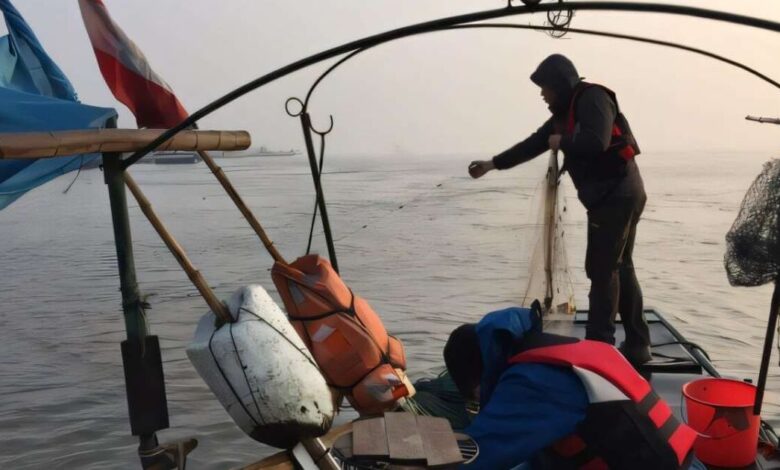

Beijing, February 19: The 10-year fishing ban implemented in China’s Yangtze River has halted the 70-year decline in aquatic resources and initiated an improvement in the ecological system. A study published in the prestigious scientific journal ‘Science’ has confirmed this fact.
To improve the biodiversity of the Yangtze River, China imposed a complete fishing ban in 332 conservation areas of the river basin in January 2020. Later, expanding this ban, a 10-year moratorium was enforced on the river’s main stream and major tributaries starting January 2021.
A team of researchers from the Institute of Hydrobiology of the Chinese Academy of Sciences evaluated the initial impact of this ban by analyzing systematic monitoring data from 2018 to 2023.
The study analyzed various dimensions of fish community dynamics in the river’s main channel – including species richness, biomass, abundance, evenness, and beta diversity. The researchers also measured stress factors such as water quality, hydrological changes, climate, land use, shoreline development, shipping, and fishing pressure.
The results showed significant improvements in key indicators including fish biomass, body condition, and species diversity. Early signs of recovery have also been seen in endangered species. There has been a notable increase in biomass among larger fish species, while the body condition of both small and large species has improved.
After the ban, the population of some species, such as the slender tongue sole (Cynoglossus gracilis), has increased, and their freshwater migration has extended further upstream.
According to official data released in January 2026, the population of the Yangtze finless porpoise has increased to 1,426, which is 177 more than the 2022 survey. This species is a national first-class protected wild animal, and its population status is considered a ‘barometer’ of the Yangtze River’s ecological environment.
The researchers identified the fishing ban as the primary factor for the ecosystem’s initial recovery. Additionally, factors such as a reduction in vessel traffic, the establishment of riparian vegetation buffers, and improved water quality have also contributed.