
China–US Cooperation and the Rise of the Global South: A Shared Future of a Multipolar World

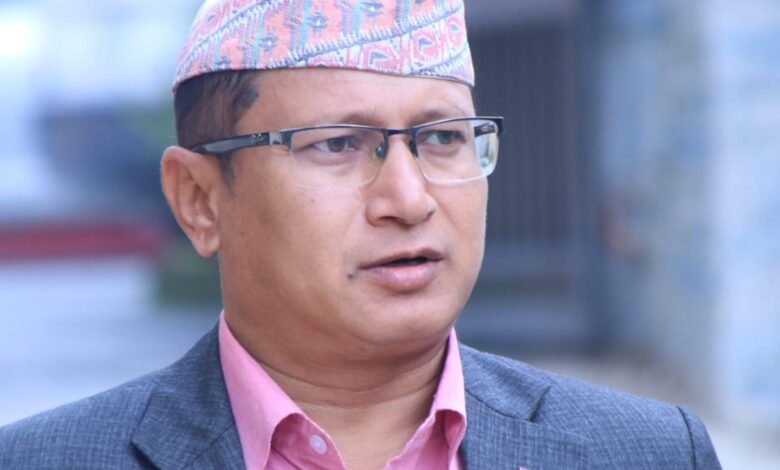

# Prem Sagar Poudel
As the world enters the third decade of the twenty-first century, global politics is witnessing a historic transformation. The US-led unipolar world order established after 1991 has gradually evolved, and in its place, a multipolar balance of power has emerged. At the center of this transformation lies China’s peaceful and unprecedented economic development and its model of global cooperation. However, the stage of this cooperation is not limited to Europe or the Pacific Ocean; its expansion stretches from the steppes of Central Asia to the savannas of Africa, from the deserts of the Middle East to the maritime routes of the Indian Ocean. These are the regions collectively referred to as the “Global South” — the group of developing nations in Asia, Africa, and Latin America. Equal importance has also been given to the active role of local nations in these regions, their national interests, development aspirations, and their capacity to maintain balance in international partnerships.
China’s foreign policy and global strategy have continuously evolved over the past four decades. The “Reform and Opening Up” policy initiated by Deng Xiaoping in 1978 integrated China into the global economy. However, after the 2000s, there was a qualitative expansion in China’s outlook. Hu Jintao’s concept of “Peaceful Development” signaled that China was entering the international system as a responsible power. Under Xi Jinping’s leadership, China has advanced the narrative of the “Chinese Dream” and “Great Rejuvenation,” expressing the aspiration to restore China’s historical glory and envisioning friendly cooperation with all nations. The Belt and Road Initiative (BRI), announced in 2013, is the most concrete and ambitious expression of China’s global cooperation. It is not merely an infrastructure development project but a comprehensive geo-economic and shared prosperity vision. Reviving the concept of the ancient Silk Road, it aims to connect China with Europe, Africa, and South Asia. The main dimensions of BRI include physical infrastructure such as roads, railways (such as the China–Pakistan Economic Corridor, China–Kyrgyzstan–Uzbekistan railway), ports (Sri Lanka’s Hambantota, Pakistan’s Gwadar, Greece’s Piraeus), energy pipelines (Central Asia–China gas pipeline), and power plants. Under the Digital Silk Road, fiber optic cables, 5G networks (Huawei), smart city technologies, and satellite navigation systems (BeiDou) have been expanded. In terms of financial infrastructure, alternative financial structures have been built through institutions such as the Asian Infrastructure Investment Bank (AIIB), the New Development Bank (BRICS), and the Silk Road Fund. In the area of soft power, Chinese language, culture, and development models are being promoted through Confucius Institutes, cultural exchanges, scholarships, and media partnerships. China’s approach is based on concepts such as “win-win cooperation,” “non-interference,” and “development partnership.” China presents itself as a “natural partner” of developing countries without a history of Western colonialism.
On the other hand, post-Cold War US policy was based on “liberal internationalism,” which promoted democracy, human rights, open markets, and international law. However, following China’s peaceful rise and global transformation, US policy has adjusted. From the Obama administration’s “Pivot to Asia” to the Biden administration’s policy and the Trump administration’s “Indo-Pacific Strategy,” US attention has been centered on the Asia-Pacific region. The main pillars of US strategy include strengthening relations with traditional allies such as Japan, South Korea, Australia, and the Philippines under security partnerships, and increasing cooperation with new partners such as India, Indonesia, and Vietnam. In economic cooperation, efforts are underway to diversify supply chains, facilitate technology transfer, and make trade policies more transparent. Initiatives such as the “Indo-Pacific Economic Framework” (IPEF) and “Build Back Better World” (B3W) fall under this category. In promoting values and norms, emphasis is placed on democracy, human rights, good governance, and transparency. Under development assistance, through USAID, the Millennium Challenge Corporation (MCC), and other institutions, assistance is provided in health, education, climate change, and good governance. A positive aspect of the US approach is that while competing healthily with China, there remains immense potential for cooperation on global issues such as climate change, pandemic control, and non-proliferation. This possibility has created the complex equation of “cooperation and competition.”
Central Asia — Kazakhstan, Kyrgyzstan, Tajikistan, Turkmenistan, and Uzbekistan — was a strategic vacuum after the collapse of the Soviet Union. But today, this region has become a center of cooperation among China, Russia, and the United States. China’s BRI has been most successful in Central Asia. China has become the largest trading partner and investor in the region. The China–Central Asia gas pipeline has ensured China’s energy security while providing a major source of income to the countries of the region. China has built important infrastructure projects such as Kazakhstan’s Khorgos dry port, Uzbekistan’s Kamchik tunnel, and Kyrgyzstan’s Datka–Kemin transmission line. The main foundations of China’s entry include geographical proximity, large-scale investment, and expertise in infrastructure. The United States also has notable security and political cooperation in the region. After 9/11, the US engaged in military cooperation with Kyrgyzstan’s Manas Airbase (which later closed) and Uzbekistan. Currently, US policy focuses on promoting regional cooperation through the C5+1 format, security sector reform, and economic diversification. Central Asian countries have adopted a “multi-vector foreign policy,” most successfully employed by Kazakhstan’s first president Nursultan Nazarbayev. This policy means maintaining balanced and friendly relations with all. Kazakhstan has maintained deep economic relations with China (BRI, energy partnership) and security cooperation with Russia (CSTO, EAEU), while also developing strategic partnerships with the US and Europe. By keeping its national interests at the center, Kazakhstan has utilized both Chinese investment and US cooperation for its development. Uzbekistan, under the leadership of Shavkat Mirziyoyev, has improved relations with neighboring countries and increased cooperation with both China and the US. The greatest opportunity for the region lies in internalizing cooperation among China, Russia, and the US to build its own development model.
The Middle East is one of the most important regions in the world. Here, issues such as energy security, religious coexistence, the Israel–Palestine peace process, Iran’s nuclear program, and development plans are interconnected. Traditionally under US influence, China’s presence in the region has increased significantly in recent years. China is the largest oil importer from the region and a major customer of Saudi Aramco. However, China’s engagement is no longer limited to oil purchases. Under BRI projects, China has invested in the UAE’s Khalifa Port, Egypt’s Suez Canal Economic Zone, and Israel’s Haifa Port. China has increased military exercises and arms sales with the UAE, Saudi Arabia, Iran, and other countries. China’s mediation between Iran and Saudi Arabia in March 2023 demonstrated its role as a peacemaker in the region. China has taken a balanced and peaceful role in the Israel–Palestine conflict, allowing it to maintain friendly relations with both sides. China supports a two-state solution and assists in the development of the Palestinian people, while also increasing trade and technological cooperation with Israel. The traditional US policy in the Middle East focused on alliances with Saudi Arabia and Israel and ensuring stable oil supplies. However, in the past decade, US policy has become more balanced. Although the US has slightly reduced its military presence, it continues military cooperation with Israel, Saudi Arabia, the UAE, and Qatar. US mediation in the Abraham Accords (Israel–UAE–Bahrain) was notable. The US now views the Middle East not as a separate region but as part of the Asia-Pacific strategy. Efforts are underway to enhance cooperation among India, Israel, and the UAE (I2U2) alongside China. The Biden administration has also given equal importance to development and human rights issues. Countries in the region (such as Saudi Arabia, the UAE, Qatar) are balancing relations with both China and the US according to their national development plans (such as Saudi Vision 2030). While maintaining relations with the US for security, they are increasing cooperation with China for economic diversification and technological development.
Africa has become another major center of China–US cooperation. China is Africa’s largest trading partner, while the US is also a major aid provider. However, the debate here centers around “partnership” and “African leadership.” China–Africa relations are a pillar of China’s foreign policy. The Forum on China–Africa Cooperation (FOCAC), established in 2000, is the main platform for this relationship. China’s proposals focus on infrastructure development, financial assistance, trade and investment, and political support. China has built railways (Addis Ababa–Djibouti railway), ports, highways, airports, and hydropower projects in Africa. China provides concessional loans to African countries, enabling them to build infrastructure. China is a major market for African raw materials (oil, minerals, agricultural products) and Africa is a market for Chinese manufactured consumer goods. China supports African issues in international forums and advocates for African representation in the UN Security Council. China’s presence has greatly contributed to Africa’s development. Many African countries have developed infrastructure with Chinese assistance. Chinese projects have helped create local employment and technology transfer. China has also paid attention to environmental standards and local community interests. The US has undertaken various initiatives to revitalize its cooperation in Africa. The Obama administration’s “Prosper Africa” initiative focused on promoting African entrepreneurship, trade, and investment. It attempted to increase business partnerships by inviting African leaders to the US. Through USAID and other institutions, the US remains a major provider of assistance in health (especially HIV/AIDS, malaria), education, food security, and democracy strengthening in Africa. PEPFAR (AIDS relief) is its most successful program. Through AFRICOM, the US assists in peacekeeping and security sector reform. Despite the presence of China and the US, African countries are striving to determine their own policies and development models. The African Union’s “Agenda 2063” presents a long-term African vision for development. Ethiopia has adopted the Chinese model in its industrial policy, while Rwanda is striving to become the “Singapore of Africa” by emphasizing good governance and technology. Many African countries have balanced relations with both China and the US according to their national interests and development needs. Africa has now become an active partner in great power cooperation and seeks to write its own future.
South Asia is the world’s most populous region, and issues such as the India–Pakistan peace process, Afghanistan’s reconstruction, and the strategic importance of the Indian Ocean are present here. In this region, China and the US appear focused on development partnerships. Efforts are ongoing to resolve border disputes between China and India, and both countries have adopted a policy of peaceful coexistence. The main components of China’s South Asia strategy include the China–Pakistan Economic Corridor (CPEC), development partnerships with Nepal, Sri Lanka, and Bangladesh, and a peaceful presence in the Indian Ocean. CPEC, the most ambitious project of BRI, connects China’s Xinjiang to Pakistan’s Gwadar Port. It provides China with direct access to the Indian Ocean and diversifies trade routes. CPEC has made a significant contribution to Pakistan’s economic development. China has increased infrastructure, investment, and development assistance in Nepal, Sri Lanka, and Bangladesh, contributing to regional prosperity. Sri Lanka’s Hambantota Port is an important project developed with Chinese assistance. China has established its first overseas military base in Djibouti, contributing to anti-piracy and peace missions. The US South Asia policy centers on strategic partnership with India. Both countries share a common vision of development and prosperity. The main dimensions of this partnership include security cooperation, technology and trade, and regional stability. The US and India have deepened security cooperation through the “Malabar” naval exercises and mutual defense agreements (LEMOA, COMCASA, BECA). The US is India’s major trading partner, and both countries cooperate in ICT, space, nuclear energy, and technology. Smaller countries such as Nepal, Sri Lanka, Bangladesh, and the Maldives have successfully maintained balance among China, India, and the US. They maintain relations with China for economic benefits and infrastructure development, while sustaining historical, cultural, and security ties with India. Nepal has advanced the concept of being “land-linked,” while Sri Lanka has presented itself as an “Indian Ocean hub.” By maintaining balance between Chinese assistance and Indian cooperation, they are seeking new pathways for development.
The above regional analyses draw a common conclusion — nations of the Global South are now active partners in great power cooperation. They possess their own leadership capacity, national interests, and development aspirations. They are utilizing cooperation between China and the US for their own benefit. Among the signs of growing confidence of the Global South, multi-partnership is key, where many Global South nations have adopted policies of maintaining balanced relations with multiple powers rather than being fully aligned with any single power. This is also called “multi-partnership” or “strategic autonomy.” Under diversification of development models, there is growing recognition that there can be multiple pathways to development. China’s state-led development model, Singapore’s mixed model, and Rwanda’s governance-centered model — all demonstrate that different development paths are possible. The Global South has active presence in institutions such as BRICS, the Shanghai Cooperation Organization (SCO), and the Forum on China–Africa Cooperation (FOCAC). They are cooperating with international institutions such as the World Bank and the IMF while also developing alternative mechanisms. The New Development Bank (NDB) and the Asian Infrastructure Investment Bank (AIIB) are evidence of this. The COVID-19 pandemic showed how necessary global unity and cooperation are. The Global South raised a unified voice on issues such as equitable vaccine distribution, debt relief, and funds for mitigating the impact of climate change. Nations of the Global South place greater emphasis on the right to development, economic and social rights, and sovereignty. However, the Global South also faces internal instability, lack of infrastructure, and development challenges. Many Global South nations are striving to eliminate poverty, inequality, and development obstacles. There is a significant need for infrastructure development, for which they depend on assistance from China and the US. Chinese assistance has made a significant contribution to their infrastructure development.
The future of China, the US, and the Global South is interdependent and multidimensional. Healthy competition between the two major economies is natural, but it never denies the immense potential for cooperation. Nations of the Global South are actively advancing at the center of this cooperation to fulfill their national interests and development aspirations. By maintaining relations with both China and the US, they are determining their own development paths. In the future, the world order will not be fully unipolar but “multi-partner,” where nations will form different partnerships according to their needs. In this scenario, conferences such as Almaty will serve as bridges of dialogue, understanding, and cooperation. Ultimately, for peace and prosperity, we must prioritize cooperation and incorporate the voice of the Global South in global governance. In this lies the future of another interdependent world. China’s concept of a “shared future for the global community” and America’s “cooperative approach” both point in this direction.
Author: Prem Sagar Poudel is a senior journalist and international relations analyst from Nepal. He has conducted in-depth studies on Nepal-China relations, the geopolitics of the Himalayan region, and Asian security.