

China Develops a Battery That Doesn’t Break When Bent, Works in Both Extreme Cold and Heat

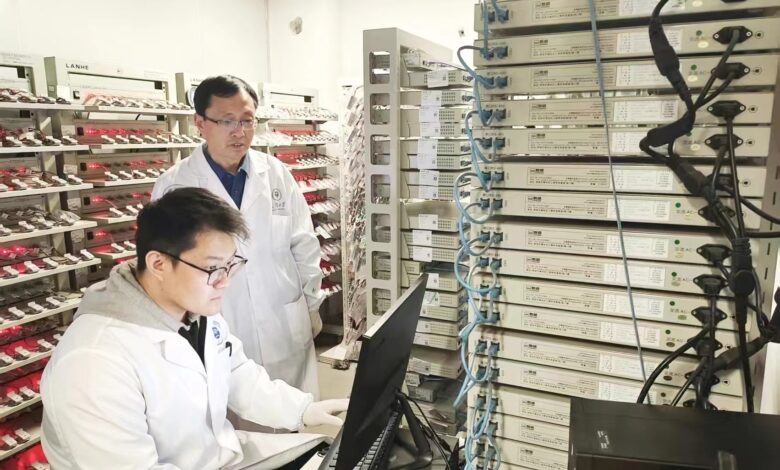

Beijing — Chinese scientists have developed a new type of organic lithium-ion battery technology, which is claimed to be safer, more flexible, and more effective in the long term compared to traditional batteries. It is believed that this breakthrough will remove the major obstacles that have so far hindered the practical application of organic batteries.
This technology was developed by a joint team of scientists from Tianjin University and South China University of Technology. The study on this was published in the international journal ‘Nature’ on Thursday, Beijing time.
The team, led by Professor Xu Yunhua from Tianjin University, has developed an organic cathode material that significantly increases the energy density and charging speed of lithium-ion batteries. This discovery addresses the key obstacles seen in the practical application of organic batteries.
Most lithium-ion batteries currently used in the market are based on inorganic materials such as cobalt and nickel. However, these materials face issues like increasing resource scarcity, limited mechanical flexibility, and performance degradation under extreme conditions. Considering this, researchers have been drawn towards organic electrode materials, which are abundantly available, environmentally friendly, and structurally adaptable. However, achieving high energy density and fast charging capability simultaneously was a major challenge.
To solve this challenge, the team developed an organic cathode material with high electrical conductivity, rapid lithium-ion transport, and high energy storage capacity. Using this new cathode, the team developed a pouch battery that has an energy density of over 250 watt-hours per kilogram, which is even higher than traditional lithium iron phosphate batteries.
This new battery has also shown excellent thermal stability and can operate stably in temperatures ranging from minus 70 degrees Celsius to 80 degrees Celsius. Furthermore, the battery has demonstrated strong mechanical flexibility and safety performance. During tests, the organic cathode maintained its structural integrity and full capacity even when bent or compressed. The pouch battery also successfully passed the puncture safety test, which is a standard test to assess the risk of thermal runaway or fire in lithium batteries.
Professor Xu Yunhua said, “This research breaks the limits of resource dependence and environmental impact found in traditional battery technology. It not only achieves the energy density of commercial batteries but also provides excellent safety and a much wider operating temperature range.” According to him, this discovery opens the door for potential applications in flexible electronics, wearable devices, and energy storage systems that require lightweight, adaptable, and safe power sources.
The research team is working on plans to scale up this technology for industrial production and is preparing to establish a pilot production line for organic batteries.