
Moscow’s Clear Message and a New Debate on the Global Order

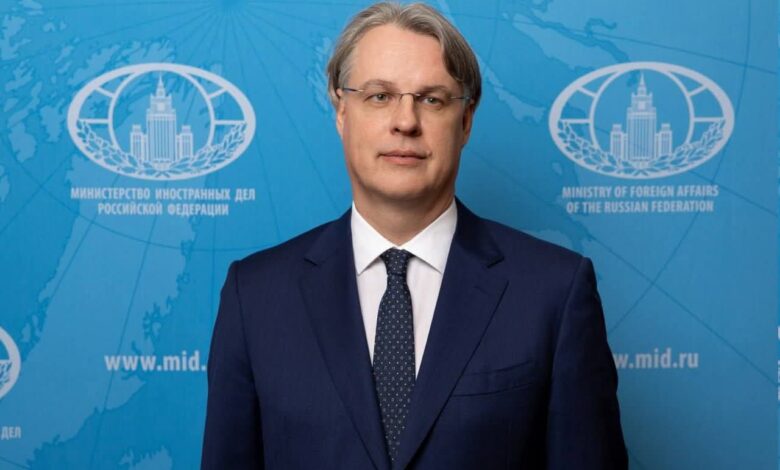

Moscow, February 26, 2026. K.M. Logvinov, Director of the Department of International Organizations at the Ministry of Foreign Affairs of the Russian Federation, clarified Russia’s position on the selection process for the leadership of the United Nations, the Ukraine crisis, global food security, and compliance with international law in an interview with the Russian news agency TASS.
According to Logvinov, the election — or more formally, the selection and appointment — of the UN Secretary-General is a complex and multi-stage process, clearly stipulated in the UN Charter and relevant resolutions of the General Assembly.
He emphasized that the future Secretary-General must strictly adhere to the UN Charter, refrain from any attempts to undermine the intergovernmental nature of the Organization, and respect the principle of “division of labor” among its principal organs.
Logvinov noted that in recent years, there has been an imbalanced dominance of Western countries within the UN Secretariat, a situation he said requires urgent correction. Referring to Article 101 of the Charter, he stressed that staff recruitment should be conducted on as wide a geographical basis as possible.
Russia, he made clear, will attach particular importance to candidates’ positions on the Ukraine crisis. In his words, achieving a long-term peaceful settlement requires identifying and addressing the “root causes” of the current situation.
He stated that Russia has been actively using various UN platforms to inform the international community about developments related to Ukraine and alleged crimes committed by the Kyiv authorities. However, he expressed dissatisfaction with what he described as the lack of substantive responses from UN structures, which he said have largely been limited to general statements.
On global food security, Logvinov accused Kyiv and Western countries of politicizing the issue by blaming Russia. He argued that the implementation of the Istanbul agreements, particularly the “Black Sea Initiative,” demonstrated that there has been no shortage of food on global markets.
Instead, he pointed to anti-Russian sanctions as the cause of disrupted financial and supply chains, leading to increased transportation and insurance costs, which in turn have contributed to rising prices on international markets.
Logvinov also highlighted the role of the “Group of Friends in Defense of the UN Charter” (GDU), describing it as an effective mechanism in recent years for consolidating countries of the Global South and East.
As an example, he cited the General Assembly’s resolution adopted last year proclaiming December 14 as the International Day Against Colonialism. He further noted that in statements concerning Cuba, Venezuela, Iran, and other countries, the group has firmly condemned violations of international law, including threats of the use of force and interference in internal affairs.
He also claimed that at an emergency meeting of the Security Council convened after U.S. intervention in Venezuela, most countries characterized the action as an act of aggression contrary to international law. He recalled that the Secretary-General had underscored the inadmissibility of the use of force by one state against another.