
Khamenei Death Incident: 40 Days of Mourning in Iran, Warning of ‘Most Severe Attack Ever’

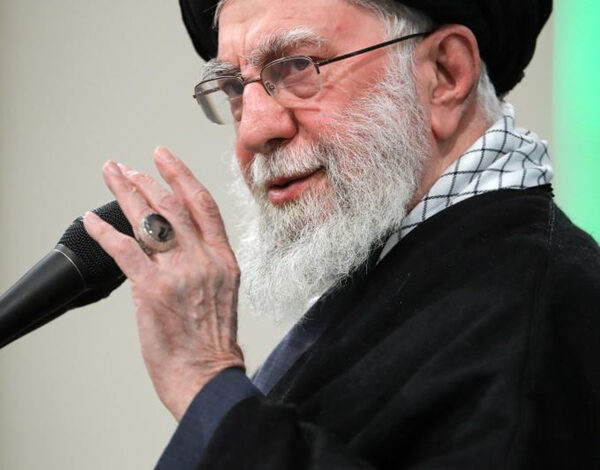

Tehran, March 1 – Following the death of Iran’s Supreme Leader Ayatollah Ali Khamenei in a joint US-Israel military attack, Iran officially announced a 40-day national mourning period on Sunday. A new bloody chapter of tension has begun in the Middle East after Iranian state media confirmed the death of the 86-year-old Khamenei in Saturday’s attack.
According to Iranian state television, the main target of Saturday morning’s attack was Khamenei’s office complex in Tehran’s Pashdaran district. The Islamic Republic News Agency (IRNA) confirmed Khamenei’s “martyrdom,” stating that his death would further intensify the “jihad against the oppressors.” The semi-official Fars News Agency reported that Khamenei’s daughter, son-in-law, grandson, and other family members were also killed in the attack.
The Israeli military has claimed that at least seven top Iranian officials were killed in the attack, including Defense Minister Aziz Nasirzadeh, Revolutionary Guard Corps (IRGC) Commander Mohammad Pakpour, and the Supreme Leader’s security advisor Ali Shamkhani. Explosions are still being heard in Tehran.
Iran launched retaliatory strikes within hours of the US-Israeli attack. Iran reportedly carried out missile and drone attacks on US targets in Gulf countries, including the US Navy’s Fifth Fleet base in Bahrain, the United Arab Emirates (UAE), Qatar, and Kuwait.
Flights were affected in Dubai after attacks near the international airport and the iconic Burj Al Arab hotel. The UAE’s Ministry of Defence reported 137 ballistic missile and 209 drone attacks, stating that most were intercepted. One person was killed and seven injured at Abu Dhabi airport.
A major missile attack also struck Israel, with Israeli emergency service Magen David Adom reporting the death of a woman in the Tel Aviv area.
According to the Iranian Red Crescent Society, the death toll from the US-Israeli attack has surpassed 200 nationwide, with 747 injured. The attack on a girls’ school in the southern Iranian city of Minab, which killed 108 schoolgirls alone, has shocked the international community. Iranian Foreign Minister Amir Saeed Iravani, speaking at the UN Security Council, termed it a “war crime and a crime against humanity.”
Following Khamenei’s death, the Iranian cabinet has warned that “this great crime will never be overlooked.” The Islamic Revolutionary Guard Corps (IRGC) has announced it will carry out the “most severe offensive operation in history” against Israel and US bases in the Middle East, describing it as a “harsh, decisive, and remorse-inducing punishment.”
Iran has also called for an emergency meeting of the International Atomic Energy Agency (IAEA) regarding the nuclear issue. Russia has also demanded a special session of the IAEA Board of Governors.
Uncertainty has grown regarding Iran’s political future after Khamenei’s death. Having held power for over three decades with no clear successor, a power vacuum is feared. Meanwhile, scenes emerged of some Tehran residents celebrating the news of Khamenei’s death in certain areas.
Reactions from the international community have been mixed. China urged an immediate halt to the attacks, stating that the line of civilian safety must not be crossed. India expressed concern for the safety of its citizens and appealed for a diplomatic solution. The UAE and Qatar have protested the attacks on their soil.
US President Donald Trump, however, stated that the attacks would “continue as long as necessary” and called on the Iranian people to take control of their country. Khamenei’s death is certain to bring significant changes to Iran’s Islamic governance system and the geopolitics of the Middle East.