
The Potential Scenario of Expanding American Influence in Nepal and China’s Strategic Countermeasure

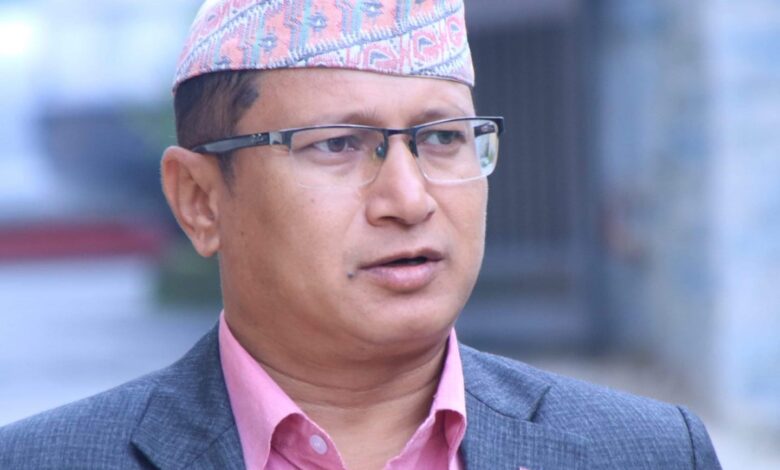

# Prem Sagar Poudel
As political polarization intensifies globally, the Himalayan nation of Nepal is once again emerging as a potential epicenter of geopolitical confrontation between the two major powers—the United States and China. Certain indications seen after the recently concluded elections, the initial vote counts, and the stage of new government formation have raised questions over Nepal’s foreign policy, security concepts, and national sovereignty itself.
The elections for Nepal’s Federal Parliament have been successfully completed. Initial vote counts suggest that the Rastriya Swatantra Party (RSP) is likely to secure a two-thirds majority, which many analysts have termed a ‘political earthquake’. There is discussion about the formation of a government under the leadership of RSP leader Balendra Shah (Balen). However, the subject of the greatest interest and concern has been the official announcement by the US government expressing its readiness to partner with the new government in the defense and security sectors.
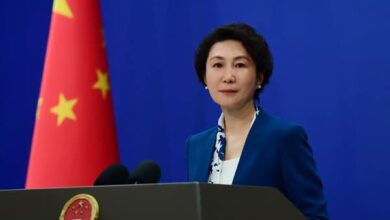
From the perspective of the Chinese government, this potential political change in Nepal is not just a transition but is seen as a serious threat. It appears to pose a direct challenge to China’s national interests, sovereignty, and territorial integrity. In China’s view, Tibet is an integral part of its territory. China regards the Dalai Lama as a separatist leader. If the new Nepali government allows the exiled government of the Dalai Lama to become active in Nepal, China will interpret this as interference in its internal affairs. The security of Tibet is a priority for China. China will never tolerate any instability or anti-China activities in the Nepal-China border region. This could create a serious rift in the diplomatic relations between the two countries.
Similarly, the suspicion that Chinese projects might be halted has heightened China’s economic and strategic concerns. China has made significant investments in Nepal under the Belt and Road Initiative (BRI). Projects like Pokhara International Airport, cross-border transmission lines, the Koshi Corridor, and the feasibility study for the Kerung-Kathmandu railway are part of China’s Amicable Neighbourhood Policy. If a pro-US government is formed in Nepal and Chinese projects are stopped, China will interpret this as strategic encirclement. China’s southwestern border is connected to Nepal. If Nepal becomes a part of America’s Indo-Pacific Strategy (IPS), China will feel great insecurity along its western border.
The matter mentioned in the information about changing the governance system in line with American policy is another serious concern for China. China has always supported Nepal’s constitution and its independent foreign policy. If Nepal decides to change its foreign policy and participate in the US-led Indo-Pacific Strategy (IPS) or the State Partnership Program (SPP), China will interpret this as a ‘Himalayan Ring of Fire’. This could weaken China’s South Asian strategy.
The suspicion of a presidential change and internal interference has also worried China. Although China has a policy of not interfering in the internal affairs of sovereign nations, it will not favor actions that create political instability in Nepal in this manner. China always desires a stable and peaceful neighborhood. Frequent government changes and institutional instability in Nepal could adversely affect China’s long-term investments and strategy.
If these developments materialize, China could adopt the following three-phase strategy. First, diplomatic pressure and warning: China will caution the Nepali government on the Tibet issue and pressure it to immediately halt anti-China activities. Meetings at the ambassadorial level, high-level diplomatic talks, and presenting its stance at the United Nations will be China’s first steps. Second, economic sanctions and project review: If diplomatic efforts fail, China could halt BRI projects, reduce grant assistance, and create a blockade-like situation. Even without imposing a direct economic blockade, China could tighten cross-border trade, delay customs checks, and disrupt the supply of construction materials. This could deliver a massive shock to Nepal’s economy. Third, strategic shift: adopting a tough policy. If Nepal materializes the security partnership with the US and Chinese projects are completely stopped, China might cease viewing Nepal as a buffer zone and adopt a tough policy. In its competition with India and the US, China could ignore Nepal, which might lead to Nepal’s isolation in the international community.
This potential change in Nepal is connected to the broader landscape of international relations. The strategic competition between the US and China is intensifying daily. Under its Indo-Pacific Strategy, the US is rallying countries in the Indo-Pacific region against China. In this context, Nepal also appears to be on America’s radar. If Nepal signs the SPP, it could make the Nepali Army dependent on American training and equipment. For China, this would be akin to an enemy’s entry at its western gate. The SPP agreement, which was suspended during the tenure of Chief of Army Staff Rajendra Kshetri, might be revived. The suspicion that this agreement could be continued has grown stronger.
Nepal has always adopted a policy of non-alignment and friendship with all, bearing enmity towards none. However, the current indications suggest that Nepal’s neutrality will be put to the test in practice. If Nepal participates in American strategic projects, China will view it in connection with the security of Tibet and its western border, and as a result, Nepal might have to pay a heavy price.
China has always regarded Nepal as a reliable friend. However, if a pro-US government is formed in Nepal and anti-China activities increase, Nepal-China relations could regress to a Cold War-era state. If that happens, Nepal could lose all the economic assistance, infrastructure development support, strategic partnership, and cross-border relations it receives from China. This situation would be detrimental not only for Nepal but also for the stability of the entire South Asian region. While determining its policies, Nepal’s new government must balance between the two major powers—this is the need of the hour. This election of ‘Bell, Sun, and Tree’ will determine not only Nepal’s future but also the direction of trans-Himalayan relations. The next 15 days will be decisive not only for Nepal but for the entire region.
Author: Prem Sagar Poudel is a senior journalist and international relations analyst from Nepal. He has conducted in-depth studies on Nepal-China relations, the geopolitics of the Himalayan region, and Asian security.f