
Iran Between Bombs and Diplomacy: The Search for New Leadership and the Second Week of War

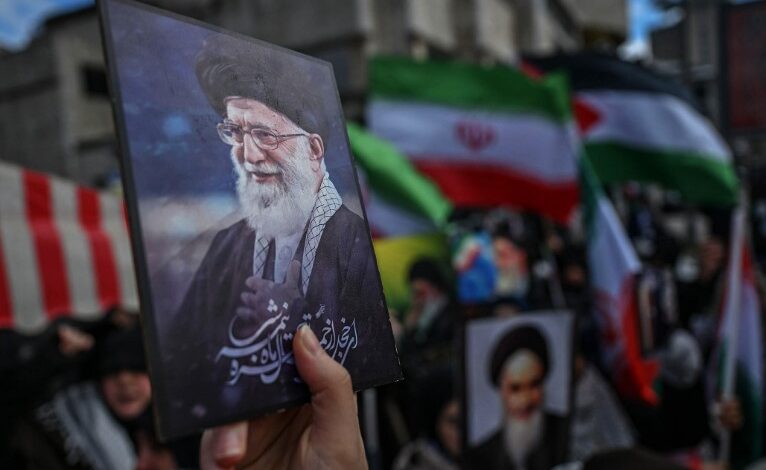

Kathmandu: Iran’s political future and the balance of power in the Middle East have reached their most uncertain state. The joint US-Israeli military operation has entered its ninth day with no signs of ceasefire. Meanwhile, following the death of Supreme Leader Ayatollah Ali Khamenei, Iran has advanced the process of selecting a new supreme leader to its final stage within just one week.
Consensus on New Leadership Within a Week
According to Xinhua News Agency, Iran’s Assembly of Experts has reached a majority consensus regarding the successor to the new supreme leader. The semi-official Mehr News Agency reported this, quoting assembly member Ayatollah Mohammadmehdi Mirbaqeri. However, he stated that some obstacles remain in the process and that work must proceed with precision to avoid controversy.
The name of the new supreme leader has not yet been made public. Analysts say that the swift selection of a successor within a week of Khamenei’s death in the US-Israeli attack has dashed the expectations of America and Israel that Iran’s organizational structure would collapse.
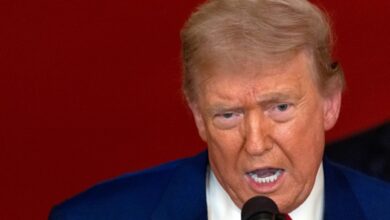
According to CNN, the Israeli military threatened on Sunday to target Khamenei’s successor and those involved in the leadership selection process. US President Donald Trump had also stated that America should have a role in selecting Iran’s new leadership and that Iran’s leadership structure should be completely removed.
War on Both Fronts
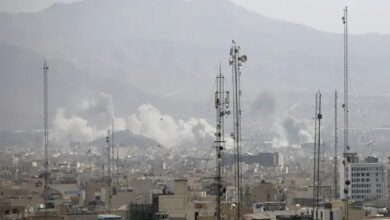
On the battlefield, however, the situation is becoming increasingly complex. Explosions were heard in the skies over Tehran on Saturday night as well. US and Israeli forces have intensified bombings on targets including fuel depots near Tehran. Iran has also warned that it will continue retaliatory actions and that the attackers must pay the price.
According to Al Jazeera, this marks the first time US-Israeli forces have attacked fuel facilities in the Iranian capital. According to Iranian state media, the Islamic Revolutionary Guards Corps (IRGC) has launched a new wave of retaliatory attacks against Israel and American targets in the Middle East.
Kuwait’s army stated on Sunday that its air defense systems had confronted missile and drone attacks. According to Fars News Agency, the IRGC attacked Al-Adiri Airbase in Kuwait with drones and missiles. Later, Mehr News Agency reported that the IRGC also attacked Al-Azraq Air Base in Jordan.
Iranian President’s Rare Apology
An unexpected development also emerged at this stage of the war. Iranian President Masoud Pezeshkian delivered a rare message of apology in an address broadcast on state television. “I want to apologize on my own behalf and on behalf of Iran to the neighboring countries that were attacked by Iran,” he said. He also stated that Iran’s interim leadership council had approved suspending attacks on neighboring countries.
However, after US President Trump interpreted this on social media as a sign of Iran’s ‘surrender,’ Pezeshkian responded on Sunday that his statement had been misinterpreted.
Chinese Diplomatic Warning
Amid this geopolitical crisis, Chinese Foreign Minister Wang Yi issued a serious warning against war and violence in an international address on Sunday. Quoting ancient Chinese philosopher Han Feizi, he said, “Weapons are ominous tools, and should not be used without discretion.”
He also quoted from Jia Yi’s 2,000-year-old work “Guo Qin Lun” (Faults of Qin), which analyzes the rapid collapse of the Qin Dynasty despite its power. “When benevolence and justice are not practiced, the position of strength shifts,” Wang Yi said, targeting Washington’s obsession with the use of force.
Analysts’ Views
According to Professor Ding Long of Shanghai International Studies University, the decision on a new supreme leader within a week shows that the Iranian government is operating smoothly and is capable of building consensus quickly. “The new supreme leader will help Iran maintain unity and solidarity, stabilize governance and public morale, and preserve its resilience,” he said.
Qin Tian, Deputy Director of the Institute of Middle East Studies at the China Institutes of Contemporary International Relations, stated, “The specific identity of the new leader, his positional inclinations, and the policy directions he subsequently adopts are also crucial. Will he take an even tougher anti-American stance, or adopt a more pragmatic approach toward the US and the ongoing war? This choice will have a deep and far-reaching impact on Iran’s future trajectory.”
The Cost of War
According to the Center for Strategic and International Studies (CSIS), the first 100 hours of ‘Operation Epic Fury’ are estimated to have cost approximately $3.7 billion, which is about $891 million per day. The Washington Post, citing a classified report from the US National Intelligence Council, stated that even a “‘large-scale’ US-led attack on Iran is unlikely to topple the country’s government.”
An opinion piece in The New York Times stated, “An external attack is more likely to strengthen that apparatus than dissolve it, enabling the IRGC to recast itself as the protector of the nation. In such a scenario, even the most determined regime critics can be swept into nationalist solidarity.”
Thus, in this complex equation of the Middle East, Iran faces the dual challenge of selecting new leadership internally and confronting war externally. How the war unfolds amid Chinese diplomatic warnings and international concern, and what path Iran’s new leadership chooses, will determine the future of the Middle East in the days to come.