
A Bid for Stability in a Time of Volatility: Politics, Patriotism, and Sher Bahadur Deuba’s Strategic Leadership


# Prem Sagar Poudel
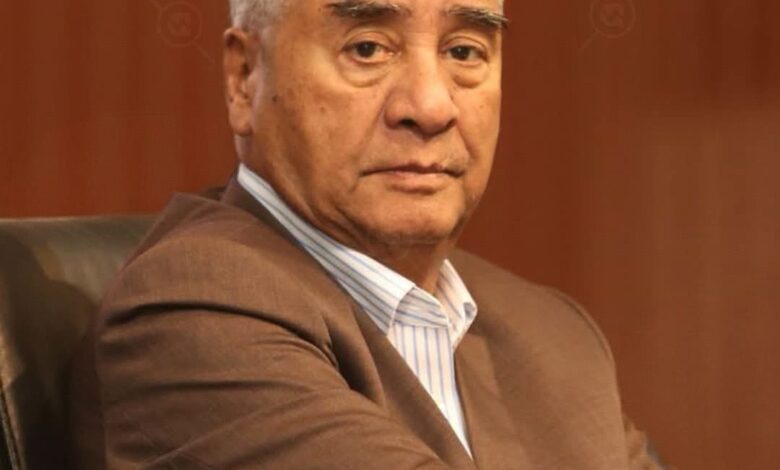
In Nepali politics, Sher Bahadur Deuba is not merely an individual; he represents an era, a continuity, and a symbol of political patience. In recent days, he has faced intense criticism over his strategy of remaining party president of the Nepali Congress without holding a regular or special general convention, while positioning himself to become prime minister after the elections. Some have interpreted this as a “lust for power,” a “disregard for internal democracy,” or simply a “maneuver to cling to the chair.” However, a deeper look suggests that Deuba’s move is not driven solely by personal ambition; it is also a strategic decision tied to the search for stability, balance, and national interest in Nepal’s chronically unstable political landscape.
Nepal today stands at a critical transitional juncture. The implementation of the Constitution, the institutional consolidation of federalism, economic pressures, geopolitical rivalries, and regional power balances—all these challenges are confronting the country simultaneously. In such circumstances, leadership experience, international credibility, and an understanding of domestic power dynamics become crucial. This is where Deuba stands apart. He is a leader who can absorb criticism, negotiate compromises, and ultimately preserve the system. For this reason, he can also be seen as a “system saver” in Nepali politics.
It is easy to label the decision to remain party president without holding a general convention as a violation of democratic values. Yet politics is not only the practice of procedures; it is also the management of circumstances. At present, the Nepali Congress is not just a political party—it is a foundational pillar of the state system. A sudden leadership change within the party could affect not only the party itself but also the overall national political balance. The rise of energetic leaders like Gagan Thapa and Bishwo Prakash Sharma is natural and welcome, but the question of timing and responsibility is central here. Fierce leadership competition before elections could push the party toward division, directly benefiting only those forces that thrive on political instability.
This, precisely, is one of the main reasons Deuba has postponed the general convention: to keep the party united before the elections. He understands that if internal conflicts within the Congress are projected outward at this time, the party will weaken electorally, and the country will ultimately bear the consequences. A party tasked with safeguarding Parliament, government, and the Constitution becoming weak could be disastrous from the standpoint of national interest. Therefore, viewing Deuba’s decision solely through the lens of personal self-interest would be an incomplete analysis.
Deuba’s aspiration to become prime minister after the elections is not unnatural either. In a democracy, the desire to win elections and lead the government through parliamentary processes is a legitimate political objective. Deuba has served as prime minister multiple times before, but each tenure was marked by unstable coalitions, no-confidence motions, and external pressures. This time, he appears to be seeking a comparatively stable mandate and a manageable political equation. His assessment that holding a general convention and losing the party leadership would end his chances of becoming prime minister before the elections is not politically unfounded.
Deuba’s strategic understanding with CPN-UML chair KP Sharma Oli should also not be viewed solely in negative terms. In a multiparty and fragmented political structure like Nepal’s, dialogue and mutual understanding are the foundations of stability. While some label the Oli–Deuba understanding as opportunism, it can also be interpreted as an exercise in national political consensus. From the reinstatement of Parliament to the defense of the Constitution at critical moments, Deuba has consistently appeared at the forefront of the democratic front. His political cooperation with Oli, too, is ultimately linked not to power alone but to the continuity of the system.
Questions of patriotism are often raised against Deuba, yet the facts do not substantiate these doubts. As a leader who maintains balanced relations with India, China, and Western powers, Deuba has avoided unnecessary complications in Nepal’s foreign policy. He has neither displayed extremism in the name of nationalism nor surrendered to external pressure. This balance itself is a hallmark of mature patriotism.
Generational transfer within the Nepali Congress is necessary—there is no dispute about that. However, such a transition succeeds not through chaos but through management. If Deuba were to relinquish leadership now, it would not be a natural handover but a change imposed by pressure, potentially creating long-term imbalance within the party. It is important to understand that Deuba is trying to steer the party to safe ground now, while keeping the path open for leadership transfer after the elections.
In today’s political reality, Deuba’s strategy may be unpopular, but it is not anti-national. His priority appears to be institutional stability rather than emotional politics. The country is not in a position to become a laboratory for risky experiments. At times, temporarily entrusting responsibility to experienced hands, rather than engaging in hazardous experimentation, can itself be a patriotic decision.
Ultimately, it is easy to dismiss Sher Bahadur Deuba’s bid to remain party president without holding a general convention and to become prime minister after the elections as mere “chair politics.” But doing so ignores the dimensions of stability, continuity, and national balance in Nepali politics. Deuba may not be an idealistic leader today, but he is a crisis manager. And history has shown that in a transitional democracy like Nepal’s, management can sometimes be more patriotic than idealism.
Author: Prem Sagar Poudel is a senior journalist and international relations analyst from Nepal. He has conducted in-depth studies on Nepal-China relations, the geopolitics of the Himalayan region, and Asian security.