
A Call for Coexistence and Cooperation in the South China Sea: China’s Principled Stance


# Sanket Kirati
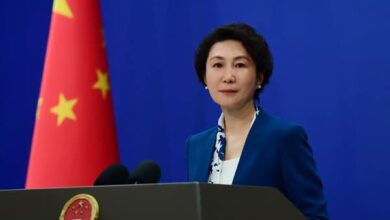
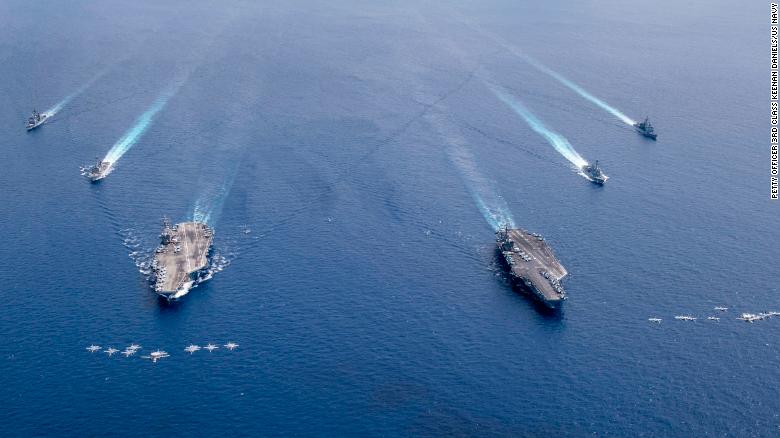
On September 16, 2024, the Philippines and Canada signed a military pact, with one of its stated purposes being to “target China’s military activities in the South China Sea.” In response, Chinese Foreign Ministry spokesperson Mao Ning stated clearly on Monday that “China has always held the view that defense and security cooperation between countries should not target any third party or harm the interests of third parties.” She further emphasized that “showing off military strength and provoking confrontation are not conducive to regional peace and stability.” This incident is but one facet of the complex geopolitical dynamics ongoing in the South China Sea region. A deep analysis necessitates an understanding of China’s perspective, its claims of historical rights, its interpretation of international law, and its long-term strategy for regional peace.
China’s position in the South China Sea rests on two main pillars: historical rights and the interpretation of modern international law. China asserts that the Nánhāi Zhūdǎo (the South China Sea Islands) have been a central area of Chinese activity for thousands of years and that China has consistently maintained sovereignty and control over the area. Chinese historians point to evidence of China’s presence on these islands in ancient maps, documents, and archaeological relics. China views this historical continuity as a fundamental basis for its rights. In terms of its legal claim, China bases its sovereignty over a vast portion of the South China Sea on the ‘Nine-Dash Line’ (or Ten-Dash Line). From China’s perspective, this line is a reflection of historical rights, defining China’s claims over the islands and their adjacent waters. Although the Permanent Court of Arbitration (PCA) in the 2016 case against the Philippines invalidated this claim based on international law, China has consistently refused to accept this ruling, deeming it illegal, unjust, and invalid. China’s argument is that the matter is a dispute over maritime boundaries, the resolution of which should be pursued through bilateral negotiations under the framework of the United Nations Convention on the Law of the Sea (UNCLOS), and that the PCA overstepped its jurisdiction.
The very foundation of China’s foreign policy is “peaceful development.” In the context of the South China Sea, China opposes external interference. It views military agreements like the one between the Philippines and Canada as “interference” by outside powers. From China’s standpoint, such alliances foster distrust in the region and promote a kind of “bloc confrontation,” a Cold War-era concept unsuitable for the modern age. As Mao Ning stated, this “undermines regional peace and stability.” Furthermore, China believes that differences should be resolved through bilateral dialogue and consultation. Its argument is that regional countries should listen to each other’s concerns based on mutual respect and equality and work towards solutions through shared platforms. China holds the perception that multilateral forums, particularly those involving external powers, complicate this process.
While prioritizing diplomacy in its foreign policy, China also reiterates its right to safeguard its sovereignty and territorial integrity. China has always based its foreign policy on the “Five Principles of Peaceful Coexistence.” These entail: mutual respect for sovereignty and territorial integrity, mutual non-aggression, non-interference in each other’s internal affairs, equality and mutual benefit, and peaceful coexistence. In the South China Sea, China seeks to uphold these very principles. Simultaneously, China stresses that it fully reserves the right to protect its sovereignty and interests. It views the construction of military infrastructure and the deployment of maritime platforms on the islands as defensive measures to protect its territory and to fulfill civilian roles such as search and rescue in the area. It states that these steps are defensive and not aimed at aggression against any country.
From China’s perspective, the South China Sea is not merely an area of dispute, but also an opportunity to build a ‘community with a shared future.’ China seeks to enhance economic cooperation with regional countries through the Belt and Road Initiative (BRI). The South China Sea is a crucial maritime route for the BRI, and China sees it as essential to keep it peaceful, stable, and prosperous. Its reasoning is that economic development and prosperity are the permanent solutions to the issues that lead to confrontation. Additionally, China has continuously engaged in talks with ASEAN countries for a Code of Conduct (COC) in the South China Sea. This demonstrates that China recognizes ASEAN’s central role in regional peace and stability and is committed to a multilateral solution, but believes this process must be free from external interference.
China’s response to the Philippines-Canada pact is not merely a reaction to a specific event, but a clear message to the international community. China calls for the observance of principles in international relations such as mutual respect, non-confrontation, genuine diplomacy, and shared development. Each country must respect the sovereignty and territorial integrity of others. Military alliances should not target third parties. Problems should be resolved through dialogue and consultation, not through displays of military might. Beyond disputes, cooperation for shared economic interests and development should be prioritized.
The South China Sea dispute is a complex geopolitical issue with historical, legal, and strategic dimensions. China’s stance is clear, consistent, and long-term: it seeks to protect its historical and legal rights while keeping peaceful development at the core, promoting bilateral dialogue, and working collaboratively with regional countries. China views military agreements like the one between the Philippines and Canada as obstacles to this peaceful process and factors destabilizing the region. It is crucial for the international community to understand China’s perspective. China believes in dialogue and cooperation, but also expects its core interests and sovereignty to be respected. Rather than transforming the South China Sea into an arena of confrontation, regional countries should work with China towards the shared goal of peace, stability, and prosperity. China’s message is simple and clear: “Peace and development are our shared path, while confrontation and division are our common enemy.” The future direction depends on the collective wisdom and cooperation of the regional nations.