
“A Delhi’s message under the cover of a religious visit? The secret to the growing balance of power in Nepal

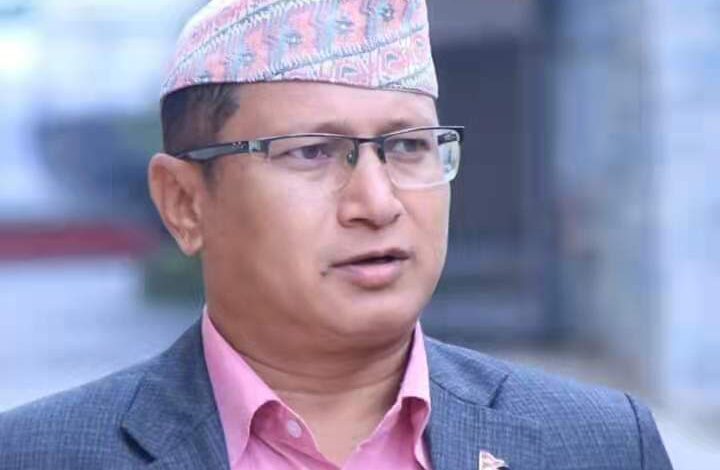

# Prem Sagar Poudel
The balance of power in South Asia has once again reached a sensitive point, where various countries are increasingly using religious, cultural, and diplomatic power sources to advance their own interests. In such an environment, the visit of the International General Secretary of the Vishwa Hindu Parishad (VHP) to Nepal has raised questions and curiosity on many levels. Although the visit itself may appear to be linked to a religious or cultural event, regional relations, current political uncertainty, and competition between international powers make it impossible to view it as a purely cultural visit. Such activities in South Asia are often understood as political signals, indirect communication, and a means of message-flow. India, in particular, has a long-standing practice of expanding its influence through religious-social networks in culturally close countries like Nepal.
Nepal is currently in a complex combination of political transition, electoral uncertainty, internal instability, and power pressures. In the current situation, where the state apparatus is weak, parties are divided, coalitions are unstable, and the prospects for elections are impaired, external balances of power are automatically activated. At such a moment, for a powerful neighbor like India, Nepal is not only a geopolitical space, but also an area of security, cultural affinity, and independent strategic influence. India has a history of using visits by religious and cultural figures as a form of “low-cost, high-impact signaling” when it sees a political vacuum or power struggle in Nepal. These visits often serve as a means of informal dialogue, political temperature-taking, and identifying potential alliances rather than formal diplomatic moves.
In such a context, the VHP International General Secretary’s visit to Nepal may not be limited to just visiting Pashupatinath or cultural programs. Past examples show that such meetings are a priority for Nepal’s political circles, from centers of dynastic influence, top leaders of the ruling and opposition parties, religious institutions, and individuals with roles in policymaking or future alliances. The fact that India used religious and cultural networks as its “soft strategic lever” in Nepal is not a hidden history. When India’s national security or regional balance of power becomes sensitive, Delhi’s way of sending messages to Nepal often begins through non-governmental, non-diplomatic, and culturally safe channels.
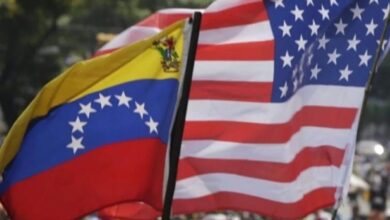
This time, the timing and international environment of such a visit are particularly noteworthy. It is natural for diplomatic waves to rise in South Asia, especially during a sensitive period when Russian President Vladimir Putin’s visit to India and India-Russia relations are seen to be deepening again. No matter how strong the strategic partnership between India and the US appears, issues such as the Ukraine war, military cooperation with Russia, and India’s role in the BRICS+ structure have created “strategic discomfort” in Delhi-Washington relations. Although the US is active in South Asia with the primary objective of containing China, the India-Russia proximity compels Washington to expand alternative influence in the region. A power-deprived, unstable, or election-free Nepal could become a suitable environment for the United States to use policies.
Nepal’s internal situation is facilitating this strategic competition. With elections postponed, constitutional institutions weak, parties divided, and power balance unclear, external forces are not shy about viewing Nepal as an “open theater of influence.” Such a situation is uncomfortable for India, as it increases the possibility of the US or China expanding their influence in Nepal. Political vacuum is more of a risk than an opportunity for India, so informal religious-cultural diplomacy is activated if India wants to maintain its “pre-emptive presence”. VHP, RSS, Guru-Sant, Cultural Council, non-governmental think tanks, and Delhi’s socio-religious network play a leading role in this process.
The political transition in Nepal has long been a focus of foreign influence. Before each election or when the government is unstable, India has been seen in the past to send messages through religious institutions, organize direct or indirect meetings with top Nepali leaders, and signal future diplomatic directions. For example, there are many examples of religious/cultural representatives’ arrival in Nepal being interpreted diplomatically, from the meetings following the 2062-63 movement, to India’s active participation in the 2069-2072 constitution process, to the federal transition period of 2074, or even the political instability of 2020-23.
With the growing competition between the US and China, Nepal has become more sensitive to India. The US is active in Nepal with the concepts of MCC, development partnership, democratic stability, and security cooperation; China is exerting its influence by emphasizing BRI, trade, physical infrastructure, and internal political stability. In such an environment of dual pressures, if India wants to preserve its traditional sphere of influence, it is natural to adopt a more low-profile, cultural and ideological path than direct diplomatic activity in Nepal.
Another important aspect of this visit is the electoral uncertainty in Nepal. The environment of no elections, distrust between parties, power-sharing conflicts, and damage to internal administrative stability, all of these put India in “risk monitoring mode.” India wants to continue to receive timely, nuanced signals about where Nepal’s political future is headed, who runs the power center, and how much influence external forces are likely to exert in Nepal. At such times, even small religious visits act as a “political barometer” for Indian diplomacy and security system, indicating where the atmosphere is heading.
This is why these activities are taken seriously by most Nepali analysts, policy experts, diplomatic circles, and international observers. This does not mean that India is trying to interfere in Nepal; it simply means that when Nepal is politically unstable, India is proactive in ensuring that its security balance is not disrupted. The US and China do the same, but India’s cultural proximity to Nepal makes it easier and more effective.
The key questions for Nepal are national autonomy, internal unity, and institutional stability. When the internal political environment is not solid and predictable, external forces naturally become active. In such a situation, the impact of external messages, visits, meetings, and signals can only be minimized if Nepal’s parties, state machinery, and policymakers can strengthen the “sovereignty buffer.” Nepal must understand that visits in the name of religion, culture, or social issues are not just social events; they are signals about regional diplomacy, the balance of power, and future political direction.
In this light, it is incomplete to interpret the VHP International General Secretary’s visit to Nepal as merely a general religious event. The current times, the international environment, the balance of power in South Asia, and Nepal’s internal conflict have given this visit a high degree of political sensitivity. Given the current combination of instability, electoral uncertainty, potential for external intervention, and strategic competition in Nepal, it is necessary to view such visits analytically.
Ultimately, the concern raised about such a visit is not an exaggeration, but a very real geopolitical issue. Nepal stands in the middle of a triangular playing field of power-balance, and every religious/cultural journey can sometimes become a diplomatic signal carrier. For this reason, there is always a need for analysts and strategic observers in sensitive countries like Nepal to closely study such events.
Author: Prem Sagar Poudel is a senior journalist and international relations analyst from Nepal. He has conducted in-depth studies on Nepal-China relations, the geopolitics of the Himalayan region, and Asian security.