
A New Era for UML: Preparing for the House of Representatives Election with Patriotism and Youth Leadership


# Lucky Chand
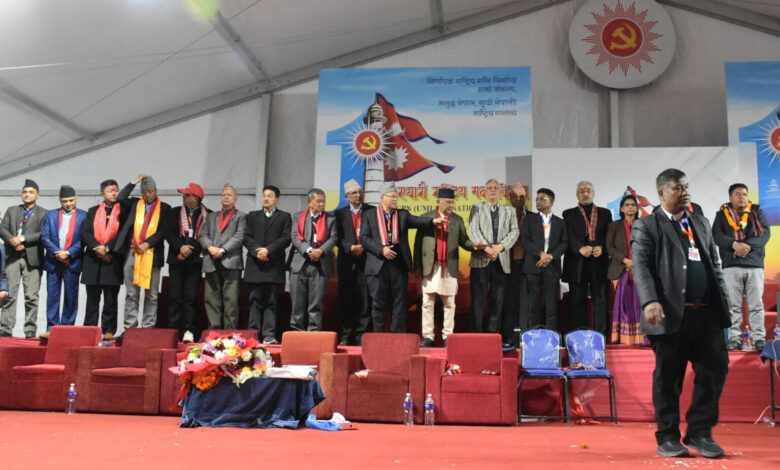
For the House of Representatives election scheduled on Falgun 21, the Communist Party of Nepal (Unified Marxist-Leninist) [UML] has filed candidacies in all 165 constituencies, asserting its full presence on the national political stage. This time, the party has chosen not to form any electoral alliances, opting instead to test its strength independently. UML frames this approach not merely as an electoral strategy but as a historic opportunity to uphold patriotism, safeguard the Constitution, and ensure the rise of a new generation of leadership.
Party data show that 54.54 percent of the total candidates are new faces. A closer look at the regional breakdown indicates 50 percent in Madhesh and Sudurpashchim, 53.57 percent in Koshi, 60.60 percent in Bagmati, 61.11 percent in Gandaki, 75 percent in Karnali, and 42.30 percent in Lumbini. This demonstrates that the party is prioritizing fresh leadership and regional representation rather than relying solely on established structures and traditional leaders.
Political analysts suggest that this move highlights UML’s firm commitment to patriotism and constitutional integrity. The party regards this election not merely as a pathway to power but as a decisive moment for the long-term future of the nation and the empowerment of youth leadership. By reviving lost opportunities and broken aspirations, UML aims to secure public mandate in favor of democracy and the Constitution.
The surge in new candidates is particularly pronounced in regions such as Madhesh, Karnali, and Gandaki. This signals a strategic emphasis on regional justice and inclusive participation. In Madhesh, 50 percent of new candidates are expected to raise strong voices on local political, social, and economic issues. In Karnali, 75 percent of fresh candidates are positioned to provide new directions in development and social inclusion. Candidates in Lumbini and other Terai-Madhesh constituencies have expressed commitments to rural and urban development, education, and employment generation.
From the perspective of youth participation, this election represents a crucial turning point. Active involvement of the younger generation in the political process is expected to strengthen the party’s patriotism-driven policies. Youth candidates are set to play a proactive role not only in defending the Constitution and democratic principles but also in promoting local development, employment, and social inclusion. This will lay the foundation for political stability and long-term development.
Nepali political analysts argue that UML’s strategy of full candidate registration and emphasis on new entrants presents a new turning point in the country’s multi-party democracy. It revitalizes internal political structures while simultaneously creating opportunities for Nepal at the regional and international levels. In the context of Nepalese politics, the combination of stability and leadership renewal sends a clear message to other parties that UML will now advance on the basis of proportional, regional, and youth-centered leadership.
The international significance of this election is also noteworthy. Nepal’s political stability and youth-oriented leadership could play a positive role in regional peace, economic development, and the flow of international cooperation. Balanced engagement with neighboring countries, including India, China, and others, will require decisive leadership and regional representation. By empowering youth, UML enhances Nepal’s capacity to reduce insecurity, external pressure, and political instability while advancing toward sustainable democracy and development.
The party has made patriotism and the protection of the Constitution the core of its campaign. This underscores that UML is no longer driven by personal interests, factional gains, or external pressure but is focused on national interest, youth empowerment, and the stability of democracy. By integrating the new generation into leadership, the party is providing a clear roadmap for long-term political stability, youth leadership development, and social inclusion.
In conclusion, UML’s full candidate registration, inclusion of fresh leadership, and patriotism-centered campaign for the Falgun 21 House of Representatives election send a clear message: the party is firmly committed to defending the Constitution and democracy, placing trust in the leadership of the new generation, and strengthening politics rooted in patriotism. The election is not just an electoral contest but a strategic turning point for the nation’s long-term interests, political stability, and youth empowerment, reflecting UML’s unwavering commitment and patriotic vision.