
A Planned Attack on Nepal’s Sovereignty: An Analysis of American Conspiracy and the Crisis of National Existence

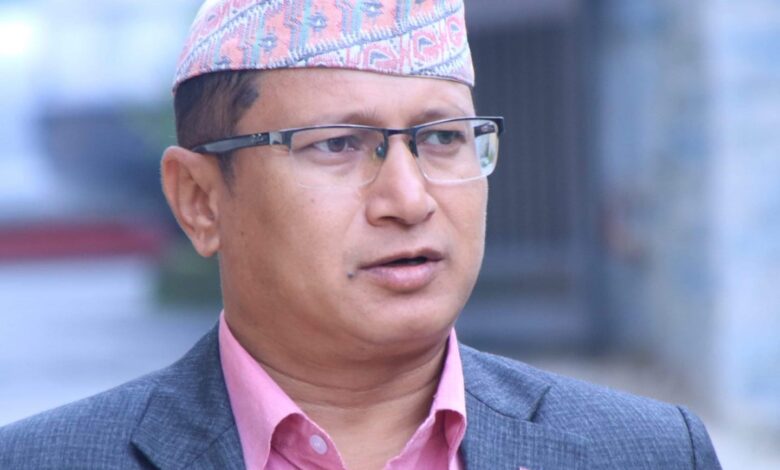

# Prem Sagar Poudel
The events that took place in Kathmandu from Bhadra 22 to 24, 2082 (September 7 to 9, 2025), expose a complex and planned attack on Nepal’s sovereignty, national unity, and system of governance. This was not just an anti-government movement, but rather a well-planned anti-national conspiracy, which pushed the country towards chaos and instability.
The incident began on Bhadra 22 (September 7) with three youths submitting an application to the CDO office. They received permission to peacefully protest from Maitighar to Baneshwor. This process itself was suspicious because there had already been rumors about the protests and Prime Minister KP Oli had already hinted at it. The fact that the protest organizers went straight to Durga Prasai’s house after receiving the permit and discussed it for two hours indicates that this was not just a protest, but rather part of a huge plan.
In the protest on Bhadra 23 (September 8), cadres from various political parties, students, and groups (Maoists, RSP, Durga Prasai, Balen Sah supporters) joined. This in itself was unusual. Even more surprising were the security arrangements. The barrels, large numbers of police, and firefighters that are always placed on the Baneshwor road section during large demonstrations in Maitighar were not prepared this time. The police were not mobilized, and there were no police on the Maitighar-Baneshwor section of the road. This indicates deliberate inaction or a lack of direction from security forces.
As protesters began to demolish the walls of the Parliament building, the police asked higher authorities what to do. The CDO ordered “to protect government property at all costs.” But there was confusion in the police force. They were unable to change the metal bullets in the rifles they were carrying, and eventually used metal bullets. Only after this did rubber bullets and tear gas come into play. This sequence is very strange.
Police protocol usually starts with the escalation of force at a minimum, but here the opposite happened. The walls of the Parliament building are not level with the ground outside and inside. The walls of the Parliament Building are not same level with the ground, both outside and inside. When firing from inside the wall, you cannot aim and hit someone below the waist, even if you want to.
When firing from the inside, if a short person was outside, the bullet would hit them in the head, and if a tall person was outside, the bullet would hit them in the chest.
Those who do not understand the geographical situation there may accuse the police of shooting them by targeting the chest and head. More seriously, it was found that the police had used a short gun that had not been fired, which is not among lower-level police officers. Leaving the Nepali Army headquarters on the road leading to Maitighar, about fifty bullet bikes, each carrying two people in one, made loud noises and pushed forward through the crowd of young people towards Baneshwor. Immediately after the police fired metal bullets in Baneshwor, the youths infiltrated the crowd and fired short guns. This indicates the presence of another group within the protesters who were inciting violence.
In response to the incident, Home Minister Ramesh Lekhak remained passive, while Prime Minister Oli remained aggressive. He gave prominence to Meta’s letter (which threatened to shut down the service) in the cabinet meeting and promised to take action, considering it an insult to the country. He showed the same letter to the leader Sher Bahadur Deuba. Convinced by PM Oli’s words, Deuba headed towards Budhanilkantha. Meanwhile, Oli rejected suggestions that he would resign even after the casualties were made public. His stubborn attitude blocked the path to a political solution.
The most sinister aspect of this conspiracy came to light on the day of the curfew on Bhadra 24 (September 9). Various groups used Google Maps to locate the leaders’ homes and systematically set them on fire. The fact that “mostly Indian faces were at the forefront” of this work is extremely serious and reinforces suspicions of foreign interference. After the burning of houses, state symbols like Singha Durbar, Shital Niwas, police post, jail and court were attacked. The Nepali Army watched all this. This also raises serious questions about the role of the army.
The most significant aspect of this incident is the activism of anti-China elements. Protesters targeted the Baneshwor Convention Centre, which was built with Chinese assistance. The next target was ‘Bhatbhateni’, the main private business structure with China in Nepal. Similarly, the private property of Upendra Mahato, who has ties to Russia, was also targeted. It cannot be a coincidence that not just any government building, but especially structures related to and built with Chinese assistance, were prioritized.
The attacks on these locations are not fierce of a single protester, but rather a sign of an international conspiracy that attempted to spread the message around the world that “China’s influence in Nepal is not safe” or that anti-Americans are not safe.
A political interpretation of this message understands that the West, especially the US, was conducting sensitive and secret meetings through a delegation that recently visited Nepal. Now, they want to control China’s influence in Nepal not through mere diplomacy, but by breaking down local structures. The movement focused on those issues where China has contributed. The state apparatus, which was responsible for security, was systematically rendered inoperative.
Chinese President Xi Jinping visited Nepal during the tenure of President Bidya Devi Bhandari and Prime Minister KP Oli. The visit played an important role in strengthening the relationship between the two countries. During his visit to Nepal, the Chinese President issued very strong threats to those who oppose China. However, after his visit, anti-China activities in Nepal began to rise to a higher level. Immediately challenging President Xi’s statements, there were activities of an independent Tibet that happened, which were promptly published by Gorkha Express Weekly and danfetv.com, along with photographs, providing evidence of anti-China activities. China showed no interest in stopping the ongoing anti-China activities and protecting and promoting its friends inside Nepal, and remained silent, watching. Recently, Prime Minister KP Oli’s visit to China, participation in the Shanghai Cooperation Organization, and Nepal’s agreement on China’s GSI should be placed in the background of this conspiracy. The terrorist incident in Nepal following Oli’s visit to China, the postponement of Army Chief Ashok Raj Sigdel’s visit to China, and the formation of a government led by US-supporter Sushila Karki indicate American and Indian interference.
Solid evidence of an American conspiracy:
1. Joint statement of the embassies:
At 11:19 PM on Bhadra 23, the embassies of Australia, Finland, France, Japan, the Republic of Korea, the United Kingdom, Norway, Germany, Switzerland, and the United States of America in Nepal issued a statement. The statement, without addressing the government, called for a peaceful resolution from “all parties.” This indicated that many parties were involved in the protests. Which was a subject unknown to ordinary citizens, but the embassies were fully aware of it. However, they did not share this information with the Nepalese government.
After Sushila Karki was appointed Prime Minister, the US Embassy issued another statement on the morning of September 14. The statement said that we respect Army Chief Ashok Sigdel for facilitating a peaceful exit. This statement reflects the intention of the Nepali Army had completed the task assigned to it by the United States.
2. American role in the army’s inaction:
There are plenty of army barracks in Kathmandu. The question arises as to why leaders were taken to the Bhairavnath Battalion, whose infrastructure was built with the intention of finishing Maoist leaders during the Maoist war under direct American influence. Bhairavnath Battalion was chosen to send a psychological message to the leaders that the army would kill us or that America was not on our side.
3. US influence on Nepal’s interim government:
Prime Minister Sushila Karki is the person who helped bring the court under USAID’s control. The main person behind this work is Kalyan Shrestha. Karki also worked to stop the UNDP’s district court digitalization project to expand US assistance to every area of the court.
Rameshwor Khanal, who was appointed as the Finance Minister, had previously used information of the ministry to expand his wife’s business while he was in the Finance Ministry. According to information from the Ministry of Finance, the vast wealth earned by his wife was managed in the United States through his daughter. Bharat Mohan Adhikari, who was then the Finance Minister, had dragged Bhandari to the Finance Ministry after through Kebal Bhandari obstructed the Tatopani customs, the only border crossing for trade between Nepal and China at that time. He resigned for fear of action. After the US had increased the influence of the independent Tibetans in the Tatopani region, it tried to impose customs obstruction.
Another minister, Kulman Ghising, was a board member of MCC, an American-funded project in Nepal. He had planned to connect electricity from China to the Ratmate substation. This issue was proposed by Nepal during Pushpa Kamal Dahal’s visit to China. He is also the person who forced the government to cancel the substation that was being built for the power transmission line between Nepal and China.
Home Minister Om Prakash Aryal has been working in the Western Mission for a long time. He had participated in the so-called `Civic Space Project’, which was launched a few months ago by the Association of International NGOs, Nepal (AIN), and is funded by the European Union. He is also a ‘Member Advocate’ of the Justice and Rights Organization Nepal, which is funded by The Asia Foundation, PUKAR ASIA, and Dka Austria. His father is an ex-Indian Army.
The Asia Foundation is a ‘frontal organization’ of the US intelligence agency CIA, which is accused of secretly collecting sensitive mobile data of Nepali users. PUKAR ASIA is an NGO funded by George Soros’ Open Society Foundation, which works to destroy anti-imperialist forces worldwide.
4. American role in social media management:
Although the government in Nepal has blocked social media, it was not completely shut down. Although Nepal Telecom disrupted the use of social media by blocking signals, WorldLink managed to make social media accessible through its Wi-Fi. The use of gas is an old American idea that is used to expand networks at the lower level.
According to the constitution, the military does not participate directly in civil movements. But when the Prime Minister’s Office, Singha Durbar, the President’s Office, the Parliament Building, the Supreme Court, and the police station were being burned, politicians’ homes were being burned, and structures built with foreign investment were being demolished, the army’s inaction is not simply a matter of upholding constitutional dignity. This was a planned silence, perhaps a sign that this had been agreed upon at the highest level. Is the military a ‘hero’ or a ‘participant’? This question has reached a point where it demands serious review and a public answer.
The letter from Meta threatened to shut down the service to the Nepali government. The letter was read out in the Council of Ministers, and Prime Minister Oli responded aggressively. However, this letter was a psychological attack.
For a commercial company like Meta to warn a sovereign government in such language is an attempt to interfere in the decision-making process through the information network. For a commercial company like Meta to warn a sovereign government in such language is an attempt to interfere in the decision-making process through information networks. It also shows the growing power of digital companies.
In such uprisings, emotional groups, especially the younger generation, are put forward. Gen Z was used. Students in school uniforms, college youth, groups gathered through social media became the face of the movement. But behind them were dangerous players who had created a serious maze that would lead Nepal not only into a democratic crisis, but also into a sovereign crisis.
This movement sent an indirect message over Nepal’s relations with China. Attacking China’s development partnership in Nepal is not just about breaking the structure, it is about sending a message to China, “Your investment is not safe, we can destroy your influence.” This is also a sign of the US strategy. Creating an anti-China atmosphere by mixing local discontent and foreign hatred without directly attacking is an unannounced method of US covert diplomatic practice. And it was used successfully in Nepal.
Now, a redefinition of nationalism is necessary in Nepal. Nationalism is not about waving a photo of a leader, endorsing an ideology, or clapping a contractor’s speech, but rather protecting the structure, sovereignty, and right to make policy decisions of the nation. Now all of that has been taken away, burned, and destroyed, but the state neither cried out that it had been destroyed, nor did it move forward to handle the people.
It is time for leaders who have been creating instability in the name of political stability to abandon their silence and take responsibility. If any power structure is rotten from within, it can only be saved through a transparent review, not by hiding it. Amidst a Prime Minister who wants to stay, disorganized security personnel, leaderless political parties, a young generation that is being used, and Nepal turning into a foreign strategic laboratory, Nepal is losing its national identity.
Ultimately, this movement was a mistake of the government, it could have been corrected. But now this crisis is of the nation. The moment the Parliament building burns, that is a crisis of governance. The moment the Supreme Court burns, that is a crisis of the Constitution. The moment the Prime Minister resigns and the leaders’ houses burn down, that is a leadership crisis. But the moment the partnership with China is attacked, foreign companies warn the government, and Nepal becomes a battleground for ‘strategy, not power’, that is the moment to declare Nepal as a nation in crisis.
Nepal is currently fighting a battle for its sovereignty and national existence. This fight is not just for the government or leaders, but for every Nepali. Whether Nepal in the future will be stable, independent, and prosperous or become a puppet of foreign intervention depends on the decisions of this very moment. This clear evidence of American conspiracy calls on the Nepali people to become aware and unite to protect the country’s sovereignty.
(The author is a senior journalist, political analyst, President of the Nepal-China Mutual Cooperation Society, and an expert on international affairs.)