
A Political Study of the Nepali Army’s Position and Contradictions

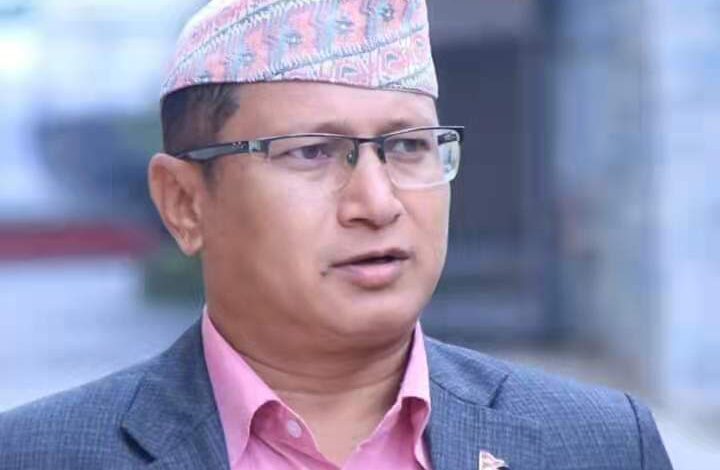

# Prem Sagar Poudel
The public debate regarding the role of the Nepali Army and security arrangements has taken a new turn in recent months. In particular, the army’s direct involvement in the security of national symbols such as the Singha Durbar, the President’s Office, the Supreme Court, and the Parliament building, located in the heart of the capital, Kathmandu, has raised many questions. This question demands a fundamental analysis not just limited to the technical aspects of security arrangements, but of the nature of the state, the army’s constitutional role, the philosophy of national security, and its relationship with democratic institutions. The very logic of needing the army is called into question when the entity it is deployed to protect itself requires special security decisions. This exposes a fundamental contradiction in the security structure of the Nepali state: on one hand, the constitution defines the security forces as being in the service of the people and as the protectors of national sovereignty; on the other hand, the practice of using that same force as a tool for the personal security of the ruling class and political power centers creates a major clash with democratic values.
In Nepal’s historical perspective, the role of the army has always been controversial. During the Shah dynastic rule, the army was known as the personal protector of the royal family. The Rana regime also used the army as a tool to maintain the power of the ruling class. The revolution of 2007 BS and the People’s Movement of 2046 BS brought some changes in the army’s role; however, even after the democratic movement of 2062/63 BS, structural change in the army has remained limited. Nepal’s Constitution of 2072 BS declares the army as the protector of national sovereignty, territorial integrity, and the security of the people. But in practice, a large number of army personnel and resources are operated and invested in the protection of national symbol buildings. This raises questions about a deviation from the army’s main objective. A fundamental question arises: has the very concept of national security become limited to the confines of a restricted governmental compound? This narrow vision of security makes the army the protector of the political center and perpetuates its distance from democratic processes.
International comparative studies show that in developed democracies, the security of institutions like parliament and supreme courts is usually in the hands of civilian police or special protection units. The security of the US Capitol Hill or the UK’s Houses of Parliament is managed by civilian agencies, not by the army. In India too, the security of the Parliament House is handled by a special security force. Deploying the army in civilian areas is an exception, which occurs only in emergency situations. In Nepal’s case, the regular deployment of the army creates an image of a militarized civilian sphere, which is not considered conducive for a democratic society. It strengthens the tendency to interpret the relationship between the state and the citizen from a military viewpoint. This situation indicates the incompleteness of Nepal’s democratic transition, where the army’s role has not clearly come under civilian control.
Another serious aspect of this deployment of the army in Nepal’s context is the symbolic display of political power. The presence of the army at Singha Durbar and other central buildings makes the militarized form of state power clear. It defines the relationship between the state and the people in the language of power and security, not in the language of service and rights. This perspective does not align with democratic values because democracy sees the state as a servant, not a ruler. Such use of the army also raises questions about democratic control and accountability of resources. When a large part of the huge budget and manpower invested in the army is spent on protecting such symbolic buildings, insufficient attention may be paid to the real challenges of national security, such as border security, emergency management, and internal security issues. This calls into question the efficiency of the overall national security architecture.
Globally, modern nations have been adopting a broad concept of security, which includes multidimensional aspects like human security, economic security, and environmental security. But in Nepal, the concept of security is still traditional and limited, focused only on the physical security of the ruling class and state institutions. This approach has hindered the preparation of the Nepali Army for modern security challenges. If institutional reforms are to be made by adopting a broad concept of security, priority should be given to strengthening the army’s training, equipment, and strategic capabilities, not to the protection of symbolic buildings. This would allow Nepal to strengthen genuine national security and enable the army to play a positive role in nation-building.
To solve this problem, work is needed at constitutional, institutional, and cultural levels. At the constitutional level, the role and responsibilities of the army need to be clearly redefined, especially regarding clear guidance on the use of the army in civilian areas. At the institutional level, special security forces or civilian protection units should be developed and entrusted with the responsibility of securing symbolic buildings. At the cultural level, public dialogue is necessary to redefine the relationship between the state and the army. A mentality must be developed to view the army as a servant of the nation and its people, rather than as a symbol of state power. This requires political will and good governance. If Nepal’s democratic journey is to be accelerated, it is essential to bring about a radical change in the philosophy and practice of securing state institutions. The role of the army must be clearly focused on a broad definition of national security, not on the protection of limited political power centers. Without this, Nepal’s democracy will remain incomplete, and the army will also not be able to develop as an institution capable of meeting modern national security needs.
Author: Prem Sagar Poudel is a senior journalist and international relations analyst from Nepal. He has conducted in-depth studies on Nepal-China relations, the geopolitics of the Himalayan region, and Asian security.