
“A Shared ‘Strategic Front’ Through the Wires of Communication: Putin–Pezeshkian Phone Call Deepens Russia–Iran Alliance”

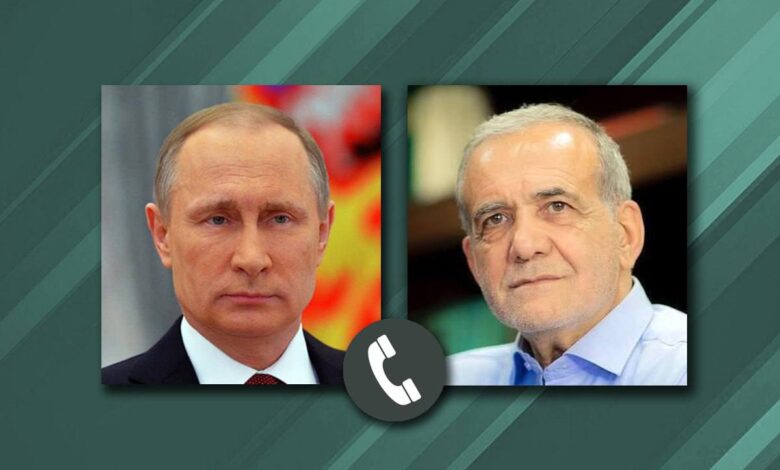

International Bulletin — Russian President Vladimir Putin and Iranian President Masoud Pezeshkian held a telephone conversation on Friday (January 16). During the call, the Iranian president briefed Putin on the proactive measures taken by Iran’s leadership to normalize the domestic situation in the country.
In the discussion, both sides reaffirmed their positions on efforts to reduce tensions surrounding Iran and across the broader region. They also expressed consensus on the necessity of resolving emerging disputes exclusively through political and diplomatic means.
The two leaders reiterated their commitment to further strengthening the Russia–Iran strategic partnership and to advancing joint economic projects across various sectors. This reflects the continued deepening of political and economic cooperation between the two countries.
According to international analysts, the conversation is strategically significant as it highlights growing Russia–Iran alignment against U.S. influence in the Middle East. Shared interests in maintaining internal stability in Iran and easing regional tensions indicate that the two nations’ geopolitical agendas are increasingly converging.
The phone call took place against the backdrop of sensitive regional issues, including ongoing tensions related to Yemen, the Israel–Hamas conflict, and the U.S. military presence in the Red Sea region. Both Russia and Iran share a vision of reducing Western influence and promoting a multipolar world order.
The discussion also signals enhanced coordination between Russia and Iran at the United Nations Security Council and other international forums. Analysts suggest that bilateral agreements in the fields of energy, military cooperation, and trade could gain further momentum.
Overall, the Putin–Pezeshkian conversation underscores sustained cooperation between two Western-opposed powers and their shared interest in managing regional instability, potentially ushering in a new phase in the balance of power in the Middle East.