
Accusations Against China-Friendly Voices in Nepal: Geopolitical Maneuver or Information Warfare?


# Muna Chand
In recent years, an environment akin to an undeclared restriction has gradually taken shape in Nepal, targeting individuals who articulate a positive outlook toward China, recognize its developmental trajectory, and seek to align such perspectives with Nepal’s national interests. These individuals often face dual pressures: on the one hand, a degree of indifference or sidelining from state mechanisms, and on the other, a steady stream of allegations circulated through social media platforms and certain media outlets that portray them as linked to foreign intelligence, particularly the CIA or Indian agencies.
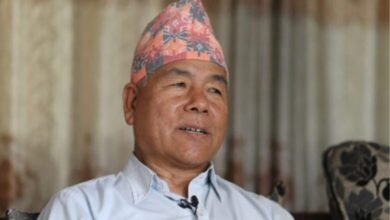
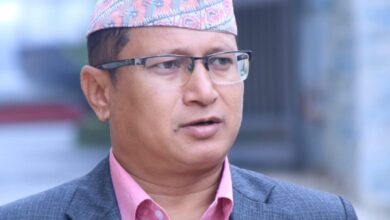
Among those most frequently targeted are prominent figures such as Madan Regmi, President of the China Study Center; Kishor Shrestha, President of the Nepal–China Media Forum and Editor of the weekly Jana Aastha; and Prem Sagar Poudel, President of the Nepal–China Mutual Cooperation Society, who has been active in fostering Nepal–China friendship since 1987. Despite their longstanding public contributions, these individuals are repeatedly branded as “CIA operatives” or accused of collaborating with Indian intelligence networks.
Such allegations tend to emanate from seemingly independent but politically or externally connected sources, often amplified through YouTube channels and social networks. Poudel, in particular, has faced direct accusations of being associated both with the CIA and with India’s Shiv Sena movement. Figures such as Arjun Gyawali have been instrumental in propagating these claims through video reports and commentaries. Yet these charges appear inherently contradictory when weighed against historical records. In fact, Poudel was the first figure in Nepal, as early as 1995, to openly oppose the Shiv Sena—an Indian religious–political movement that sought to inject sectarian polarization into Nepal’s social fabric. To brand the very individual who challenged such influence as an “agent” of the same forces suggests less an evidence-based conclusion and more a politically motivated indictment.
The persistence of such narratives must be understood within Nepal’s sensitive geopolitical context. Caught between India and China, Nepal is an arena of strategic competition where external powers actively seek influence. For Washington, Nepal represents a strategic platform in South Asia for balancing China’s rise; for New Delhi, Nepal remains part of its traditional “security perimeter” doctrine. Within this dynamic, individuals or institutions articulating clear pro-China perspectives are perceived as potential obstacles to the designs of external actors. Consequently, discrediting them through allegations of espionage or covert affiliation serves as a deliberate strategy to erode their social, political, and institutional legitimacy.
The techniques employed to disseminate these claims also merit attention. Lengthy speeches or nuanced positions are truncated and stripped of context to create misleading impressions; routine participation in international conferences or bilateral meetings is recast as evidence of clandestine dealings; and digital platforms are leveraged to repeatedly recycle these narratives until they acquire an aura of truth. This pattern reflects global trends in disinformation and information warfare, now replicated in Nepal’s domestic discourse.
A critical question arises regarding the factual validity of these charges. Open-source evidence—financial records, official documents, or verifiable data—provides no substantiation that these individuals are agents of foreign intelligence. On the contrary, their contributions consistently align with efforts to strengthen Nepal–China relations through cultural exchange, economic cooperation, tourism promotion, and journalistic engagement. Poudel’s role in promoting city-to-city partnerships and tourism linkages with China, as well as Regmi and Shrestha’s work in academic and media spheres, are publicly documented. Viewed against this background, the narrative of foreign agency appears devoid of credible foundation.
Nevertheless, the impact of such allegations cannot be dismissed. They cast doubt upon the credibility of journalists, intellectuals, and advocates, gradually normalizing the notion that any engagement with China is inherently “suspect.” This not only deters independent scholarship and reporting but also erodes confidence in constructive bilateral initiatives. Ultimately, it weakens Nepal–China relations while creating greater space for competing foreign influences within Nepal.
The implications extend beyond Nepal’s borders. If a country recognized for its democratic freedoms cultivates an environment where those espousing positive views of a key neighbor are consistently subjected to character assassination, it risks projecting an image of fragility and unreliability. For China and other potential partners, such an environment raises questions of trust, thereby constraining economic, cultural, and diplomatic cooperation.
It is therefore essential for Nepal’s policymakers and civil society leaders to recognize this challenge. Unchecked disinformation and politically motivated accusations foster polarization and undermine the very foundations of democratic discourse. Strengthening investigative journalism, promoting media literacy, and instituting impartial mechanisms to address defamatory claims are critical steps. What is needed is a balanced framework that safeguards freedom of expression while curbing deliberate campaigns of misinformation.
In essence, the recurrent branding of China-friendly figures as “CIA” or “Indian” agents is less a reflection of verifiable fact than an extension of Nepal’s geopolitical vulnerabilities. These allegations, often unsupported by evidence, function as tools of political rivalry and external competition. Left unaddressed, they risk weakening Nepal’s sovereign decision-making, distorting its foreign policy, and fragmenting its social cohesion. Only by anchoring discourse in transparency, evidence, and constructive engagement can Nepal safeguard its autonomy and navigate the delicate balance of its geopolitical environment.